AI-Driven Shopping Boosts Online Holiday Sales, Salesforce Data Shows

AI-powered chatbots and other digital tools significantly contributed to a nearly 4% year-over-year increase in U.S. online sales during the 2024 holiday season, according to Salesforce data. Retailers harnessed AI-driven customer service features such as conversational chatbots, targeted promotions, and personalized product recommendations to attract shoppers seeking trending products and the best deals.

From November 1 to December 31, U.S. online sales reached $282 billion, up from $272 billion in 2023, surpassing Salesforce’s initial 2% growth forecast, despite more restrained discounts. AI-based chatbots saw a 42% increase in usage compared to the previous year, with Salesforce analyzing data from 1.6 trillion page views to reach this conclusion.

Globally, AI-driven sales grew to $229 billion, compared to $199 billion in 2023. While AI was a major growth driver, a concerning 28% product return rate, up from 20% in 2023, was highlighted as a potential drag on profit margins for retailers, according to Caila Schwartz, director of Consumer Insights at Salesforce.

“Retailers who have embraced AI and agents are already seeing the benefits, but these tools will be even more critical in the new year as retailers aim to minimize revenue losses on returns and re-engage with shoppers,” Schwartz said.

The report also noted that mobile shopping peaked on Christmas Day, with 79% of all orders made through smartphones during the holiday season. Social media platforms like TikTok Shop and Instagram helped drive 14% of all traffic to e-commerce sites.
 

Chipmakers Surge on Optimism Fueled by AI Demand

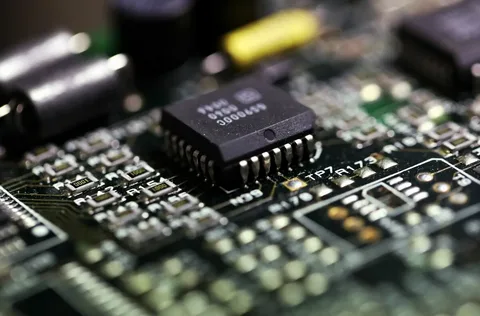
Shares of chipmakers saw significant gains on Monday, driven by optimism surrounding strong AI-driven demand. Microsoft’s plan to invest $80 billion in AI-enabled data centers in fiscal 2025 sparked expectations that semiconductor demand will remain robust. Micron (MU.O) led the charge with a 10.6% rise in its stock, while other key players like Applied Materials (AMAT.O), Lam Research (LRCX.O), and KLA Corp (KLAC.O) saw increases between 5.1% and 5.5%.

The Philadelphia Semiconductor Index (.SOX) surged 3.9%, reaching its highest point since mid-October, and has risen over 19% in 2024. The broader Nasdaq (.IXIC) also advanced, leading Wall Street’s major indexes higher, while semiconductor stocks in Europe and South Korea saw similar gains.

Citigroup noted that while Microsoft’s spending plan was in line with analysts’ expectations, it was seen as a “modest positive” for the sector, alleviating concerns about a potential drop in capital expenditure.

“AI data centers are very chip hungry, that’s why you have people running towards the chip sector right now,” said Michael Matousek, head trader at U.S. Global Investors.

The strong demand for AI servers, evidenced by Foxconn’s (2317.TW) record revenue for Q4, further fueled the sector’s positive momentum. Nvidia (NVDA.O), a key Foxconn customer, added 5.1%, with CEO Jensen Huang scheduled to deliver a keynote speech at the CES trade show later in the day. AI server manufacturer Super Micro Computer (SMCI.O) saw a 10.3% surge.

Although Nvidia’s quarterly results in November pointed to a slowdown in revenue growth, the surge in demand for the company’s AI chips, which dominate the market, has mitigated those concerns.


Trina Solar Sets World Record for Solar Technology Efficiency

Trina Solar (688599.SS) has achieved a new world record for the conversion efficiency of a specific type of solar module, the company announced on Monday. In laboratory tests, Trina’s large surface area n-type fully passivated heterojunction (HJT) modules demonstrated an impressive efficiency of 25.44%. These results were certified by the Fraunhofer CalLab, a leading solar research body in Germany.

HJT technology involves passivating the surface defects of solar cells to enhance performance, and the new efficiency benchmark highlights its potential for solar energy. Cell efficiency is crucial because higher conversion rates reduce the size of solar installations and lower costs.

Professor Martin Green of the University of New South Wales, whose lab previously held the solar cell efficiency record for decades, praised the achievement, noting that HJT represents one of the leading technologies vying for dominance in the solar industry. While HJT technology is currently more costly than other methods, Green predicts that costs will decrease as the industry adopts the new technology.

Trina’s chairman and CEO, Gao Jifan, expressed the company’s commitment to advancing research and development in passivated solar technology to maintain its leadership in the field. While HJT currently represents a small portion of the market, it is projected to increase from 7% in 2024 to 9% in 2026. Meanwhile, TopCON cells are expected to dominate the market in the coming years.

The achievement not only sets a new record for HJT technology but also represents a milestone in the efficiency of single-crystalline silicon solar cell modules.