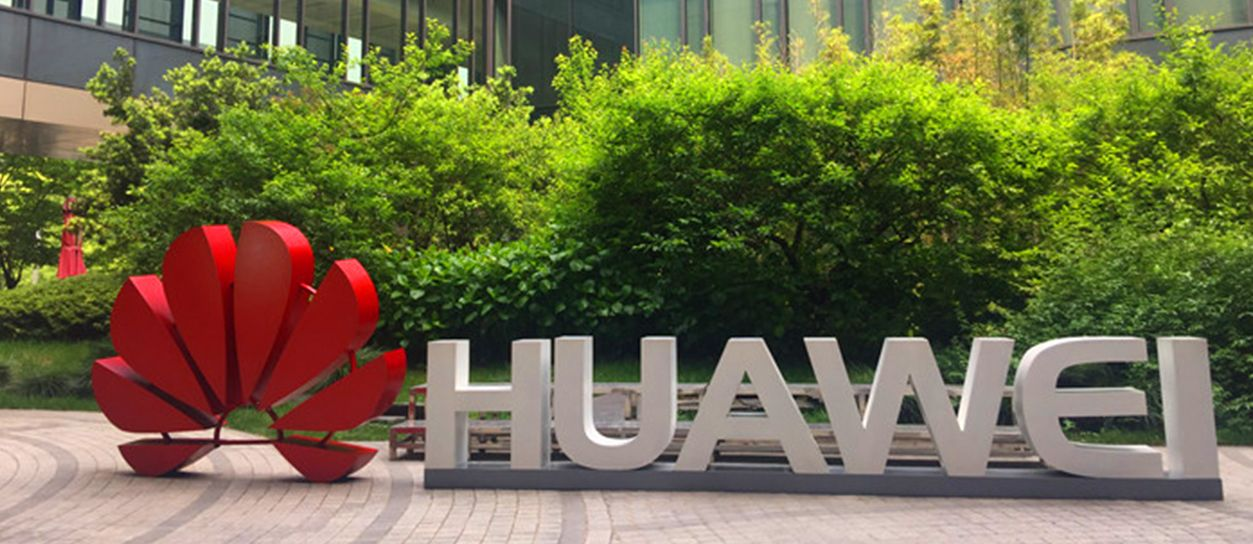
Huawei Chairman Announces 2024 Revenue Exceeded $118 Billion

Huawei’s chairman, Liang Hua, announced on Wednesday that the company surpassed 860 billion yuan ($118.27 billion) in annual revenue for 2024, marking a significant recovery after the impact of U.S. sanctions. The company experienced a remarkable 22% year-on-year growth compared to 2023, when it reported 704.2 billion yuan in revenue. This marks Huawei’s fastest growth in four years, as it continues to adapt and rebuild its operations.

Liang made these remarks at a forum in Guangzhou, confirmed by a Huawei spokesperson. He emphasized that Huawei’s 2024 results align with the company’s expectations, with ICT infrastructure remaining stable, the consumer business returning to growth, and the smart car solutions business rapidly developing. He added that the company’s annual sales revenue would exceed 860 billion yuan.

Huawei’s consumer business saw a strong rebound beginning in August 2023, when it launched new smartphones featuring locally-produced chipsets that successfully navigated U.S. sanctions. This resurgence has allowed Huawei to capture a 16% share of the Chinese smartphone market, overtaking Apple, according to Canalys data.


European Data Centre Space Shortage Expected in 2025 as AI Booms

As artificial intelligence (AI) continues to surge, Europe’s data centres are facing a growing capacity crisis. Despite plans to expand by 22% in 2025, experts warn that demand will outpace supply, risking Europe’s further delay in the AI race. Analysts at the Kickstart Europe conference on Wednesday highlighted the growing concerns about electric grid congestion and a lack of suitable sites for new data centres, particularly in traditional European hubs like Frankfurt, London, Amsterdam, Paris, and Dublin.

One of the key developments exacerbating this issue is the rise of China’s DeepSeek, which has introduced more energy-efficient AI models. While this development may ease some of the pressure, it does not address Europe’s significant infrastructure constraints.

Major software companies like Google and Amazon are continuing to push ahead with plans for hyperscale data centres, but they, along with European firms, are struggling to find adequate space. “Providers can’t build supply fast enough to keep up with demand,” said Kevin Restivo, director of data centre research at CBRE, during his keynote address.

The shortage is most pronounced in primary data centre locations, but secondary markets like Milan, Warsaw, and Berlin are seeing rapid growth in 2025. Many companies are even looking outside of urban areas to find space. CBRE forecasts that 9.1 gigawatts of new capacity will come online this year, with hyperscalers taking up over a third of it.

However, Europe’s data centre expansion still lags behind U.S. investments, which are seeing massive funding, such as the $500 billion “Stargate” initiative involving Oracle, Microsoft, and OpenAI over the next four years. According to CBRE, the average cost to build data centre space in Europe is 12 million euros per megawatt, suggesting that the European market is expanding by over 100 billion euros this year. Despite this growth, analysts, such as Stijn Grove from the Dutch Data Center Association, warn that Europe risks falling behind in the AI race, becoming technologically dependent on the U.S. and China.


Trump, DeepSeek in Focus as Nations Gather at Paris AI Summit

The Paris AI Summit on February 10-11 is set to bring together nearly 100 countries to discuss the safe development and deployment of artificial intelligence (AI), with a particular spotlight on U.S. President Donald Trump’s administration and China’s DeepSeek. This summit follows last year’s meeting at Bletchley Park in England, expanding the conversation globally.

France, alongside India, is hosting the event with a focus on areas where it holds a competitive edge: open-source systems and clean energy for data centers. The summit will also address labor disruptions and AI market sovereignty. Top executives, including those from Alphabet and Microsoft, are expected to attend, with keynotes such as one from OpenAI’s Sam Altman, the CEO of ChatGPT.

The U.S. delegation, led by Vice President JD Vance, faces challenges in reaching consensus with China and other nations due to ongoing political tensions. Since President Trump’s administration began in January, several executive orders have reversed Biden’s approach, including pulling out of the Paris Climate Agreement and revisiting AI export controls to counter China.

A major point of discussion will be the creation of a non-binding communiqué on AI stewardship, which, if agreed upon, would mark significant progress. While the French presidency has emphasized that the summit will give a voice to all nations, it is clear that discussions will be influenced by the competition between the U.S. and China, particularly in AI development.

The summit will not focus on new regulations but will instead discuss frameworks for AI policy, aiming to balance innovation with safety. European nations, especially France, are keen to avoid regulations that might slow down the advancement of their national AI companies.

A notable highlight is the inclusion of China’s DeepSeek, which has recently disrupted the global AI scene by offering models that compete with U.S. companies at a fraction of the cost. This has bolstered the argument that the global race for AI supremacy remains open, as DeepSeek challenges established leaders in human-like reasoning technology.

At the summit, philanthropies and businesses are expected to commit substantial capital—starting with $500 million and potentially rising to $2.5 billion over five years—to fund public-interest AI projects across the globe. Additionally, energy concerns will be discussed, with France positioning its clean nuclear energy as a potential solution to the high power demands of AI models.