Musk’s Lawsuit Against OpenAI May Proceed to Trial, Judge Says

A U.S. District Judge, Yvonne Gonzalez Rogers, announced on Tuesday that parts of Elon Musk’s lawsuit against OpenAI could go to trial, with Musk himself required to testify in court. The case, which centers on Musk’s effort to block OpenAI’s transition to a for-profit entity, is evolving into a public legal battle between Musk and OpenAI CEO Sam Altman.

Judge Rogers, presiding in Oakland, California, stated that “something is going to trial in this case,” and indicated that Musk would be called to the stand to present his case to a jury. She also noted that Musk’s legal team had not provided sufficient evidence to issue a preliminary injunction halting the transition, suggesting the possibility of an evidentiary hearing where both sides could present witnesses and evidence.

The case stems from Musk’s claims that OpenAI’s founders initially approached him to help fund a nonprofit organization focused on developing artificial intelligence (AI) for the benefit of humanity. However, Musk contends that OpenAI has since shifted its focus to making a profit. Musk’s lawsuit, filed last year, expanded to include antitrust and other claims against the company. He has asked the court to prevent OpenAI from completing its transition to a for-profit business.

OpenAI, in its defense, has moved to dismiss Musk’s claims, arguing that Musk should focus on competing in the marketplace rather than through legal channels. The company argues that restructuring to a for-profit entity is necessary to secure the capital needed to continue developing advanced AI models. A recent fundraising round of $6.6 billion and a potential future round of up to $25 billion from SoftBank hinge on OpenAI’s restructuring.

The situation has raised questions about the unusual nature of nonprofit organizations converting into for-profit entities. Rose Chan Loui, executive director of the UCLA Law Center for Philanthropy and Nonprofits, pointed out that such transitions are typically seen in health care sectors, not in venture capital-backed tech companies.

 

China Announces Measures Against Google, U.S. Firms Amid Escalating Trade Tensions

China announced a series of new measures on Tuesday targeting U.S. businesses, including tech giant Google, farm equipment manufacturers, and the owner of Calvin Klein, as trade tensions between the U.S. and China escalate. These actions followed the implementation of new U.S. tariffs on Chinese goods, with Beijing responding by imposing its own tariffs on U.S. products, such as coal, oil, and certain autos.

China’s State Administration for Market Regulation launched an investigation into Google, suspecting the company of violating the country’s anti-monopoly laws. While the details of the investigation remain unclear, it marks the latest development in the strained relationship between China and the U.S. Google, whose search engine and other services are blocked in China, derives only about 1% of its global revenue from the country. Despite this, it continues to collaborate with Chinese partners, particularly in advertising.

Alongside the Google probe, China’s Commerce Ministry added two U.S. companies to its “unreliable entity” list: PVH Corp, which owns brands like Calvin Klein and Tommy Hilfiger, and biotech firm Illumina. China accused both companies of taking actions that harmed Chinese enterprises and violated their rights. Being placed on this blacklist subjects companies to fines, trade restrictions, and other sanctions, such as the revocation of work permits for foreign employees. PVH expressed surprise at the decision, emphasizing its compliance with Chinese laws, while Illumina did not respond to media inquiries.

In addition to these measures, China also introduced 10% tariffs on U.S. farm equipment imports, potentially impacting firms such as Caterpillar, Deere & Co, and AGCO. The tariffs could also affect Tesla’s Cybertruck, as China may apply tariffs to this electric truck, pending regulatory approval. Tesla did not immediately comment on the development.

These actions intensify the ongoing trade conflict between the U.S. and China, particularly in sectors like technology and agriculture. Experts suggest that these measures are intended to signal China’s willingness to retaliate against U.S. interests while leaving room for de-escalation. The new tariffs will take effect on February 10, 2025.


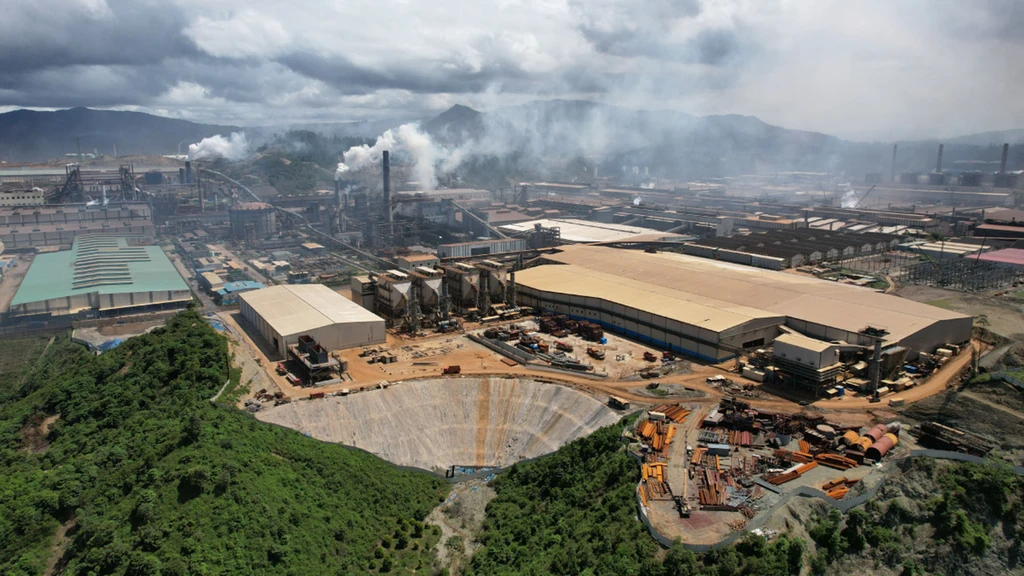
Chinese Firms Control Around 75% of Indonesian Nickel Refining Capacity, Report Finds

A report from C4ADS, a global security nonprofit based in Washington, has revealed that Chinese companies control approximately 75% of Indonesia’s nickel refining capacity, raising concerns about supply chain control and environmental risks. As of 2023, Indonesia’s refining capacity, which totals 8 million metric tons, is distributed across 33 companies. However, shareholder overlap shows that Chinese firms effectively control about three-quarters of the smelting capacity.

The report highlights that, while Indonesia aims to use its nickel industry as a key driver for economic growth, the substantial foreign influence could limit the country’s ability to fully control and shape the industry for its own benefit. The dominance of Chinese-controlled nickel production is also seen as a competitive disadvantage for U.S. and European automakers, especially in the growing electric vehicle (EV) market. Nickel, a key component in EV batteries, is crucial for the development of green technologies, but increasing restrictions on trade with China could affect access to this vital resource.

An Indonesian official noted last year that Chinese companies were seeking partnerships with Indonesian and South Korean firms to reduce their stakes in smelters, making their products more accessible to the U.S. market. To address these concerns, President Prabowo Subianto formed a task force to develop Indonesia’s downstream mineral industry with domestic financing, aiming to reduce the perception that foreigners benefit the most from the country’s resources.

The C4ADS report pointed out that two Chinese companies, Tsingshan Holding Group and Jiangsu Delong Nickel Industry Co Ltd, were responsible for over 70% of Indonesia’s refining capacity as of 2023. These companies were among the first investors in Indonesia’s push for domestic processing of nickel ore, a move that has helped make Indonesia the world’s dominant producer of nickel.

The report also mentions safety issues tied to Chinese-owned facilities. In December 2023, two workers at a Tsingshan Stainless Steel facility in Central Sulawesi were sentenced to jail for negligence related to a fire that caused fatalities. Additionally, in early 2023, two workers died in clashes at the PT Gunbuster Nickel Industry smelter in North Morowali, owned by Jiangsu Delong Nickel Industry.

Despite these concerns, Tsingshan has been selling stakes in some of its smelters. In October 2023, the company reached a deal with Indonesian state miner Aneka Tambang to sell 30% of PT Jiu Long Metal Industry.