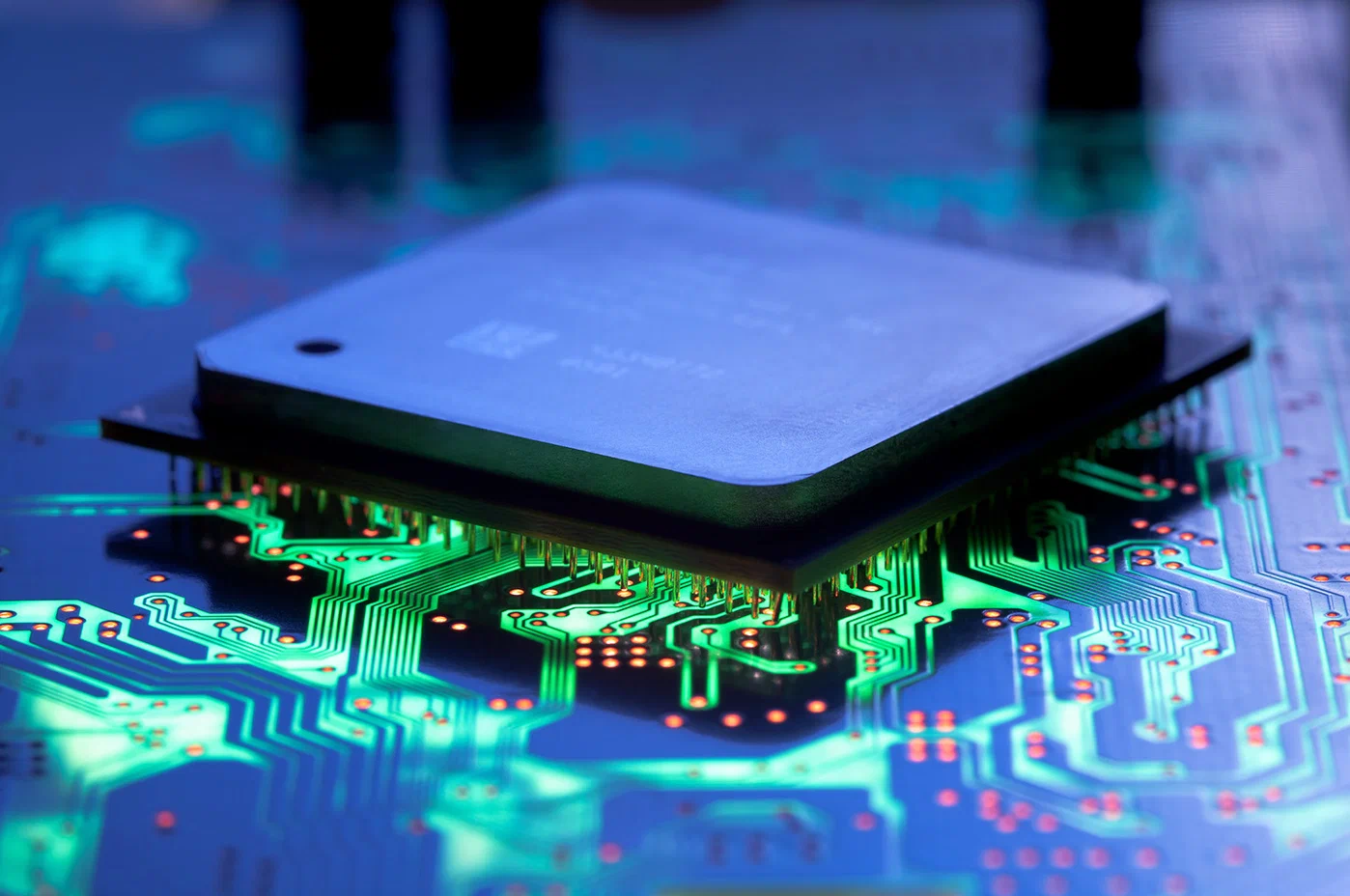
AI Chip Startup Positron Raises $23.5 Million to Challenge Nvidia

Positron, a startup aiming to rival Nvidia in the artificial intelligence (AI) chip market, announced on Tuesday that it has raised $23.5 million in a seed funding round. Investors in the round included Valor Equity Partners, known for its support of Elon Musk’s ventures, along with Atreides Management, Flume Ventures, and Resilience Reserve.

Focus on Efficiency and Inference:

Positron’s chips are manufactured in Arizona and are designed to use less than a third of the power of Nvidia’s leading H100 graphical processing units (GPUs) while offering similar performance. The company’s chips are specifically intended for AI inference, the phase where AI models are utilized, as opposed to training the models. Although demand currently leans toward training chips, analysts forecast that the need for inference chips will rise as more AI applications are developed.

Industry Shift and Rising Costs:

With major players like OpenAI, Google, and Meta investing heavily in AI infrastructure, the demand for chips is expected to grow significantly. Meta, for example, has pledged to spend up to $65 billion this year, while Microsoft plans to invest $80 billion. OpenAI also announced a $500 billion Stargate infrastructure project. Despite Nvidia’s dominance, holding around 80% of the market, rising costs and concerns about over-reliance on a single supplier have pushed companies such as Microsoft, Meta, and OpenAI to seek alternative solutions, both in-house and externally.

Four Russians Arrested in Phobos Ransomware Crackdown, Europol Reports

Europol announced on Tuesday that four Russian nationals, suspected of deploying a variant of Phobos ransomware, have been arrested following a coordinated international law enforcement operation. The group, identified as the 8Base ransomware gang, extorted payments from victims in Europe and across the globe.

Coordinated Effort:

The arrests were the result of a collaboration involving law enforcement agencies from 14 countries. Along with the arrests, authorities seized 27 servers linked to the gang’s criminal operations, effectively dismantling part of the network. This action forms part of a broader series of successful operations targeting Phobos ransomware. Thanks to previous arrests, law enforcement agencies have also been able to warn over 400 companies worldwide about imminent ransomware attacks.

Prior Arrests and Impact:

In June 2024, a Phobos administrator was arrested in South Korea and later extradited to the United States in November, where he faces charges related to ransomware attacks on critical infrastructure and businesses. Another significant arrest occurred in 2023 when a key Phobos affiliate was apprehended in Italy based on a French arrest warrant, further disrupting the gang’s activities.

Phobos ransomware primarily targets small to medium-sized businesses, which are often vulnerable due to weaker cybersecurity defenses.

Connection Challenge Could Hamper France’s AI Hub Ambitions Despite Nuclear Power Advantage

France’s bid to become a global leader in artificial intelligence (AI) is facing potential setbacks due to delays in connecting power-hungry data centres to the national electricity grid. Despite boasting abundant nuclear energy—critical to attracting AI investments—the time it takes to establish the necessary infrastructure could slow down the country’s growth in the sector.

Macron’s Vision and Investments:

In a recent AI summit, French President Emmanuel Macron highlighted the country’s reliance on clean and reliable nuclear power as a key asset for AI development. With over 100 billion euros ($103.26 billion) in AI investment pledges, France is positioning itself as a major player in Europe’s race to catch up with the U.S. The pledge includes a $10 billion supercomputer facility by UK-based Fluidstack, which will require 1 gigawatt (GW) of power—equivalent to the output of one of France’s smaller nuclear reactors.

Brookfield, a global asset manager, also committed to spending 20 billion euros to develop AI infrastructure, including data centres. With 57 nuclear reactors, France produces over two-thirds of its electricity from nuclear power, and last year, it exported a record amount of energy, mostly to Italy.

Grid Connection Bottleneck:

The challenge lies not in generating the electricity but in connecting it to the data centres. France’s energy grid, though robust, may struggle to keep up with the surge in demand that AI data centres will bring. Experts warn that, while building data centres can be completed in under a year, constructing the necessary transmission lines to supply them with power could take up to five years.

Fatih Birol, executive director of the International Energy Agency, highlighted the issue at the AI summit, noting that countries with sustainable and affordable electricity supplies have a competitive edge. However, the slow pace of building the required transmission infrastructure presents a bottleneck for France’s ambitious plans.

Efforts to Expedite Construction:

Construction and permitting procedures in Europe are notably slower than in the U.S., as Anj Midha, a general partner at Andreessen Horowitz, pointed out. In response, state-owned utility EDF has identified four sites for data centres on its land, with existing grid connections and 2 GW of power already available. These sites are expected to reduce project timelines by several years, but challenges remain.

EDF is also in talks with companies to power additional 1 GW data centre projects, though the completion of these sites may still be delayed by the need for public consultation and the high costs associated with constructing new high-voltage power lines.