France’s EDF Identifies Land for Data Centers to Boost AI Infrastructure

France’s state-owned utility, EDF, announced on Monday that it has identified four sites on its land for the development of data centers. This move is part of EDF’s strategy to expedite investments in power-hungry digital infrastructure, particularly as the country hosts a summit on artificial intelligence (AI) with political and business leaders discussing the emerging technology.

As a leading producer of nuclear energy, EDF is positioning nuclear power as a clean and reliable energy source for these data centers. The four identified sites are strategically located with available grid connections, offering a combined total power capacity of 2 gigawatts (GW). EDF is also in the process of searching for two additional sites to meet growing demand.

EDF’s initiative includes providing personalized support to digital companies wishing to develop data center projects, guiding them through the necessary steps to complete their projects. Last year, EDF executives revealed that the utility was in discussions with three companies about powering 1 GW data center projects in France. However, there were concerns that grid connections could delay the launch of some projects.
Brazil Denies Report of Tax on US Tech Firms Amid Trump Steel Tariffs

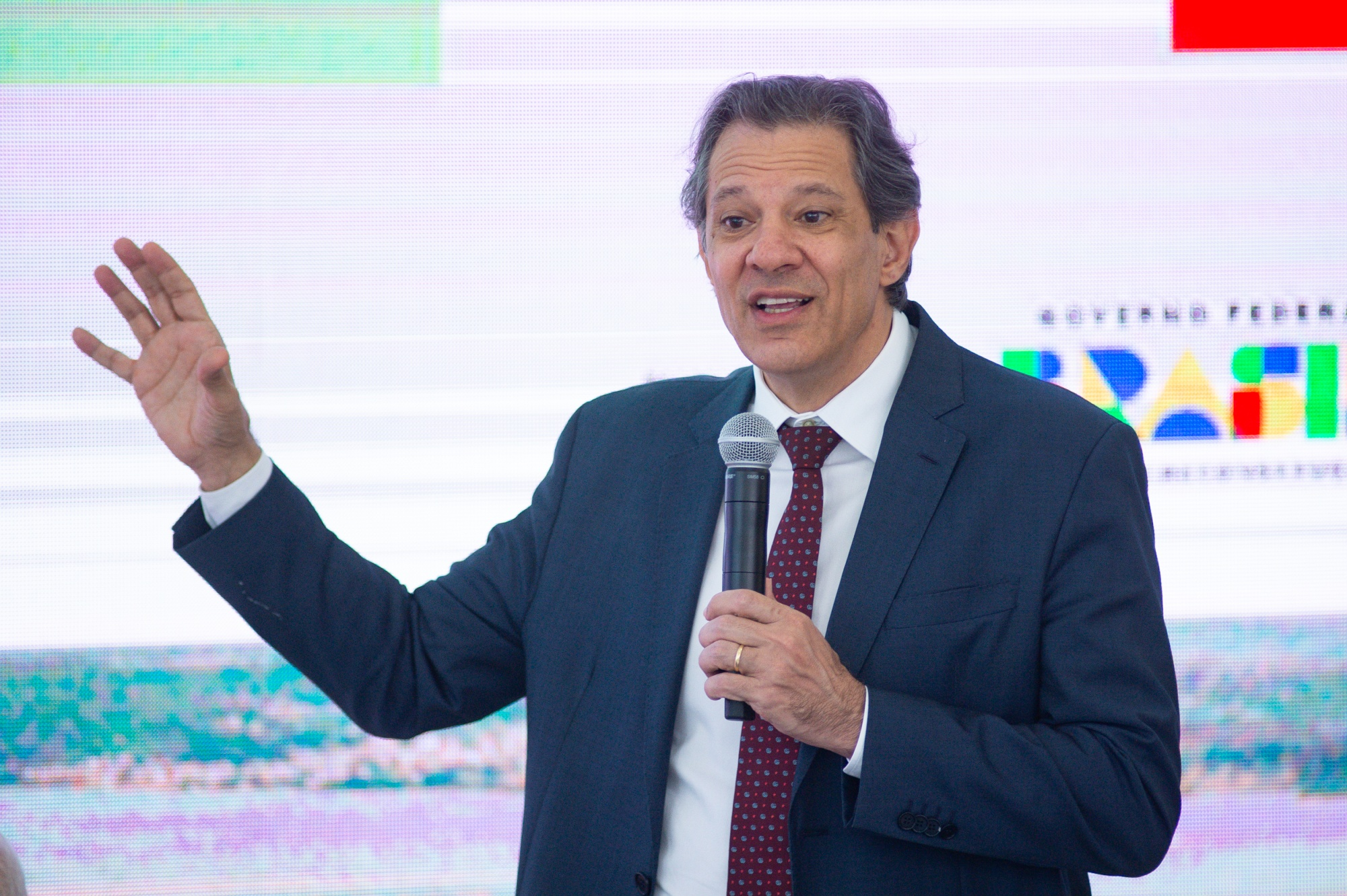
Brazil’s Finance Minister, Fernando Haddad, denied reports on Monday suggesting that the country was considering imposing taxes on U.S. tech companies in response to President Donald Trump’s proposed 25% tariff on all U.S. steel imports.

The speculation arose after a report from the Brazilian newspaper Folha de S.Paulo, which claimed that the administration of President Luiz Inácio Lula da Silva was contemplating levying tariffs on major tech firms as a retaliatory measure.

Haddad quickly refuted the claims on social media, emphasizing that the information was inaccurate. He reiterated that the Brazilian government would only make official statements based on concrete decisions, not speculative announcements that could be misinterpreted or later changed.

The report had suggested that tech giants such as Amazon (AMZN.O), Meta Platforms (META.O), and Alphabet (GOOGL.O) could be targeted by such a tax. However, Haddad’s remarks clarified that no such plans were under consideration at this time.

Brazil, a significant supplier of U.S. steel imports, also serves as a key market for many large tech companies, which would have been affected by such a tax. The denial comes as Trump is set to introduce additional tariffs on steel and aluminum imports, escalating his trade policy strategy.

EDP Renewables Signs Virtual Power Purchase Agreement with Microsoft for Solar Projects

EDP Renewables North America announced on Monday that it has successfully delivered three large-scale solar projects and entered into a long-term virtual power purchase agreement (VPPA) with Microsoft (MSFT.O). The agreement highlights the growing trend among tech giants to secure cleaner energy sources to power their operations, especially data centers, as they continue to invest heavily in artificial intelligence.

The three solar projects, located in Illinois and Texas, will collectively generate around 400 megawatts (MW) of electricity. Under the terms of the VPPA, Microsoft will purchase approximately 389 MW of electricity and renewable energy credits, contributing to the tech company’s sustainability goals.

The Illinois-based projects include a 140 MW solar installation in Jacksonville and a 110 MW solar park near Jerseyville, both of which began operations in November. Additionally, a 150 MW solar facility near Austin, Texas, came online in December 2024.

This agreement brings the total number of solar projects EDP Renewables has developed for Microsoft in the U.S. to five, further strengthening the partnership between the two companies in their pursuit of clean energy solutions.