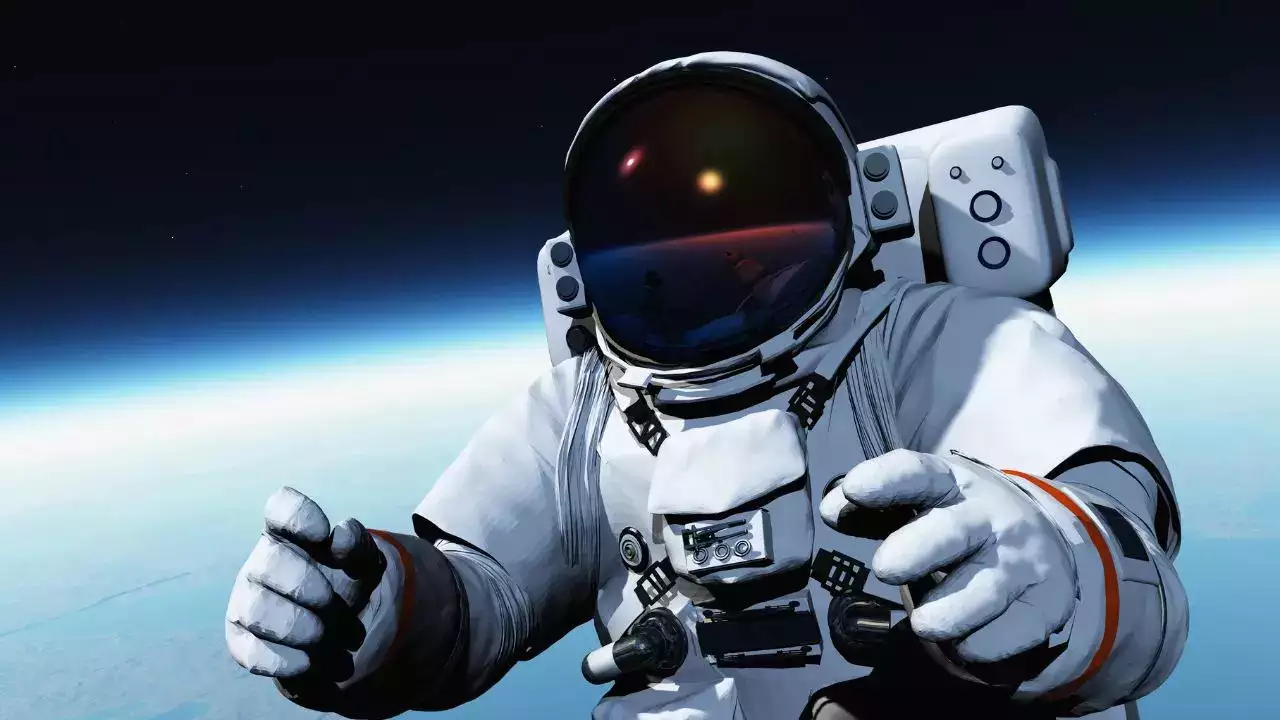
Prolonged Space Travel May Impair Astronauts’ Vision, Challenging Future Mars Missions

Space Travel and Vision Impairment: A Challenge for Long-Duration Missions

Extended exposure to microgravity has been found to significantly impact astronauts’ vision, raising concerns for future long-duration space missions. Scientists have linked these vision problems to spaceflight-associated neuro-ocular syndrome (SANS), a condition affecting approximately 70 percent of astronauts who spend six months or longer in space. The phenomenon is believed to result from shifts in blood flow and pressure due to the absence of gravity, leading to changes in eye structure and function. With future missions to Mars expected to last several years, understanding and mitigating these effects is crucial for astronaut health.

Scientific Analysis of Ocular Changes in Space

A recent study published in the IEEE Open Journal of Engineering in Medicine and Biology analyzed key ocular parameters in 13 astronauts who spent between 157 and 186 days aboard the International Space Station (ISS). Researchers examined ocular rigidity, intraocular pressure, and ocular pulse amplitude, finding significant reductions of 33 percent, 11 percent, and 25 percent, respectively. These biomechanical changes correlated with symptoms such as optic nerve swelling, retinal folds, and slight reductions in eye size—factors that could contribute to long-term visual impairment if not properly addressed.

Potential Long-Term Impacts of Microgravity on Vision

Dr. Santiago Costantino, an ophthalmologist at Université de Montréal, emphasized that prolonged microgravity exposure alters blood flow and venous circulation within the eye. These disruptions may lead to structural changes in critical ocular tissues, such as the sclera and choroid. While most astronauts experience vision recovery after returning to Earth, some require corrective lenses, and the long-term consequences of repeated exposure remain uncertain. With future Mars missions potentially extending beyond a year, the risk of permanent visual impairment must be carefully studied and mitigated.

Addressing Vision Challenges for Deep-Space Exploration

As space agencies plan for extended missions beyond low Earth orbit, developing effective countermeasures for vision impairment is a top priority. Potential solutions include artificial gravity environments, targeted drug therapies, or specialized eyewear designed to compensate for microgravity-induced changes. Understanding the underlying mechanisms of SANS will not only improve astronaut health but also ensure the success of deep-space exploration efforts. Future research and medical advancements will be essential in preparing astronauts for the extreme conditions of interplanetary travel.

Birth of Plasma Jets: Astronomers Witness a Supermassive Black Hole’s First Eruption

Unveiling the Birth of Plasma Jets from a Supermassive Black Hole

For the first time, astronomers have directly witnessed a supermassive black hole ejecting a jet of plasma traveling at nearly one-third the speed of light. This extraordinary event, occurring 270 million light-years away in the constellation Draco, originates from the central black hole of galaxy 1ES 1927+654, which possesses a mass 1.4 billion times that of the Sun. The observation marks a significant breakthrough in understanding how black hole jets form and evolve, offering an unprecedented glimpse into a process that has long remained theoretical.

Observational Breakthrough and Scientific Findings

According to a study published in The Astrophysical Journal Letters, astronomers first detected the emergence of these jets following an intense radio flare in the galaxy’s core in 2023. Using data from the Very Long Baseline Array (VLBA), researchers observed highly ionized plasma jets piercing through dense gas clouds surrounding the black hole. By early 2024, the jets had extended nearly half a light-year. Lead researcher Dr. Eileen Meyer of the University of Maryland, Baltimore County, highlighted the uniqueness of capturing this event in real time, noting that it provides crucial insights into the early stages of jet formation.

Unlocking the Mysteries of Jet Formation

Black holes in active galaxies often produce powerful twin jets of plasma, propelled by magnetic fields and capable of stretching millions of light-years. While these structures have been extensively studied in their mature stages, their formation process has remained largely theoretical—until now. This rare observation allows scientists to investigate how material from a black hole’s accretion disk is funneled into highly energetic outflows, shedding new light on one of the most enigmatic astrophysical phenomena.

Implications for Future Black Hole Research

The ability to observe plasma jets at their inception provides a valuable opportunity to refine existing models of black hole activity. Understanding these early-stage dynamics may help explain how jets influence galaxy evolution, interstellar matter distribution, and even the cosmic web structure. As astronomers continue monitoring this system, future observations could reveal whether the jets maintain their trajectory or dissipate over time, further deepening our knowledge of black hole mechanics and their impact on the universe.

Unveiling Alaska’s Auroras: NASA’s Dual Rocket Mission

NASA’s Dual Rocket Mission to Decode Alaska’s Auroras

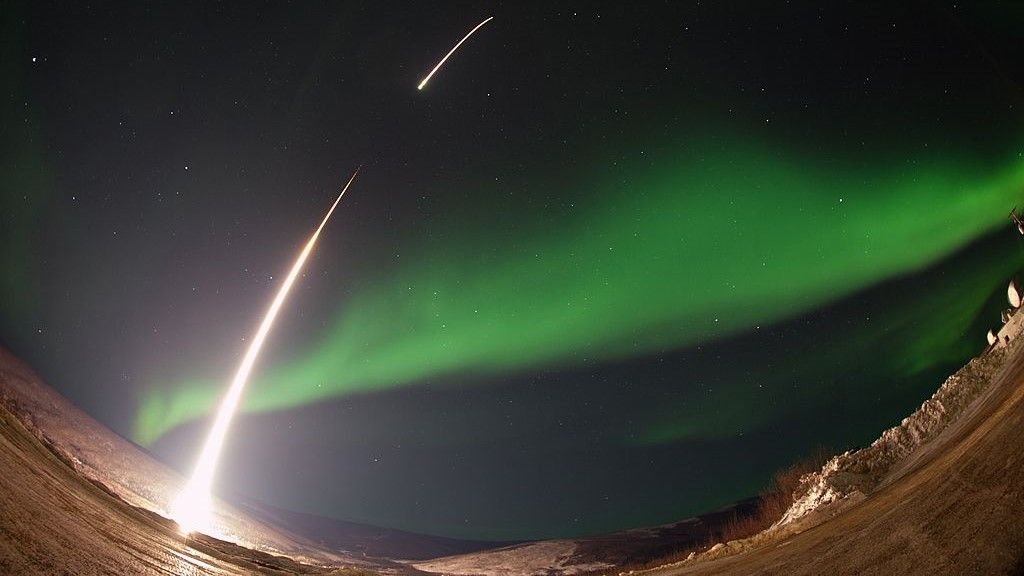
NASA is gearing up for a groundbreaking mission to explore the mysteries of the aurora borealis over Alaska. By launching two rockets through these dazzling light displays, scientists aim to investigate the underlying mechanisms that create the auroras’ flickering patterns and the enigmatic dark patches known as “black auroras.” The launches, set to take place at the Poker Flat Research Range in Fairbanks, form part of a broader effort to understand how solar particles interact with Earth’s magnetic field, shaping these celestial phenomena.

Investigating Auroral Pulsations with GIRAFF

One of the two missions, known as GIRAFF (Ground Imaging to Rocket Investigation of Auroral Fast Features), is led by NASA scientist Robert Michell. This mission will focus on analyzing the rapid pulsations and flickering seen in auroras. Equipped with specialized instruments, the rocket will gather data on the energy, density, and movement of charged particles responsible for these shimmering effects. By studying these variations, researchers hope to unlock new insights into the complex dynamics of auroral formation.

Probing the Mystery of Black Auroras

The second mission, the Black and Diffuse Aurora Science Surveyor, led by Marilia Samara, will turn its attention to a lesser-known phenomenon—black auroras. These unusual dark voids appear as patches of missing light amid the vibrant auroral display. Scientists suspect that they may result from electrons being deflected or reversed before reaching the atmosphere. By capturing high-resolution data during the rocket’s flight, the mission aims to confirm whether these reversed electron flows are responsible for the phenomenon.

Advancing Our Understanding of Space Weather

Together, these two missions represent a major step forward in auroral research, shedding light on the intricate processes that drive space weather. Understanding how charged particles behave in Earth’s upper atmosphere has broader implications, particularly for satellite operations and communication systems affected by geomagnetic activity. As NASA continues to push the boundaries of space science, these auroral investigations will provide critical knowledge about the interactions between our planet and the Sun’s energetic emissions.