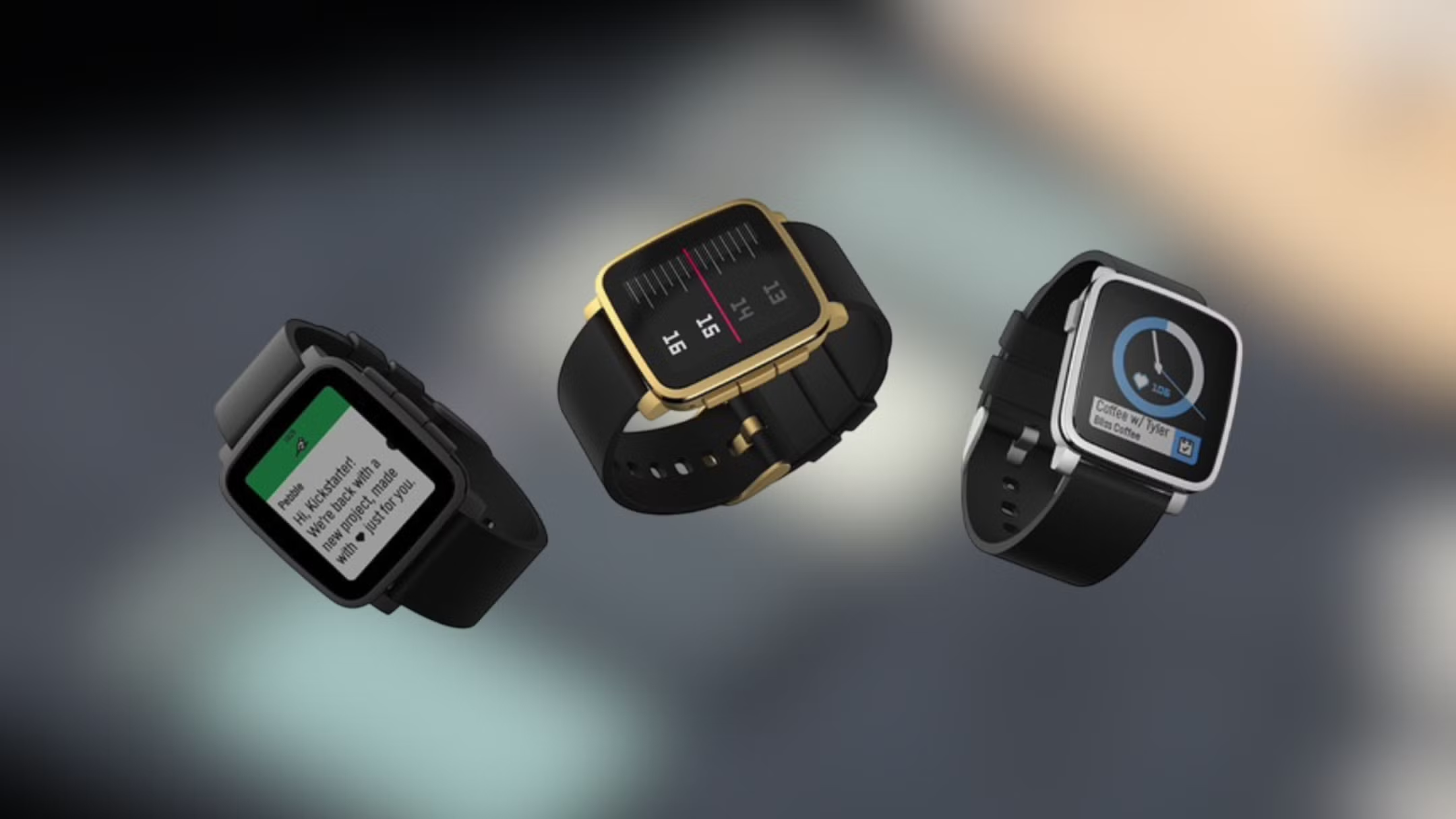
Pebble Makes a Comeback with New E-Ink Smartwatch; Google Releases OS Source Code

Pebble has officially announced its return to the smartwatch market, years after the company ceased operations due to financial struggles. The California-based company is now working on a new smartwatch under the “rePebble” branding, aiming to bring back its signature e-ink display technology. Unlike most modern smartwatches that rely on OLED or LCD panels, the upcoming Pebble device will feature an always-on e-ink screen, which is expected to improve battery life and outdoor visibility. In a significant move to support Pebble’s revival, Google has open-sourced the operating system (OS) that previously powered its smartwatches.

In a blog post, Pebble’s co-founder and CEO, Eric Migicovsky, explained why the company is returning to the market despite the abundance of smartwatch options today. According to him, most existing smartwatches lack a specific combination of core features that Pebble users loved. The new device will prioritize simplicity and functionality, focusing on essential features like time tracking, notifications, music control, alarms, weather updates, and fitness tracking. Unlike traditional smartwatch displays, Pebble aims to use a reflective e-ink screen, which remains readable under direct sunlight and consumes significantly less power.

Migicovsky also emphasized the importance of physical buttons in the smartwatch’s design, allowing users to control music playback without constantly looking at their phones. He argued that many modern smartwatches rely too heavily on touchscreens, which can be inconvenient in certain situations. Additionally, he expressed a desire for the new Pebble watch to be “hackable,” a nod to the company’s open-source philosophy. This stands in contrast to brands like Apple, which restrict users from customizing their watch faces or modifying the software.

With Google’s decision to release the OS source code, Pebble’s resurgence could mark an exciting new chapter for fans of minimalist and highly customizable smartwatches. While details about the final product, pricing, and release date remain unknown, the company’s vision suggests a return to the roots that made Pebble a fan favorite in the first place. As the development progresses, more information is expected to emerge, giving users a clearer idea of what to expect from the next-generation Pebble smartwatch.


Leaked Image Reveals iPhone SE 4 Rear Panel Design Next to iPhone 16

The iPhone SE 4 is anticipated to make its debut in the coming months as the successor to the iPhone SE (2022), currently the most affordable smartphone in Apple’s lineup. With each generation, Apple has introduced significant improvements to the SE series, and recent reports suggest that the upcoming model will follow suit. Leaked images of the purported iPhone SE 4 have surfaced online, providing a glimpse of its design when placed alongside the iPhone 16. These images hint at some key design elements and possible upgrades over the previous model.

A well-known tipster, @MajinBuOfficial, shared two images on X (formerly Twitter), showcasing what appears to be a dummy unit of the iPhone SE 4 next to the iPhone 16. Notably, the rear panel of the device lacks the Apple logo, further suggesting that this may be a prototype rather than a final design. The leak reveals that the iPhone SE 4 will feature a single rear camera, much like its predecessor. However, a closer look at the images indicates that the camera bump on the SE 4 is noticeably taller than that of the iPhone 16. Additionally, the right side of the device houses the power button, consistent with Apple’s current design language.

Beyond design changes, the iPhone SE 4 is expected to receive significant internal upgrades. Reports indicate that Apple may equip the device with its A18 chip, offering a substantial performance improvement over the A15 Bionic chip found in the previous SE model. This upgrade could bring better efficiency, faster processing speeds, and enhanced graphics performance, making the SE 4 a more capable device. Moreover, rumors suggest that the phone may include 8GB of RAM, potentially enabling support for Apple Intelligence features, which would mark a major step forward for Apple’s budget-friendly lineup.

While Apple has yet to confirm any details about the iPhone SE 4, these leaks and rumors paint an exciting picture of what could be the most advanced SE model yet. If the leaks prove accurate, the phone could bridge the gap between affordability and high-end performance, making it an appealing option for users looking for a budget-friendly iPhone with modern features. As the official launch approaches, more details are expected to emerge, offering further insight into Apple’s plans for its next-generation entry-level smartphone.

Pinterest Forecasts Strong Q1 Revenue, Shares Surge on AI Advertising Boost

Pinterest (PINS.N) announced Thursday that it expects first-quarter revenue to exceed market expectations, with a forecast between $837 million and $852 million, driven by the platform’s AI-powered advertising tools. The forecast came after a successful fourth-quarter performance, with record monthly active users and revenue, bolstered by a strong holiday shopping season.

Pinterest’s Performance+ suite, which leverages artificial intelligence to help advertisers target users more effectively, has become a major driver of ad spend. CEO Bill Ready highlighted the platform’s increasing engagement, stating that users are visiting Pinterest more frequently and finding the platform more actionable. The growth is particularly fueled by a rise in Gen Z users and the expansion of shoppable content, making Pinterest increasingly appealing to marketers.

The platform is also benefiting from growing third-party ad deals with major players like Google and Amazon, helping to diversify Pinterest’s revenue streams. However, experts note that ad spend remains heavily concentrated in North America, and the company has historically been slow to execute on expanding these third-party integrations.

Pinterest’s global monthly active users reached 553 million, surpassing estimates of 545.8 million, marking an 11% increase from the previous year. Despite an 18% year-on-year revenue growth to $1.15 billion in Q4, the company’s adjusted profit per share of 56 cents missed analyst expectations of 65 cents due to tax adjustments.