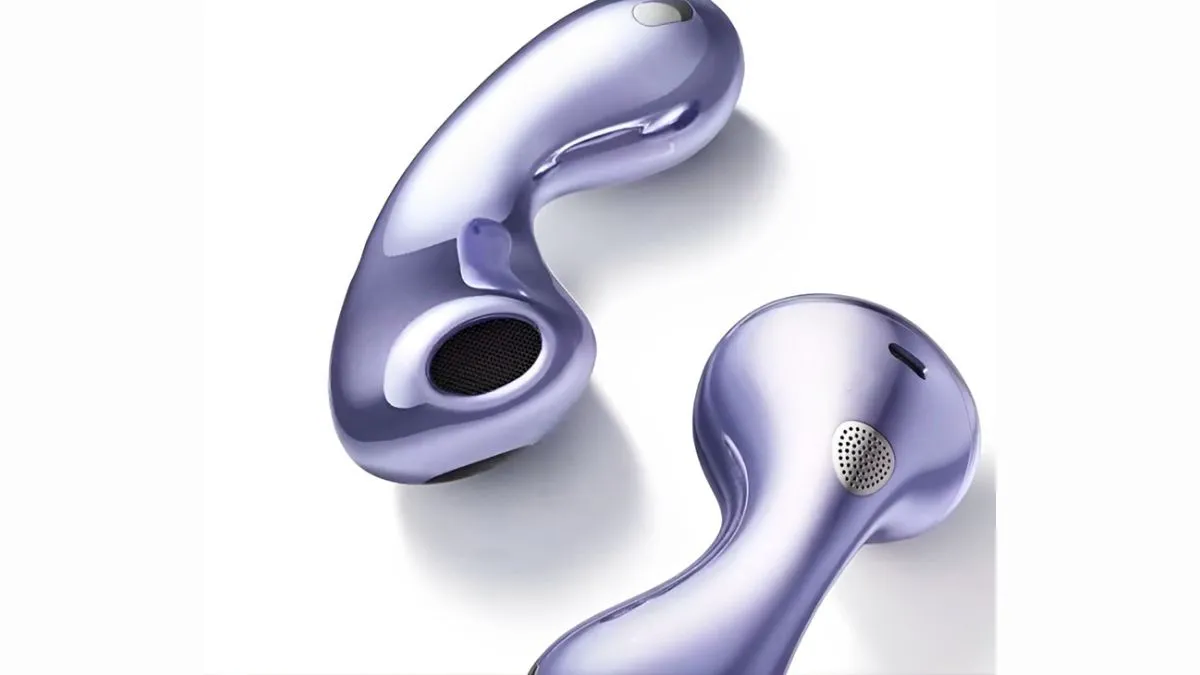
Huawei FreeBuds 6 Launched: Semi-Open Design, 36-Hour Battery Life & Key Features

Huawei has introduced the FreeBuds 6, a pair of truly wireless stereo (TWS) earphones featuring a sleek water-drop shape and a semi-open ear design. Launched alongside the Huawei Pura X foldable smartphone, these earphones promise a more comfortable and lightweight fit compared to their predecessors. The FreeBuds 6 are equipped with dual drivers, including 11mm dynamic drivers and micro-flat tweeters, aiming to deliver a high-fidelity audio experience. With AI-powered enhancements and an extended battery life of up to 36 hours when used with the charging case, they offer a premium listening experience.

Priced at CNY 999 (approximately Rs. 11,900), the Huawei FreeBuds 6 are available in three elegant colors—Aurora Purple, Sky White, and Starry Sky Black. They are currently up for pre-order in China through the Huawei China e-store, with official sales beginning on March 28. This latest addition to Huawei’s audio lineup is expected to compete with other high-end TWS earphones in the market, offering a combination of stylish design and advanced sound technology.

One of the key highlights of the FreeBuds 6 is their innovative acoustic architecture. Huawei claims they are the industry’s first semi-open dual-unit TWS earphones, designed based on extensive research on different ear shapes. The earphones are 12% smaller and 9% lighter than their predecessor, making them more comfortable for prolonged use. Additionally, they boast certifications like HWA Lossless and Hi-Res Wireless, ensuring high-quality audio output. Huawei has also collaborated with the Central Conservatory of Music’s chief tuning team to create classical and balanced preset EQ modes, enhancing the listening experience for audiophiles.

Apart from high-quality sound, the FreeBuds 6 also incorporate intelligent features such as ultra-wideband real-time hearing optimization, which dynamically adjusts sound frequencies based on the user’s ear canal shape, wearing position, and volume levels. They offer noise cancellation of up to 95dB and can reduce wind noise at speeds of up to 8m/s, making them suitable for outdoor use. With smart volume control that adapts to ambient noise, Huawei’s latest TWS earphones are designed to provide a seamless and immersive audio experience in any environment.
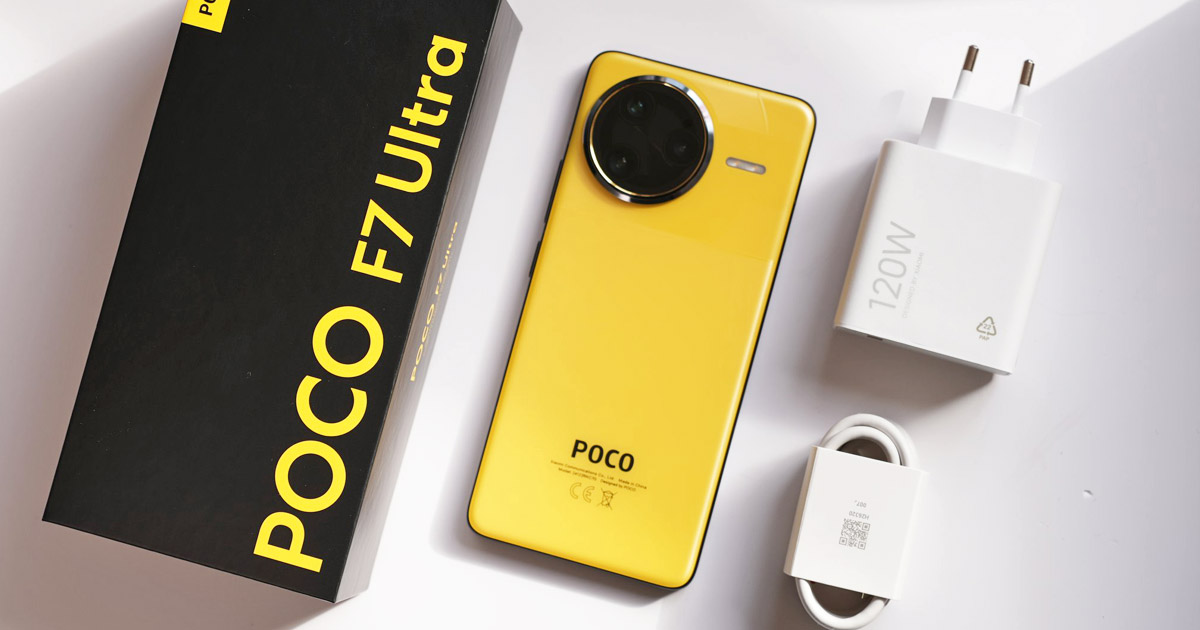

Poco F7 Ultra and F7 Pro Global Launch Date Revealed; Unboxing Video Surfaces Online

Poco has officially announced the global launch date for its upcoming flagship smartphones, the Poco F7 Pro and Poco F7 Ultra. These devices will be unveiled at a global launch event in Singapore on March 27. Alongside the announcement, the company also shared an image showcasing the rear design of both models. The Poco F7 Pro is expected to be a rebranded version of the Redmi K80, while the Poco F7 Ultra may be based on the Redmi K80 Pro. Both smartphones will be powered by Qualcomm’s latest Snapdragon chipsets, promising high-end performance. Additionally, an unboxing video of the handsets has surfaced online, revealing their key specifications and in-box contents.

The official launch event is set for 8:00 GMT (1:30 pm IST) on March 27. Poco’s teaser image confirms that both the F7 Pro and F7 Ultra will be available in black and yellow color options, featuring an identical design language. The devices sport circular camera modules on the back, accompanied by an LED flash positioned outside the module. This design choice is in line with Poco’s signature bold aesthetics, which emphasize a performance-driven look.

Under the hood, the Poco F7 Pro will be powered by the Snapdragon 8 Gen 3 chipset, whereas the F7 Ultra will house a Snapdragon 8 Elite processor. A recently leaked unboxing video from the YouTube channel TechTablets provides further insights into the devices. According to the video, the Poco F7 Pro comes with 12GB of RAM, while the Ultra model boasts 16GB of RAM. Both devices are expected to feature 512GB of internal storage. The retail box includes standard accessories such as a protective case, charger, USB Type-C cable, documentation, a SIM-ejector tool, and the smartphone itself.

In terms of charging capabilities, the video suggests that the Poco F7 Pro supports 90W wired charging, while the Ultra model takes it up a notch with 120W wired charging. The design features a dual-tone finish, with the F7 Pro available in a silver shade and the Ultra model in black. Both smartphones are expected to sport a hole-punch cutout on the display for the front camera. Additionally, the series is rumored to run on HyperOS 2 and come equipped with a 50-megapixel primary camera with Optical Image Stabilization (OIS). The Poco F7 Pro is likely to house a massive 6,000mAh battery, while the Ultra variant could feature a slightly smaller 5,300mAh battery, balancing power and efficiency.

Anthropic Enhances Claude AI with Web Search Integration

Anthropic has officially introduced web search functionality for its AI chatbot, Claude, marking a significant upgrade to the platform. Since its launch in March 2023, Claude has relied solely on its internal knowledge base and lacked access to real-time internet information. With this new update, the chatbot can now fetch the latest information across web, mobile, and desktop applications. Currently, the feature is available in preview mode and will only be activated when Claude determines it is necessary.

In a newsroom post, Anthropic highlighted that this update makes Claude more competitive in the AI chatbot space. Previously, it was the only major AI chatbot without internet access, whereas rivals such as Gemini, ChatGPT, Meta AI, Copilot, and DeepSeek had already integrated this capability. The company had initially defended its decision to keep Claude “self-contained,” arguing that it reduced the risk of misinformation and ensured more reliable responses. However, with growing demand for real-time data access, Anthropic has now shifted its approach.

The web search functionality enables Claude to look up recent events and retrieve the latest information, potentially improving the chatbot’s accuracy for time-sensitive queries. According to Anthropic, the feature is currently being tested with paid subscribers in the United States. The company also plans to expand it to more countries and eventually make it available to free-tier users. To access the feature, users must select the Claude 3.7 Sonnet AI model from the model picker menu in the text box, navigate to profile settings, and toggle on the web search option.

One key limitation of the new feature is that users cannot manually trigger web searches. Instead, Claude will autonomously decide whether a query requires internet access. While this approach aligns with Anthropic’s focus on responsible AI use, it remains to be seen how well the chatbot balances self-contained knowledge with real-time data retrieval. As the AI landscape evolves, this upgrade positions Claude to better compete with its internet-enabled counterparts.