
Micron Unveils $10 Billion AI Memory Research Lab in Boise

Micron Technology plans to invest $10 billion over the next decade in a new research facility in Boise, Idaho, focused on advanced memory technologies, computing systems and future semiconductor manufacturing.

The new Micron Research Labs facility will bring together customers, universities, government agencies and semiconductor partners to accelerate development of next-generation memory products.

The investment comes as demand for high-bandwidth memory (HBM) continues to surge due to rapid growth in AI data centers and advanced computing systems. HBM has become a critical component for feeding data to AI accelerators, benefiting major memory manufacturers including Micron, Samsung Electronics and SK Hynix.

Micron said the Boise facility will be connected with its global research network across the U.S., Europe, Japan, India, Singapore and Taiwan.

The project builds on more than $250 billion in separate U.S. manufacturing and R&D commitments already announced by the company. Micron expects construction of the new laboratory to begin in 2027, with the facility eventually hosting hundreds of researchers.

Former Meta Executive Says Zuckerberg Prioritized Growth Over Child Safety

A former Meta engineering director has testified that Mark Zuckerberg encouraged a company culture that prioritized growth and engagement over child safety, as Meta faces a major U.S. trial over alleged harms to young users.

Arturo Bejar, a former Meta employee and longtime critic of the company’s safety practices, told jurors that major product decisions were highly centralized and that changes moved quickly only when Zuckerberg personally made them a priority.

The lawsuit, brought by California, Colorado, Kentucky and New Jersey, accuses Meta of designing Facebook and Instagram in ways that could encourage excessive use among young people while failing to adequately protect them from harassment, mental-health risks and other harms. Another 25 states have also accused Meta of improperly collecting data from children under 13.

Bejar said Meta had internal tools capable of identifying large numbers of suspected underage users but argued the company did not act aggressively enough because stronger enforcement could reduce engagement.

He also criticized features such as usage-break reminders, saying they were ineffective because they were optional and easy to dismiss.

Meta has denied allegations that it intentionally harmed young users and has pointed to extensive investments in safety systems and parental controls.

The six-week trial is being closely watched because it could result in substantial financial penalties and potentially force changes to how Facebook and Instagram operate for younger users.

China Robot Makers Push Humanoids From Hype Toward Real-World Work

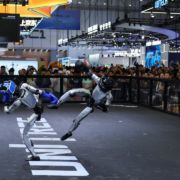
Chinese robotics companies are increasingly shifting their focus from spectacular demonstrations toward real commercial applications, showcasing humanoid robots performing logistics, factory and household tasks at the World Robot Conference in Beijing.

More than 300 companies are attending the event, presenting over 2,000 exhibits and launching more than 150 products as investor interest in humanoid robotics continues to surge.

Among the demonstrations, robots were shown sorting parcels, moving warehouse crates, packing smartphones and performing assembly-line work. Companies including Leju, Robotera and DexForce said their machines are already being tested or deployed in logistics facilities and manufacturing plants.

Robotera said it has more than 100 parcel-sorting robots across 15 warehouses, while DexForce has deployed humanoid systems at a Lens Technology factory supplying companies such as Apple and Huawei.

Household robotics companies are also preparing for commercialization. X Square Robot said it is testing robots in hundreds of homes this year ahead of a planned broader rollout next year.

The conference comes amid intense investor enthusiasm following Unitree’s blockbuster Shanghai debut, while other Chinese robotics companies are considering public listings.

China is positioning robotics as a strategic growth industry, with government officials emphasizing its role in manufacturing, logistics and services. The key test for the sector is now whether humanoid robots can move beyond demonstrations and deliver reliable productivity in real working environments.