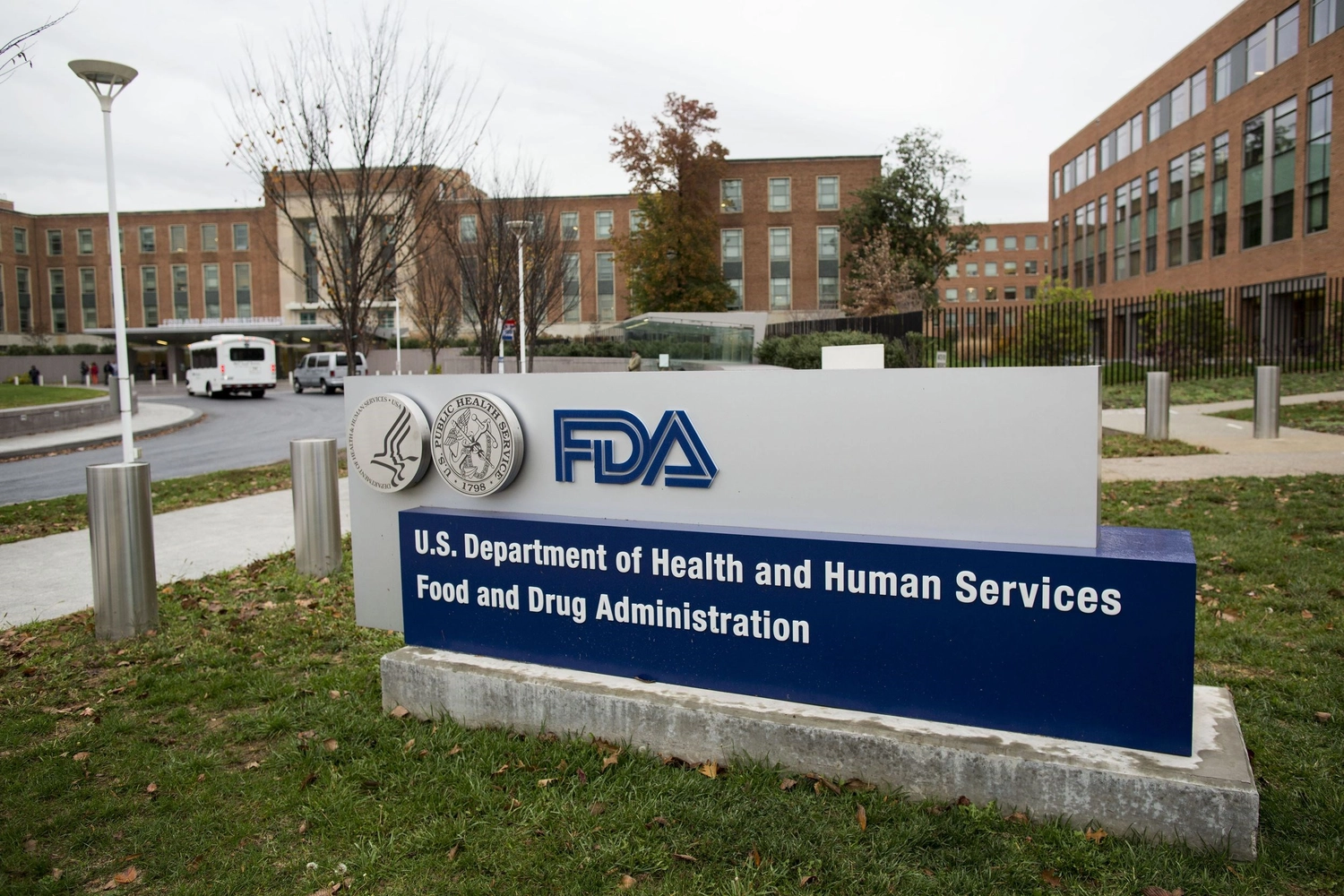
U.S. FDA to Roll Out AI Tools Across All Centers Following Successful Pilot

The U.S. Food and Drug Administration (FDA) announced it will immediately begin deploying artificial intelligence tools internally across all of its centers, with full integration expected by June 30. The move follows a successful generative AI pilot aimed at supporting scientific reviewers in accelerating the drug review process.

WHY IT MATTERS:
The FDA typically has 6 to 10 months to evaluate a drug approval application. The newly tested generative AI tools are designed to ease the burden on scientists by automating repetitive and time-consuming tasks, thereby streamlining the overall review process and potentially speeding up access to life-saving treatments.

In a statement, the agency emphasized that the focus of future AI enhancements would be on usability, better document integration, and center-specific output customization — all while upholding strict data security and FDA compliance standards.

KEY QUOTE:
Future enhancements will focus on improving usability, expanding document integration and tailoring outputs to center-specific needs, while maintaining strict information security and compliance with FDA policy,” the FDA said.

CONTEXT:
The announcement comes just a day after Wired reported that the FDA had been in discussions with OpenAI, the maker of ChatGPT, regarding potential AI collaborations. The report also mentioned that representatives from Elon Musk’s Department of Government Efficiency had attended multiple meetings with both the FDA and OpenAI in recent weeks.

WHAT’S NEXT:
The FDA plans to monitor the system’s performance closely, solicit feedback from its users, and refine the tools accordingly. The agency has committed to releasing more information about the AI implementation and its outcomes in June.

This marks one of the most significant government-level adoptions of generative AI to date and could signal a broader shift toward AI-assisted regulatory workflows in the healthcare and pharmaceutical sectors.


Match Group’s Paying Users Decline Despite Beating Estimates; Workforce Cuts Announced

Match Group, the parent company of Tinder, Hinge, and OkCupid, reported a 5% drop in paying users for Q1 2025, signaling ongoing struggles in the online dating industry and prompting a 7% decline in its share price despite surpassing revenue expectations.

The total number of paying users declined to 14.2 million from 14.9 million year-on-year, underscoring concerns about user engagement and monetization in a market affected by inflation, stagnation in app innovation, and shifting consumer behaviors. While the company forecasted a stronger-than-expected revenue range of $850 to $860 million for Q2, the fall in core paying user metrics prompted a cautious investor response.

In a significant operational move, Match announced it will lay off 13% of its workforce — its first major restructuring under new CEO Spencer Rascoff, who took over in February with a mandate to revive growth and address cost inefficiencies.

The underperformance in payers, despite a healthy revenue forecast, raises long-term questions about Match’s ability to drive engagement,” noted Chandler Willison, research analyst at M Science. Match’s Q1 revenue came in at $831 million, down 3% year-on-year, but still above the $827.5 million forecast by analysts.

The broader online dating sector appears to be in a transitional phase. Rival Bumble also reported a 7% drop in Q1 revenue this week, in line with market expectations, further reflecting the headwinds facing the industry.

Both Match and Bumble are turning to artificial intelligence to regain traction, with AI-powered discovery features and personalized matchmaking tools in development. Analysts see product innovation as a key lever for rekindling user interest and restoring growth.

Activist investors have been urging Match to reconsider its capital strategy and push for a strategic review of its MG Asia unit. These pressures, combined with weaker user metrics, suggest continued volatility ahead unless user engagement can be meaningfully revived.

Coinbase Acquires Deribit for $2.9 Billion to Expand Crypto Options Reach

Coinbase, the largest publicly traded cryptocurrency exchange, announced a $2.9 billion acquisition of Deribit, a leading crypto derivatives platform, as it looks to strengthen its position in global crypto options trading and cater to a growing base of institutional and advanced retail investors.

The deal, comprising $700 million in cash and 11 million shares of Coinbase’s Class A stock, marks a strategic expansion beyond the U.S. and into derivatives-heavy markets such as Asia and Europe, where leveraged trading is more common. Deribit, known for its dominant role in crypto options, will provide Coinbase with a significant foothold in these international markets.

According to analysts, the acquisition positions Coinbase to benefit from the increasing demand for options as a hedging tool—especially during market volatility—while also opening doors for regulatory-compliant expansion should the U.S. legalize crypto options and perpetuals trading domestically.

This acquisition gives Coinbase a real chance to become the go-to platform for derivatives trading in crypto globally,” said Bo Pei of US Tiger Securities. He added that the move reflects a broader trend of U.S.-based firms consolidating market share and scaling into more sophisticated financial products.

Coinbase has already seen record growth in both consumer and institutional derivatives volumes in the last quarter, even though it’s still in the early stages of the derivatives business. Its stock rose 5.7% on the announcement, partially recovering from a 21% decline earlier in 2025. The company is scheduled to report its Q1 earnings after Thursday’s market close.

The move also comes amid renewed political and regulatory interest in crypto. Former President Donald Trump has recently pledged to make the U.S. a global leader in digital assets, a stance that has encouraged optimism among crypto companies and investors alike.

Other firms are also making bold plays: Ripple recently acquired Hidden Road for $1.25 billion, and Kraken bought NinjaTrader for $1.5 billion to expand into retail futures. Analysts expect more consolidation ahead, with U.S. firms likely leading the wave.

Coinbase’s acquisition of Deribit may serve as a milestone in reshaping the competitive landscape of the crypto derivatives market — potentially giving it a long-term edge as global regulations evolve.