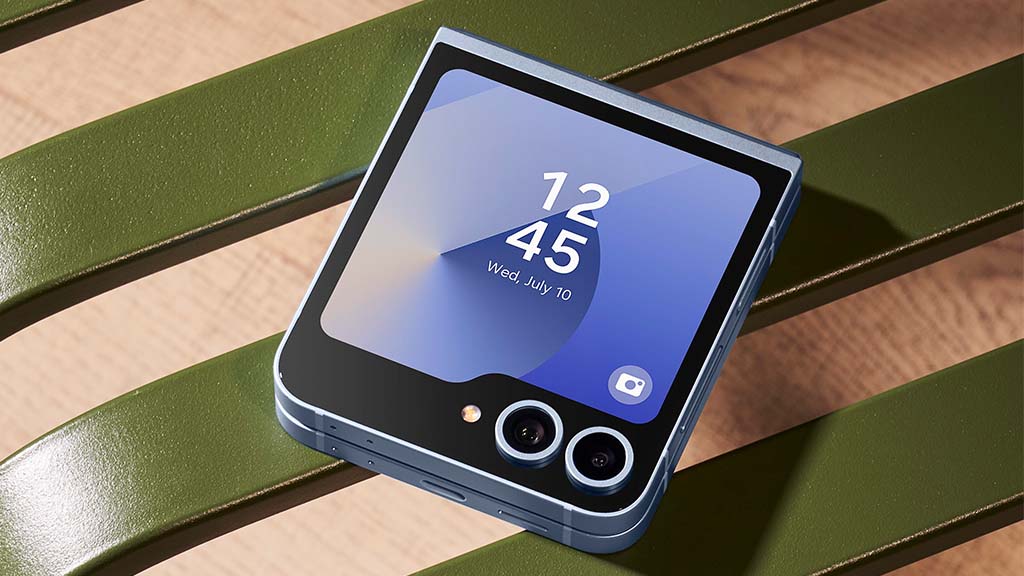
Samsung Galaxy Z Fold 7 and Z Flip 7 Expected to Begin Mass Production in May, Tri-Fold Model Likely to Debut Later

Samsung is gearing up for the official launch of its much-anticipated Galaxy Z Fold 7 and Galaxy Z Flip 7, expected to be unveiled during the company’s second Galaxy Unpacked event in July 2025. While Samsung has yet to officially confirm the details of these devices, a recent report from South Korea suggests that the foldable smartphones are progressing on schedule. According to the report, mass production of both models is slated to begin in May, which points to a timely release in the second half of the year.

The report, sourced from South Korean outlet The Bell, reveals that Samsung Display has already started manufacturing the foldable OLED panels for both the Z Fold 7 and Z Flip 7. The front-end manufacturing process for these foldable panels is said to follow a similar method to that of traditional mobile OLEDs. However, the back-end process, which involves assembling and finishing the panels, differs slightly and takes place at a Samsung facility in Bac Ninh, Vietnam. Once the panels are completed, they will be sent to Samsung Electronics’ local production factory for further assembly into the foldable devices.

In addition to the Z Fold 7 and Z Flip 7, Samsung is also expected to announce a tri-fold smartphone later in 2025. This new device is likely to debut in the fourth quarter of the year, alongside a budget-friendly version of the Galaxy Z Flip. The anticipated Galaxy Z Flip FE, as it’s rumored to be called, is expected to cater to consumers who want the foldable experience at a more affordable price point. These devices, including the tri-fold, were initially expected to launch alongside the main foldable lineup in July but are now reportedly scheduled for a later debut.

Samsung’s focus on foldable technology is evident as they continue to innovate within this niche, pushing forward with advancements in both design and functionality. The Galaxy Z Fold 7 and Galaxy Z Flip 7 are likely to build upon the success of their predecessors, offering refined features and enhanced durability. Meanwhile, the introduction of a tri-fold phone could mark a new era for foldable smartphones, offering users a unique and versatile form factor that further differentiates Samsung’s devices from other foldable options on the market.


Android 16 Beta 4 Update Brings New Clock Font and Dynamic AOD Colours to Pixel Devices

The recent release of Android 16 Beta 4, which came out last Thursday, introduced several bug fixes for Pixel devices, but it also brought some subtle changes to the user interface. One of the most noticeable tweaks involves the clock font in the Pixel’s status bar. While the general look remains the same, there are minor adjustments to the font, including wider spacing between the numbers and a slight change in the height of the characters. These adjustments might not be immediately obvious to users, but they offer a more refined look for the time display on the Pixel’s status bar.

According to reports, the Android 16 Beta 4 update was specifically noticed on the Pixel 9, where the clock’s appearance was modified. The number “0” is now narrower compared to the previous beta, and the spacing between the “1” and “2” appears to have widened. While these changes affect the clock’s font, it appears that the battery icon and other status bar elements remain unchanged. This indicates that Google is refining the aesthetic of the clock without altering the entire status bar UI, maintaining consistency across the screen.

In addition to the clock changes, Android 16 Beta 4 also brings a refreshing update to the Always-On Display (AOD) clocks. Previously, the clocks had thin white outlines, but with this update, the outlines are now dynamically colored. This change introduces more vibrant customization, allowing for a more personalized aesthetic depending on the user’s wallpaper and theme. The AOD now offers a more visually engaging experience, with the dynamic color feature adding a modern touch to the always-on display.

These UI tweaks in Android 16 Beta 4 might seem small, but they contribute to a more polished and customizable user experience on Pixel devices. While the update primarily focuses on under-the-hood bug fixes, these visual enhancements show that Google is also paying attention to the finer details, improving both functionality and design aesthetics for its users. As more beta updates are released, it’s likely that we will see additional refinements to the UI, further shaping the overall Android experience for Pixel users.

OpenAI’s o3 AI Model Fails to Meet Benchmark Expectations in FrontierMath Test

OpenAI’s recently released o3 artificial intelligence model is facing scrutiny after its performance on the FrontierMath benchmark test fell short of the company’s initial claims. Epoch AI, the creator of the FrontierMath benchmark, revealed that the publicly available version of o3 scored only 10 percent on the test, which is significantly lower than the 25 percent score claimed by OpenAI’s chief research officer, Mark Chen, at the model’s launch. While this discrepancy has raised questions among AI enthusiasts, it does not necessarily suggest that OpenAI misrepresented the model’s capabilities. The difference in performance can likely be attributed to the varying compute resources used for testing and the fine-tuning of the commercial version of the model.

OpenAI first introduced the o3 AI model in December 2024 during a livestream, where the company boasted about its improved capabilities, especially in reasoning-based tasks. One of the primary examples used to highlight o3’s potential was its performance on the FrontierMath benchmark, a difficult test designed to evaluate mathematical reasoning and problem-solving skills. The test, developed by over 70 mathematicians, is considered tamper-proof and features problems that are new and unpublished. At the time of the launch, Chen claimed that o3 had set a new record by achieving a 25 percent score on this challenging test, a remarkable feat compared to the previous highest score of 9 percent.

However, following the release of the o3 and o4-mini models last week, Epoch AI conducted their own evaluation and posted their findings on X (formerly Twitter), stating that the o3 model scored only 10 percent on FrontierMath, making it the highest score among publicly available models. Despite this, the 10 percent result still stands out as impressive, but it is less than half of what OpenAI originally suggested. This has sparked debate within the AI community regarding the reliability of benchmark scores and the accuracy of OpenAI’s initial claims.

It’s important to note that the difference in performance does not imply any intentional deception on OpenAI’s part. It’s likely that the internal version of the o3 model used higher computational resources to achieve its claimed 25 percent score, while the publicly available version was optimized for power efficiency, potentially sacrificing some performance in the process. This discrepancy highlights the challenges AI companies face when balancing model performance with practical deployment constraints, such as power consumption and resource utilization, in commercial versions of their models.