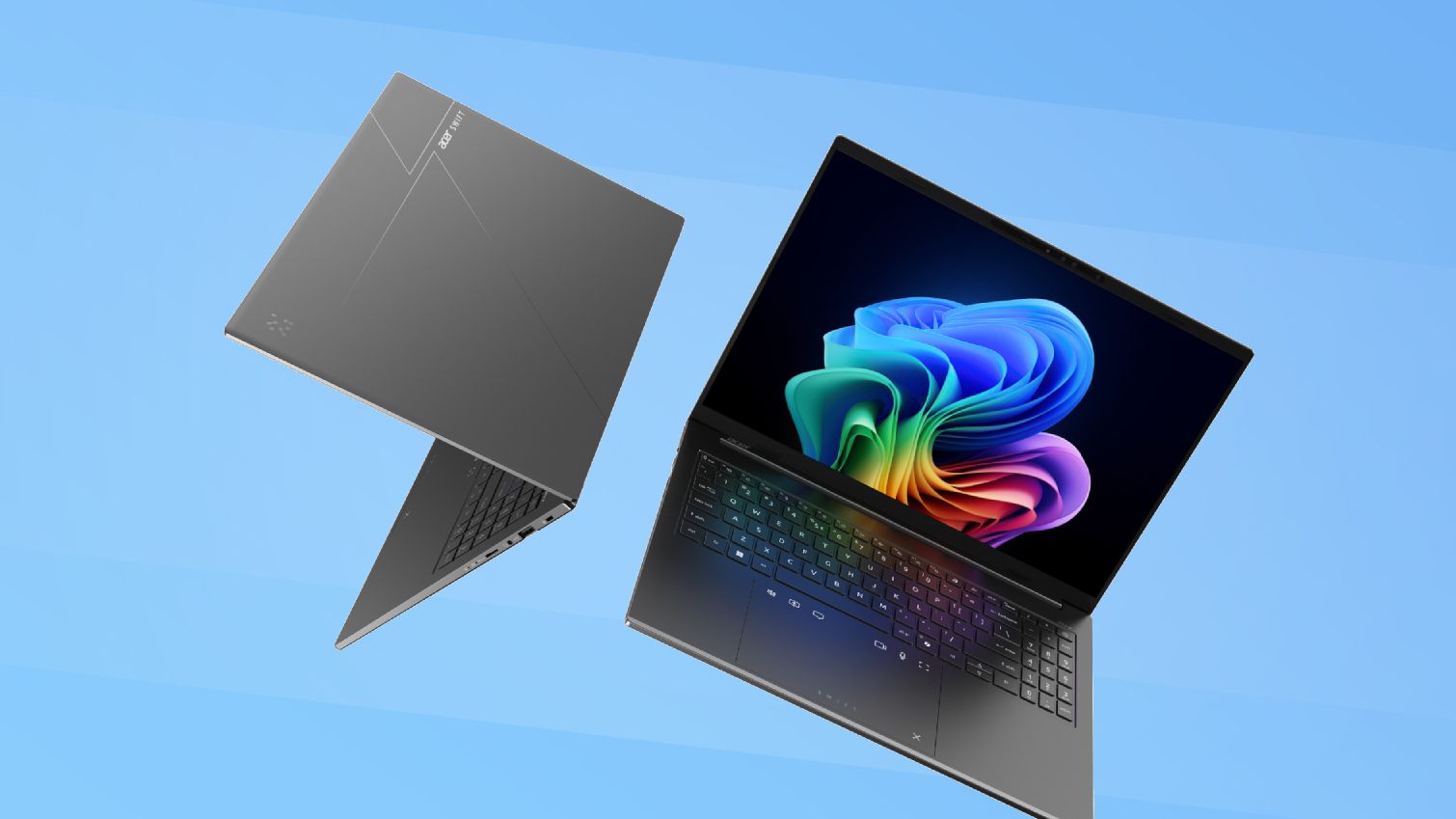
Acer Unveils Swift Go 14, Go 16, and Edge 14 AI-Powered Copilot+ Laptops at Computex 2025

Acer Launches Copilot+ AI Laptop Lineup at Computex 2025

At Computex 2025 in Taiwan, Acer unveiled a trio of AI-powered laptops under its Copilot+ PC series: the Swift Go 14 AI, Swift Go 16 AI, and Swift Edge 14 AI. Designed with portability and performance in mind, these laptops feature Intel’s latest Core Ultra 9 processors and focus on integrating artificial intelligence capabilities into everyday computing. The Swift Go models boast sleek, thin-and-light designs enhanced by an improved Acer Multi-Control Touchpad, while the Swift Edge 14 AI impresses with a 14-inch 3K OLED display covered in Corning Gorilla Matte Pro for added durability.

Acer has confirmed pricing and availability across Europe, the Middle East, and Africa (EMEA). The Swift Edge 14 AI will retail starting at EUR 1,599 (approximately Rs. 1,54,000) and will be available in a single Pearl White variant beginning in June. Meanwhile, the Swift Go 16 AI in Titanium Grey and the Swift Go 14 AI in Steam Blue will be priced at EUR 1,299 and EUR 1,199, respectively, with regional rollouts scheduled for August and July.

In terms of specifications, the Swift Go 14 AI features a 14-inch WUXGA OLED display, while the Go 16 AI sports a larger 16-inch 2K WUXGA+ screen. Both offer a 16:10 aspect ratio, VESA DisplayHDR TrueBlack 500 certification, Eyesafe 2.0 compliance, and 100% DCI-P3 color gamut coverage. Designed for portability, they measure just 15.9mm thick, with weights of 1.39kg and 1.6kg. Performance is driven by up to an Intel Core Ultra 7 258V processor, paired with Intel’s Core Ultra Boost NPU, delivering up to 47 TOPS of AI computing power, and supported by up to Intel Arc Graphics 140V.

The Swift Go series also packs up to 32GB of LPDDR5x RAM and up to 2TB of PCIe Gen4 NVMe SSD storage. Connectivity includes Wi-Fi 7, Bluetooth 5.4, multiple USB-C and USB 3.2 Gen 2 ports, HDMI, and a microSD card reader. Security and convenience features include a 1080p IR camera with Windows Hello, a privacy shutter, Kensington lock support, backlit keyboard, a 180-degree hinge, and an activity indicator built into the touchpad.


AI Takes Center Stage at Microsoft’s Developer Conference Amid Profit Push

Microsoft’s Developer Conference Highlights AI Strategy and Profit Goals

Microsoft kicked off its annual developer conference in Seattle on Monday, gathering thousands of software developers eager to transform the company’s extensive artificial intelligence investments into tangible, revenue-generating tools. The focus of this year’s event is squarely on monetizing AI—turning years of research and infrastructure development into products and services for both consumers and enterprises.

The tech giant, based in Redmond, Washington, has already invested a staggering $64 billion this year—much of it funneled into data centers that support AI-powered features like Copilot, which is integrated into Microsoft 365 applications. Its deep partnership with OpenAI, the creator of ChatGPT, remains central to its strategy, even as the dynamics of that relationship begin to shift.

There are growing indications that Microsoft is recalibrating its role in the AI ecosystem. Despite its close ties with OpenAI, Microsoft recently allowed the AI firm to collaborate with Oracle on the ambitious “Stargate” data center project in Texas. This move suggests Microsoft is positioning itself more as a platform provider—a “neutral arms dealer” in the intensifying AI race—rather than maintaining exclusive strategic control.

CEO Satya Nadella has also emphasized efficiency, stating that once an AI algorithm is refined, performance improvements can drive down computing costs significantly—up to tenfold. This efficiency is key as demand for AI services hosted on Microsoft’s Azure cloud continues to rise. According to Cantor Fitzgerald analyst Thomas Blakey, Microsoft is increasingly retaining AI services within its own data centers, giving it tighter control over cost, performance, and profitability.

Uber Integrates Delhi Metro Ticketing into App, Expands Plans for More Cities and B2B Logistics

Uber Launches Metro Ticketing on App with Delhi Metro Integration via ONDC

Uber has announced the launch of metro ticketing on its platform, beginning with Delhi Metro, in partnership with the Open Network for Digital Commerce (ONDC). This marks Uber’s first integration with India’s digital public infrastructure, aiming to provide a more connected and seamless experience for urban commuters. Users in Delhi can now plan and pay for metro rides directly through the Uber app, streamlining the multimodal travel experience.

The integration is part of a broader initiative, with Uber confirming that three additional cities across India will be brought onto the platform in 2025. In addition to expanding metro ticketing, the company also revealed plans to launch a B2B logistics solution powered by the ONDC network. This service will enable businesses to book on-demand delivery services from Uber’s logistics network without the need to maintain their own fleets.

This latest move builds on a Memorandum of Understanding (MoU) signed in 2024 during Uber CEO Dara Khosrowshahi’s visit to India. At the time, Uber committed to working closely with ONDC to help scale India’s digital public goods. “Today’s launch is a tangible realization of that commitment,” the company said in a statement, emphasizing its goal of making urban mobility more inclusive, sustainable, and seamlessly integrated.

Commenting on the development, Uber’s Chief Technology Officer, Praveen Neppalli Naga, highlighted the significance of collaborating with ONDC, calling India’s digital public infrastructure a leap forward in population-scale technology. Vibhor Jain, Acting CEO and COO of ONDC, welcomed Uber’s participation, stating that it represents a major step toward expanding trusted and interoperable digital access in India. He added that this collaboration opens new avenues for multimodal transport and a more unified logistics framework across the country.