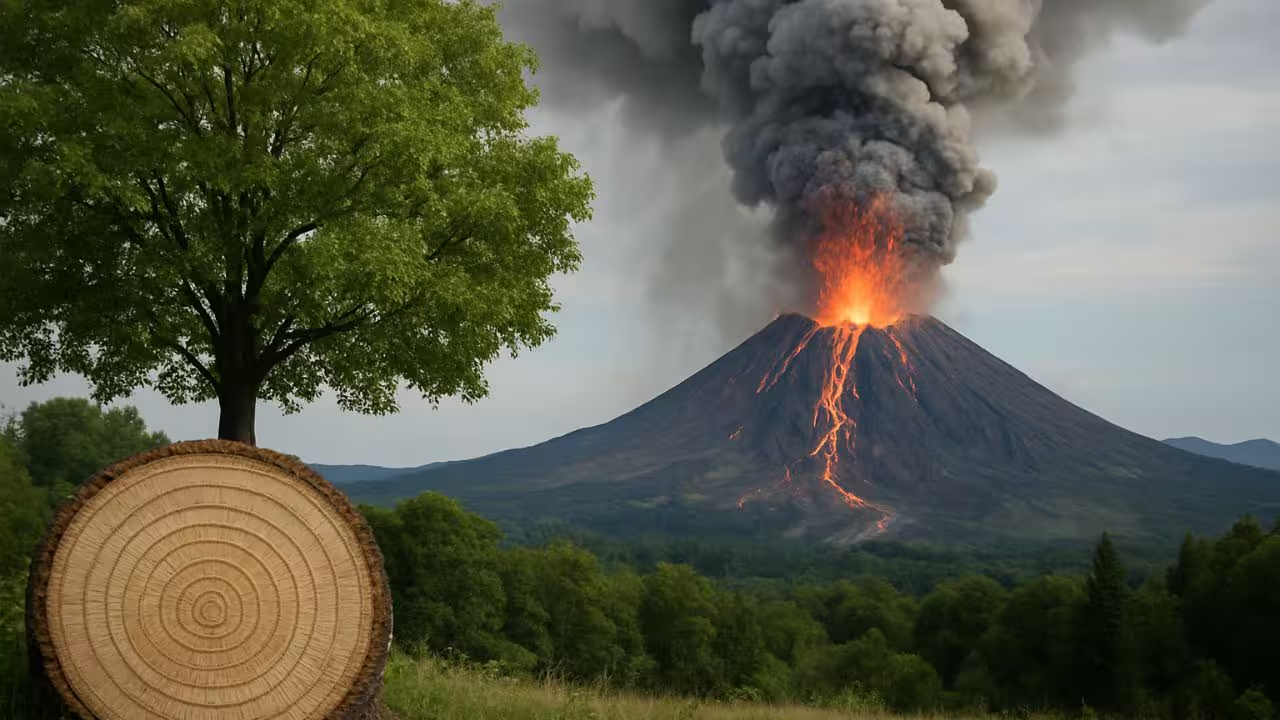
NASA Satellite Identifies Tree Leaf Variations as Potential Early Indicator of Volcanic Eruptions

NASA scientists are exploring a novel method to predict volcanic eruptions by observing how trees respond to underground volcanic activity from space. In collaboration with the Smithsonian Institution, researchers have found that tree leaves tend to grow lusher and greener when volcanic carbon dioxide seeps through the soil, signaling magma movement beneath the surface. This natural reaction offers a promising early warning sign, potentially visible via satellites like Landsat 8 and recent missions such as AVUELO, providing an additional tool to monitor high-risk volcanoes worldwide.

According to research from NASA’s Earth Science Division at Ames Research Center, the greening of vegetation is triggered when trees absorb volcanic carbon dioxide released as magma pushes upward. Unlike sulfur dioxide, which appears later in volcanic activity and is easier to detect, carbon dioxide emissions are more challenging to observe directly from orbit. However, the indirect effect on vegetation health serves as a valuable clue to detect early stages of volcanic unrest.

Volcanologist Florian Schwandner highlights that these subtle changes in vegetation can complement existing early warning systems, particularly in remote or dangerous volcanic regions. Since on-site gas measurements can be risky and expensive, scientists like Robert Bogue and Nicole Guinn have begun investigating how tree leaf characteristics might serve as natural indicators of underground volcanic processes. Guinn’s studies around Mount Etna in Sicily demonstrated a strong link between leaf color shifts and subterranean volcanic gas emissions, with satellites like Sentinel-2 and Terra able to capture these vegetative changes effectively.

To validate this approach further, NASA and Smithsonian teams, led by climate scientist Josh Fisher, conducted fieldwork in early 2025 near active volcanoes in Panama and Costa Rica. They collected tree samples and measured gas levels to better understand the connection between vegetation response and volcanic activity. This interdisciplinary research not only aims to improve volcanic eruption forecasting but also promises insights into how long-term exposure to atmospheric carbon dioxide affects trees—information crucial for anticipating future climate dynamics.
Russian Scientists Identify 11 New Active Galactic Nuclei Through Spektr-RG X-ray Survey

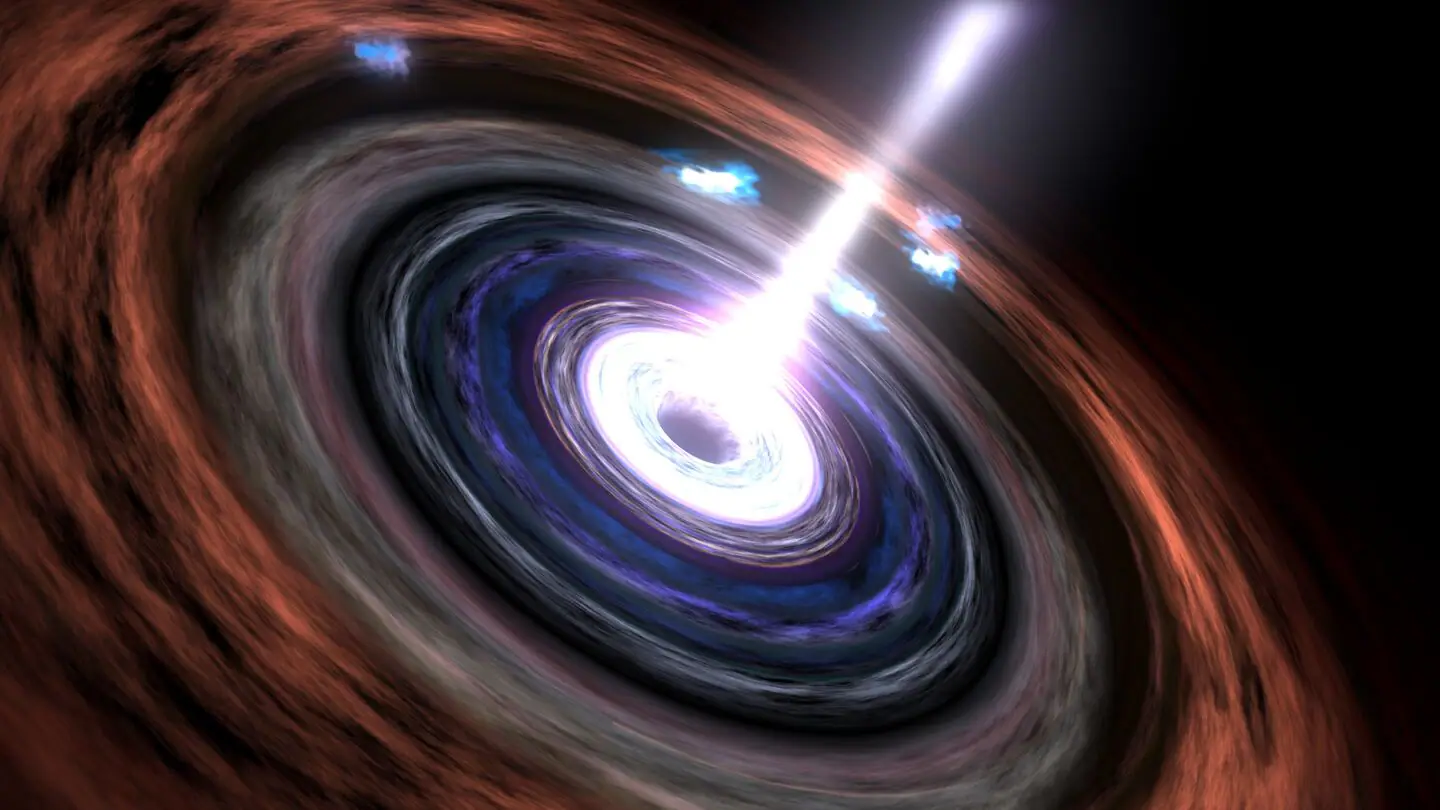
A recent survey by researchers from the Russian Academy of Sciences has led to the discovery of 11 new active galactic nuclei (AGNs) through the all-sky X-ray source observations conducted with the ART-XC telescope aboard the Spektr-RG (SRG) space observatory. Led by Grigory Uskov, the team has so far identified over 50 AGNs and several cataclysmic variables, contributing significantly to our understanding of these energetic cosmic objects. The discovery of these new AGNs provides valuable data for further research, including statistical analysis, testing cosmological models, and improving classification methods.

The newly detected AGNs, cataloged in ARTSS1-5, have been classified as Seyfert galaxies, a well-known subtype of AGNs. Among them, seven are type 1 Seyferts (Sy 1), three are type 1.9 (Sy 1.9), and one is type 2 (Sy 2). Seyfert galaxies are characterized by their luminous cores powered by supermassive black holes accreting matter. These galaxies emit strong electromagnetic radiation, especially in infrared and optical bands, and are key to understanding the nature of AGN activity due to their relatively moderate luminosities compared to quasars.

According to the study published in Astronomy Letters, the 11 AGNs are located at relatively close cosmic distances, with redshifts ranging from 0.028 to 0.258. Their X-ray luminosities vary widely, spanning from 2 to 300 tredecillion erg per second, which fits within the typical luminosity range for active galactic nuclei in the current universe. One particularly interesting source, SRGA J000132.9+240237, exhibits an X-ray spectrum with a power-law slope less than 0.5, indicating strong absorption and a significant reflection component from the galaxy’s surrounding dusty torus.

The researchers emphasize the need for longer and more detailed X-ray observations to fully understand the physical properties of these newly found AGNs. Such studies could shed light on the interaction between supermassive black holes and their host galaxies, the structure of the obscuring material around them, and their role in galaxy evolution. This ongoing work by the Russian team enhances our ability to map the high-energy universe and explore the extreme environments near supermassive black holes.

Antarctica Shows Short-Term Ice Growth Despite Ongoing Long-Term Melting, New Research Finds

Researchers from Tongji University in Shanghai have released new findings about Antarctica’s ice sheet, revealing an intriguing yet complex picture of the continent’s recent ice changes. Using over two decades of NASA satellite data, the study highlights that despite ongoing global warming, Antarctica has actually gained ice mass in the past few years. However, this short-term increase does not overturn the long-term trend of substantial ice loss, emphasizing that the recent gains are largely due to increased precipitation rather than a true reversal in climate change impacts.

The study leverages data from NASA’s Gravity Recovery and Climate Experiment (GRACE) and its successor, GRACE Follow-On satellites, which have monitored Antarctic ice since 2002. Over this period, the ice sheet initially experienced steady ice loss, which accelerated notably between 2011 and 2020—from about 81 billion tons of ice lost annually in the early 2000s to approximately 157 billion tons per year during the last decade. Surprisingly, from 2021 through 2023, the trend shifted with Antarctica gaining around 119 billion tons of ice each year. This turnaround was especially visible in four glaciers in eastern Antarctica, which shifted from losing ice rapidly to gaining mass.

While the recent increase in ice mass offers a glimmer of hope, scientists caution against interpreting it as a sign that global warming effects have been reversed. Climate change impacts are uneven across the globe, and Antarctica’s climate system is complex, influenced by localized factors such as precipitation patterns. The researchers stress that increased snowfall, which adds ice mass, is currently masking the broader warming-driven ice losses seen over the last two decades. This underscores the importance of viewing Antarctica’s ice changes as part of a nuanced and evolving climate system.

In a broader context, Antarctica has historically shown more stable temperatures compared to the Arctic, which has warmed more rapidly. Similarly, Antarctic sea ice has remained relatively stable but has started to show signs of decline in recent years. These patterns highlight how climate change impacts vary by region and reinforce the need for continued monitoring of polar ice. The study from Tongji University contributes vital insights, demonstrating that while short-term variability in ice mass exists, the long-term implications of warming remain a significant concern for the global climate system.