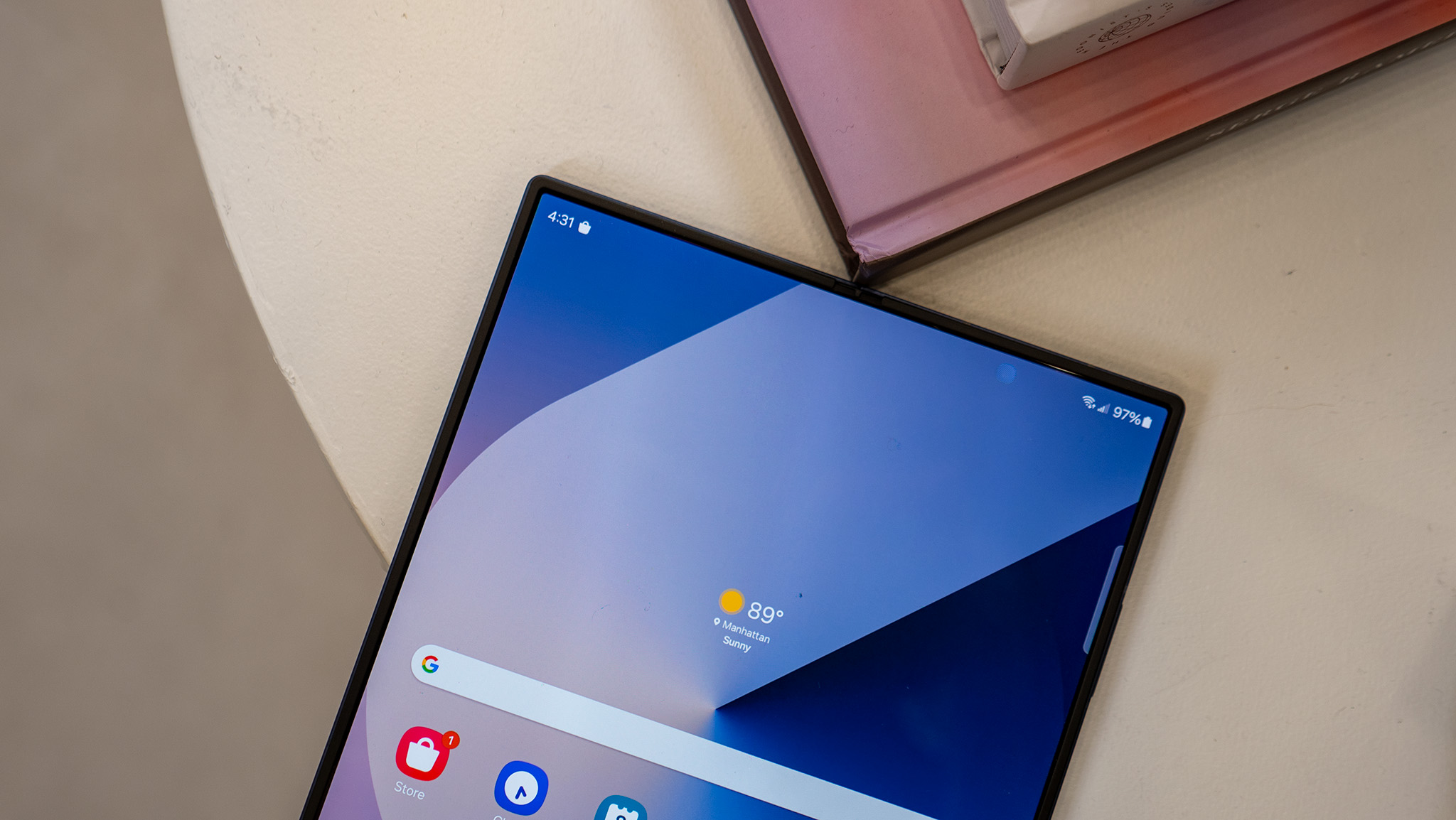
Leaked Render Reveals Detailed Rear Design of Samsung Galaxy Z Fold 7

Samsung’s Galaxy Z Fold 7 is expected to make its debut in July during the company’s second Galaxy Unpacked event of 2025, where it will likely be joined by the Galaxy Z Flip 7. While Samsung has not officially confirmed the phone yet, leaks and rumors continue to surface, gradually revealing more about the device. Recently, a leaked render has provided the first clear glimpse of the Galaxy Z Fold 7’s rear design, following earlier leaks that disclosed its dimensions.

The leaked image, originally posted on the Chinese social platform Weibo, was quickly taken down but not before tipsters captured screenshots that have since circulated widely online. This render offers a close-up view of the phone’s back, showing a vertically aligned triple camera setup. The design appears to follow the aesthetic of its predecessor, with subtle refinements rather than a complete overhaul, reinforcing expectations that Samsung is opting for evolutionary improvements this year.

Notably, the leaked image highlights a repositioned flash next to the camera module, which aligns with previous rumors of a major camera upgrade for the Galaxy Z Fold 7. Industry insiders speculate that this could indicate the presence of a larger main sensor, possibly a groundbreaking 200-megapixel camera, which would mark a significant enhancement in mobile photography for Samsung’s foldable lineup.

While the phone shown in the render looks like a prototype or dummy unit rather than a final production model, the leak offers valuable clues about what to expect from the upcoming foldable flagship. As Samsung prepares for its Galaxy Unpacked event, anticipation continues to build around the device’s potential innovations, especially in terms of camera technology and design refinement.

OnePlus Ace 5 Ultra to Feature 50MP Sony IMX906 as Main Camera: Official Confirmation

OnePlus is gearing up for the launch of its highly anticipated Ace 5 Ultra and Ace 5 Racing Edition in China on May 27. The company has been steadily teasing key specifications of these new devices, building excitement ahead of the unveiling. Both models will be powered by the MediaTek Dimensity 9400 series chipsets and will run on the latest Android 15-based ColorOS 15, promising a smooth and efficient user experience.

A major highlight of the OnePlus Ace 5 Ultra is its camera system. OnePlus recently confirmed via a Weibo post that the device will feature a 50-megapixel Sony IMX906 primary sensor, measuring 1/1.56 inches. The company touts this camera’s ability to capture “shadowless” images, suggesting improved clarity with minimal motion blur, an essential feature for sharper photos. Additionally, the camera will support Live Photos, allowing users to capture moments with subtle motion effects.

The Ace 5 Ultra will also impress with its display and battery capabilities. It will sport a large 6.83-inch flat 1.5K resolution screen (1,272×2,800 pixels) that supports a high 144Hz refresh rate, 3,840Hz PWM dimming, HDR10+, HDR Vivid, and Dolby Vision. The display will include hardware-level low blue light filtering and TÜV Rheinland Eye Protection 4.0 certification, designed to reduce eye strain during prolonged use. Powering the device is a massive 6,700mAh battery, which supports 100W wired fast charging and bypass charging to maintain battery health.

OnePlus has also focused on performance and design, equipping the Ace 5 Ultra with a “glacier cooling system” to manage heat during intensive use. The phone will be available in multiple RAM and storage configurations, including 12GB + 256GB, 16GB + 256GB, 12GB + 512GB, 16GB + 512GB, and a top-tier 16GB + 1TB option. Buyers will have a choice of three colors: Breeze Blue, Burning Titanium, and Phantom Black, catering to diverse aesthetic preferences.

Apple Plans to Release AI-Powered Smart Home Hub with Integrated Camera by Year-End: Gurman

Apple has been the subject of ongoing rumors about a revolutionary smart home device featuring a robotic arm that can move around a user’s desk. While this innovative tabletop gadget has captured attention, it appears that Apple may first release a more affordable, scaled-down version of the device before unveiling the high-end model. According to a reliable industry insider, this lower-end smart home hub is expected to launch by the end of the year and will include a tablet-like display, a built-in camera, and integration with Apple Intelligence, along with a new operating system designed specifically for smart home control.

Bloomberg journalist Mark Gurman shared insights into Apple’s ambitious plans, revealing that the original high-end smart home hub, codenamed J595, is envisioned as an AI-centric device featuring a screen size comparable to an iPad and a robotic arm capable of moving around a desk. Apple reportedly intends to give the device a “unique AI personality,” making it a more interactive and intelligent companion. However, delays have pushed back the release of this flagship device, impacting Apple’s original timeline.

Despite these setbacks, Apple’s commitment to the smart home market remains strong. Gurman reports that a more modest version of the device, with the codename J490, is now slated for release by year-end. This model will have a 7-inch square-shaped screen, resembling a compact iPad, and will include a camera, internal speakers, and a built-in battery for flexible placement. Designed as an AI-powered wall tablet, it will allow users to interact through a touch interface that blends elements from watchOS and the iPhone’s Standby mode, creating a user-friendly and seamless experience.

The introduction of this smart home hub will also mark the debut of Apple’s new operating system, homeOS, dedicated to managing smart home devices more intuitively. By combining hardware innovation with AI-powered software, Apple aims to strengthen its foothold in the growing smart home market. This launch could serve as a precursor to more advanced devices in the future, setting the stage for a new era of intelligent home automation under Apple’s ecosystem.