U.S. Nears Deal to Allow UAE Import of 500,000 Nvidia AI Chips Annually Starting 2025

The United States is moving toward a landmark agreement with the United Arab Emirates (UAE) that would allow the import of 500,000 of Nvidia’s most advanced AI chips per year, starting in 2025, according to two sources familiar with the matter. The draft deal, still under negotiation, could significantly boost the UAE’s ambitions to become a global AI hub and represents a strategic shift in U.S. technology export policy.

Under the current version of the agreement:

  • 100,000 chips per year (20%) would be allocated to G42, a major UAE tech firm backed by Abu Dhabi’s sovereign wealth fund Mubadala and chaired by national security adviser Sheikh Tahnoon bin Zayed Al Nahyan.

  • The remaining 400,000 chips would go to U.S. tech giants like Microsoft and Oracle, which are expected to build or expand data centers in the UAE.

The deal could triple or quadruple the AI computing power previously accessible to the UAE under Biden-era restrictions. However, one source noted that the agreement has encountered growing opposition in Washington in recent days, particularly over concerns the chips might eventually benefit China or other adversarial actors.

Strategic and Political Implications:

  • The deal would elevate the Gulf region, especially the UAE, as a third major AI power center alongside the U.S. and China.

  • The agreement reportedly includes a reciprocal clause: for every AI facility G42 builds in the UAE, it must construct a similar one in the U.S., promoting bilateral infrastructure investment.

  • The definition of what constitutes an “advanced AI chip” (e.g., Nvidia’s Blackwell or future Rubin GPUs) will be established later by a dedicated working group, which will also set security parameters.

Trump and Gulf AI Expansion:

Coinciding with the deal, former U.S. President Donald Trump, during his tour of the Gulf this week, announced $600 billion in tech commitments from Saudi Arabia, including chip deals with Nvidia, AMD, and Qualcomm. The Trump administration also plans to rescind Biden-era AI chip export restrictions, accelerating tech collaboration with Gulf nations.

Nvidia, G42, the White House, and the U.S. Commerce Department all declined to comment publicly. However, if finalized, the deal would mark one of the most significant U.S. AI technology transfers to the Middle East to date.
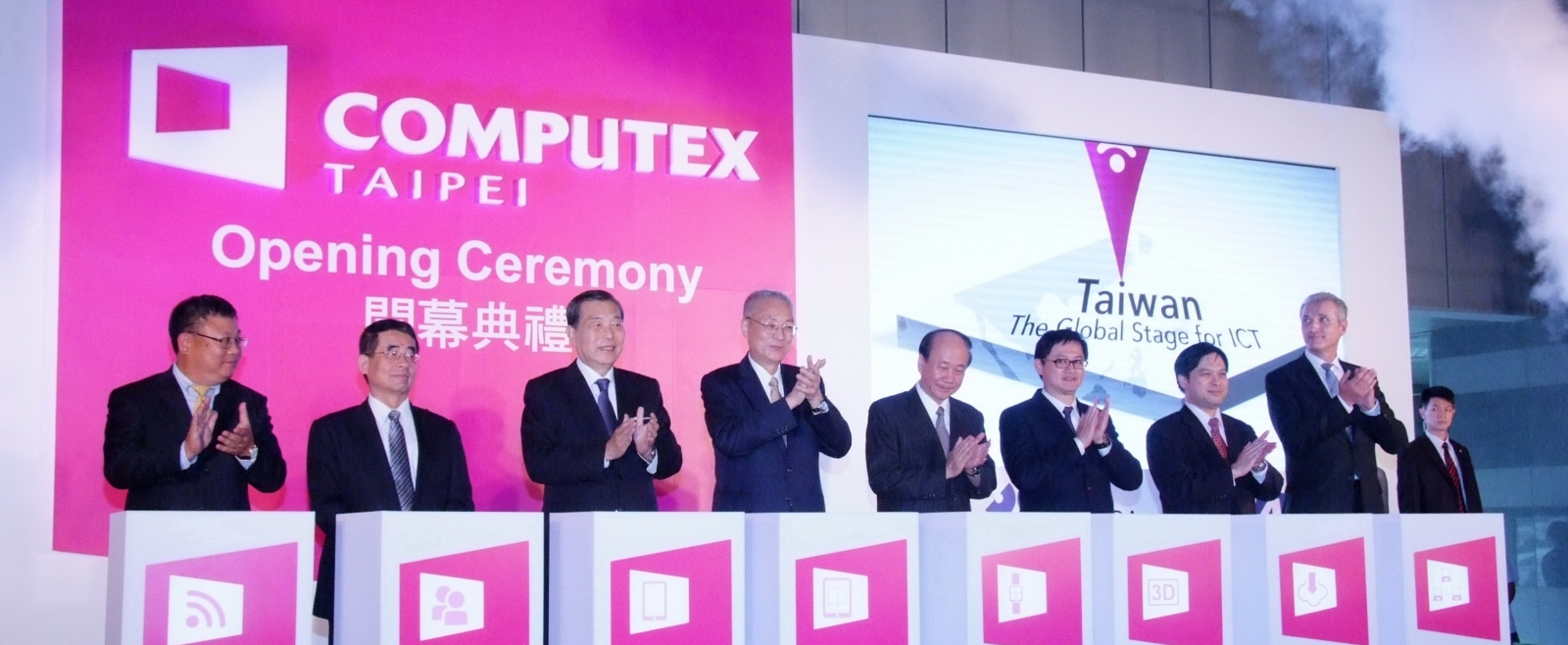

Computex 2024 to Spotlight AI Innovations, Nvidia’s Jensen Huang Takes Center Stage

Taiwan’s Computex trade show, set for May 20–23, will once again shine a spotlight on artificial intelligence, with Nvidia CEO Jensen Huang expected to headline the event. With 1,400 exhibitors lined up, this year’s focus extends beyond AI-powered devices to global economic shifts and the geopolitical implications of U.S. tariffs.

Huang, known for sparking “Jensanity” at last year’s event, will deliver the keynote speech Monday. He’s anticipated to announce expanded partnerships with leading Taiwanese AI server manufacturers like Foxconn and Quanta. Analysts believe Huang may also reference recent U.S. policy changes, including trade tariffs and the ongoing effort to reduce supply chain dependence on China.

Obviously, Nvidia relies a lot on the Taiwanese ecosystem to deliver,” said Ian Cutress, chief analyst at More Than Moore. Nvidia recently pledged to produce $500 billion worth of AI servers in the U.S. over the next four years, in collaboration with TSMC, Foxconn, and Wistron.

Other tech giants will also make major appearances:

  • Qualcomm will present developments in AI PCs.

  • MediaTek is set to unveil its strategy for edge and cloud AI.

  • AMD will showcase advancements in gaming and AI-powered personal computing.

  • Intel’s new CEO, Lip-Bu Tan, while skipping a public speech, will meet privately with key Taiwanese partners.

  • Advantech, a leader in industrial computing, returns after a decade to reveal new AI systems for business applications.

The event arrives amid concerns over tightened export controls on advanced AI chips to China and heightened pressure from the U.S. to relocate manufacturing stateside. These dynamics have shifted the industry’s focus from traditional B2C electronics to enterprise-level AI and industrial innovation.

Taiwan has also changed,” said Advantech Chairman K.C. Liu. “The industry has shifted toward AI. It’s no longer enough to focus solely on consumer goods.”

Computex 2024 is expected to serve not only as a showcase for the latest AI breakthroughs but also as a barometer of how companies are navigating complex global supply chains and political risks in the tech sector.

European Retailers Urge Crackdown on Visa and Mastercard Fees

Leading European retailers and e-commerce platforms have appealed to the European Commission to address what they describe as excessive and opaque fees imposed by Visa and Mastercard, alleging the charges undermine the EU’s competitiveness and hurt alternative payment systems.

In a letter dated May 13 and seen by Reuters, major industry groups such as EuroCommerce, Ecommerce Europe, and the European Digital Payments Industry Alliance — whose members include Aldi, Amazon, Carrefour, eBay, H&M, Ikea, and Marks & Spencer — asked EU regulators to intervene under antitrust rules. They claim Visa and Mastercard have increased their fees by nearly 34% between 2018 and 2022, with no corresponding improvements in service quality for merchants or consumers.

The retailers argue that the U.S. card giants dominate two-thirds of eurozone card payments and have created a complex, non-transparent fee system that hinders scrutiny or competition. The growing frustration over these practices has also revived interest in EU-backed alternatives like the digital euro, although progress on such initiatives remains slow.

Visa responded by defending its fee structure, saying it reflects high-value services such as fraud protection, operational reliability, and customer support. Mastercard did not issue a comment on the matter.

The letter was addressed to key EU officials, including antitrust chief Teresa Ribera, financial services commissioner Maria Luís Albuquerque, and economy chief Valdis Dombrovskis. The signatories are calling for:

  • Regulatory action under EU antitrust laws,

  • Revised interchange fee rules with price caps,

  • Mandatory transparency and non-discrimination rules for card schemes, and

  • A monitoring tool for regulators to oversee card network practices.

This latest appeal intensifies pressure on Brussels to tackle U.S. dominance in the EU payments sector and promote more equitable digital financial infrastructure across the continent.