
Hugging Face Unveils Free AI Agent Capable of Performing Digital Tasks Autonomously

Hugging Face has launched a new open-source AI tool called the Open Computer Agent, designed to autonomously perform various browser-based tasks. Released as a free demo, the tool is now publicly accessible through the Hugging Face website. The AI agent can navigate web platforms like Google Search, Google Maps, and even ticket booking sites to complete actions on behalf of the user — all without direct human input at each step. This development builds on Hugging Face’s smolagents framework, which was introduced earlier this year to facilitate lightweight autonomous agents.

Announced by Aymeric Roucher, Project Lead for Agents at Hugging Face, the Open Computer Agent is powered by a virtualized Linux environment and includes applications like Mozilla Firefox. This setup allows the AI agent to interact with the web as a human would — clicking, typing, and navigating through browser interfaces in real time. With its open-source foundation, the project invites developers, researchers, and enthusiasts to explore and expand its capabilities.

The intelligence behind the agent comes from the Qwen2-VL-72B, a powerful vision-language model capable of interpreting images and interfaces based on visual coordinates. This means the agent can “see” what’s on screen, make decisions, and perform follow-up actions like clicking buttons or typing search queries. Hugging Face’s smolagents library adds the logic layer that enables these autonomous interactions, forming the basis of the agentic workflow.

Users trying out the demo can instruct the agent to carry out tasks like finding directions using Google Maps. Once prompted, the agent launches a browser, navigates to the correct site, inputs the required information, and completes the task — all without the user having to touch their keyboard or mouse. With the release of the Open Computer Agent, Hugging Face continues its push toward more accessible and transparent AI tools, empowering the public to experiment with emerging forms of digital automation.

Sony Set to Reveal New Xperia Flagship Launch Event

Sony is preparing to unveil what could be its next flagship smartphone, the Xperia 1 VII, during a launch event. While the company has not officially confirmed the device name, strong hints from official promotions and multiple leaks point toward the successor to the Xperia 1 VI, which debuted in May 2024. This upcoming launch marks Sony’s continued commitment to its Xperia line, which caters to photography enthusiasts and fans of premium design in niche global markets.

In a recent announcement on X (formerly Twitter), Sony confirmed that the event will take place at 4am CEST (10pm IST) and will be streamed live on its official YouTube channel. The teaser image released by the company features the silhouette of a smartphone, strongly suggesting the focus of the event will be the Xperia 1 VII. Anticipation is high as Sony rarely releases multiple flagships annually, and each model tends to bring targeted improvements in imaging and display technology.

Adding to the speculation, a device believed to be the Xperia 1 VII recently appeared on benchmarking site Geekbench under the model number XQ-FS54. The listing suggests it will be powered by the Snapdragon 8 Gen 3 “Elite” chipset and equipped with 12GB of RAM. The phone is also rumored to run Android 15 out of the box, making it one of the first flagships to do so. Certification listings from Taiwan’s NCC further hint at three colour variants—black, navy green, and purple—and a likely triple rear camera setup featuring Sony’s own Exmor-T sensor technology.

Dimensions revealed through leaks suggest the Xperia 1 VII may be slightly taller than its predecessor, measuring 165mm in length versus the Xperia 1 VI’s 162mm. With a focus on professional-grade photography, sleek design, and custom software enhancements, Sony appears poised to once again carve out a unique space in the premium Android segment. The May 13 event should offer clarity on specs, features, and the official rollout timeline for this anticipated device.

Realme GT 7 to Sport IceSense Cooling and New Colour Variants, Company Teases

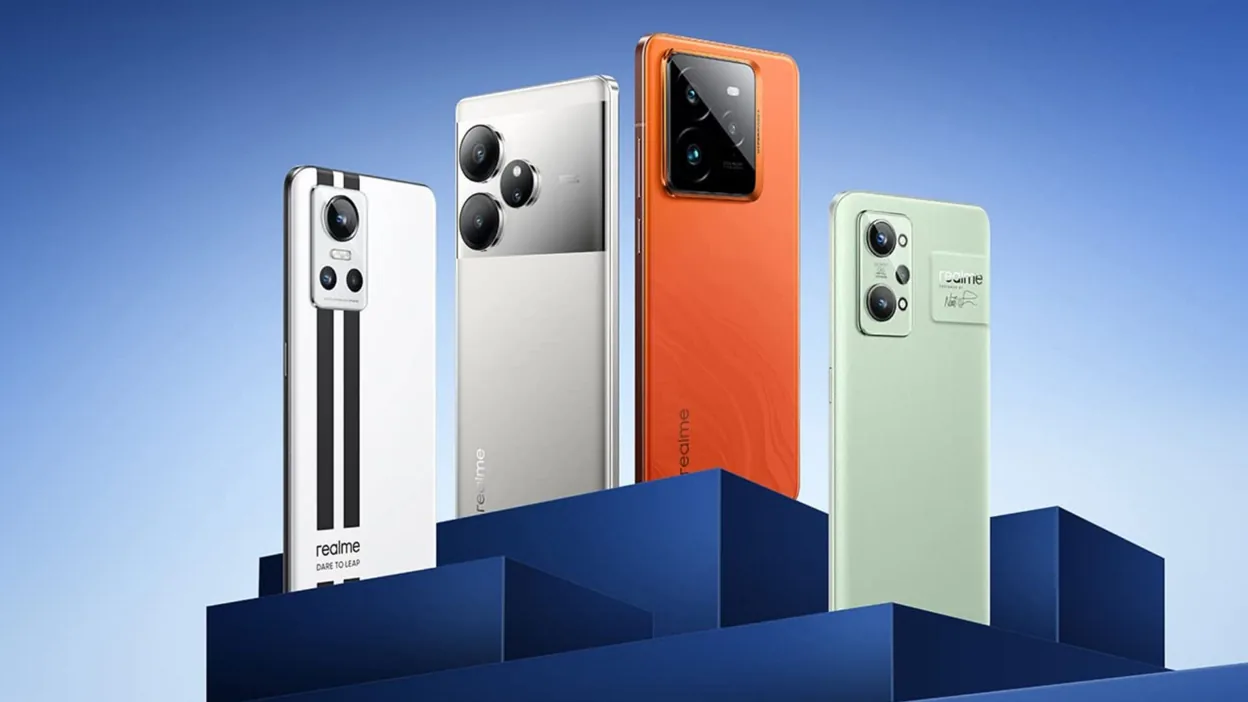
Realme is gearing up to launch its highly anticipated GT 7 smartphone in India, and ahead of the official release date, the company has started teasing key design and performance features. Among the highlights is a new thermal management system and stylish colour variants. The Realme GT 7 has already debuted in China, where it drew attention for its powerful specs, including the MediaTek Dimensity 9400+ chipset, a 7,200mAh battery, and a dual rear camera setup led by a 50-megapixel sensor. It also boasts an IP69 rating for dust and water resistance.

One of the standout innovations in the GT 7 is its IceSense Graphene design, which Realme says is the first of its kind in a smartphone. The device will be available in two colours — IceSense Blue and IceSense Black — both of which incorporate this advanced thermal solution. Graphene, known for its exceptional heat conductivity, is embedded in both the phone’s back panel and display to ensure efficient heat dissipation during intensive usage, such as gaming or multitasking.

Realme is also introducing a “Skin-Touch Temperature Control” system that dynamically responds to environmental conditions, helping the device stay cool in hot weather and comfortably warm in colder temperatures. The GT 7 features an Indium Laser-Etched Frame that offers a sleek metal texture, while a Pro-Gaming Coating on the back enhances grip and provides a smooth, skin-friendly finish — ideal for extended use and mobile gaming sessions.

The GT 7 first launched in China with a starting price of CNY 2,599 (approximately ₹30,400) for the 12GB + 256GB variant. With the Indian debut just around the corner, anticipation is building around its premium design, next-gen cooling system, and competitive pricing. Realme’s continued innovation in thermal management and design aesthetics could help the GT 7 stand out in the increasingly crowded upper mid-range smartphone segment.