
Anthropic Unveils AI for Science Initiative to Help Researchers Speed Up Their Work

Anthropic has launched a new initiative called the AI for Science programme, designed to help accelerate scientific research and discovery. This program focuses especially on projects related to biology and life sciences, offering support to researchers who are working on high-impact scientific endeavors. Anthropic plans to provide selected participants with free API credits, enabling them to use the company’s AI technology to enhance their research capabilities. The announcement follows closely after the release of Anthropic’s Research feature within its AI assistant, Claude.

The AI for Science programme is backed by Anthropic’s public benefit corporation, emphasizing the potential of generative AI to transform scientific workflows. By leveraging AI, researchers can analyze complex data more efficiently, generate new hypotheses, design and simulate experiments, and synthesize results to extract meaningful insights. Anthropic aims to empower scientists by reducing the time and effort typically required for these tasks, ultimately speeding up the pace of discovery.

Eligible researchers affiliated with recognized institutions can apply by submitting a detailed application form. Anthropic’s team, alongside experts in relevant fields, will review submissions on a monthly basis and select promising projects. Those chosen will receive substantial API credits — potentially up to $20,000 worth — to access Anthropic’s advanced AI models. The selection criteria focus on the applicant’s scientific contributions, the anticipated impact of the research, and how effectively AI can accelerate their work.

Importantly, all applications will go through a biosecurity review to ensure the projects do not contribute to harmful or dangerous outcomes. This reflects Anthropic’s commitment to responsible AI use, especially given the power of AI in scientific research. By combining cutting-edge AI with careful oversight, the AI for Science programme aims to foster innovation while maintaining ethical standards in the scientific community.
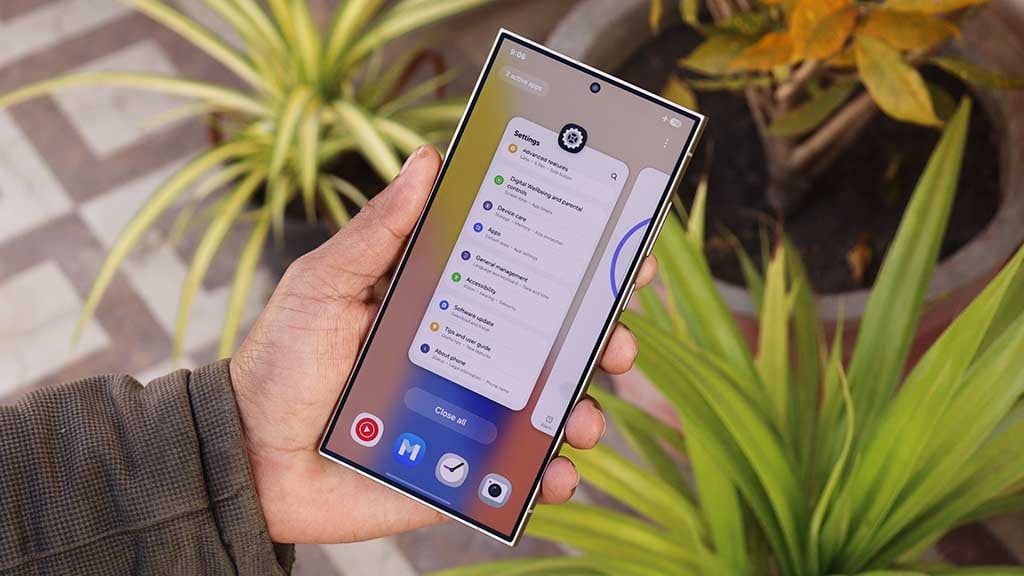
Samsung Rumored to Add Phone Calls, Do Not Disturb, and Additional Features to Now Bar in One UI 8

Samsung is already working on the next version of its custom Android skin, One UI 8, even as the rollout of One UI 7 continues. A recent leak suggests that the upcoming update will bring several enhancements to the Now Bar feature, which was first introduced with One UI 7 on devices running Android 15. The Now Bar currently offers a quick, glanceable summary of AI-driven insights via Galaxy AI’s Now Brief. However, the new version is rumored to add useful functions like phone call management and a Do Not Disturb toggle directly accessible from the lock screen.

According to tipster @opraks9plus, a video shared on X (formerly Twitter) shows the Galaxy S25 Ultra running an early build of One UI 8, featuring a Do Not Disturb button embedded in the Now Bar. While it’s unclear if this button will simply indicate when DND is active or allow users to toggle the setting on and off, the addition signals a move toward more interactive quick controls. Another leak hints at an active call feature within the Now Bar, where users might see call duration and recipient details in a pill-shaped interface, allowing them to monitor ongoing phone calls without unlocking their phones.

The Now Bar itself is an AI-powered tool designed to provide personalized and contextually relevant information right on the lock screen. It acts as an extension of the Now Brief feature, which offers users customized content like health stats, calendar events, news updates, and travel info in a series of scrollable cards. One UI 8’s enhancements appear to be geared toward making these interactions more actionable, adding convenience by integrating core phone functions such as call handling and DND management into the lock screen experience.

Since these updates were spotted in an early One UI 8 build, they could still undergo changes before the official release. Samsung has positioned the Now Bar as a key component of its Galaxy AI ecosystem, aiming to make daily device interactions more seamless and intuitive. If the rumored additions hold true, users can expect a smarter, more interactive lock screen that offers quicker access to essential controls without needing to dive into deeper menus.

OpenAI Set to Reduce Microsoft’s Revenue Share Following Restructuring, Report Says

OpenAI has informed investors that it plans to reduce the share of its revenue paid to Microsoft as part of an ongoing restructuring effort, according to a report by The Information. This move reflects a shift in the relationship between the AI company and its major backer, signaling a recalibration of financial terms as OpenAI looks toward the future. The restructuring also includes changes to the company’s governance, with its nonprofit parent maintaining more control and potentially limiting CEO Sam Altman’s influence.

Financial forecasts shared with investors reveal that OpenAI expects the percentage of revenue shared with Microsoft to drop by at least 50% by the end of the decade. Currently, under an existing agreement, OpenAI is committed to sharing 20% of its revenue with Microsoft through 2030. However, the new projections indicate this share will shrink to around 10% by 2030, affecting Microsoft and other commercial partners alike.

The report also highlights that Microsoft is seeking to extend its access to OpenAI’s technology beyond 2030, underscoring the strategic importance of the partnership despite the changing financial terms. The evolving deal points to a long-term collaboration, even as OpenAI recalibrates how the benefits are distributed.

Earlier this year, Microsoft revised some key aspects of its agreement with OpenAI following its joint venture with Oracle and SoftBank Group, aimed at building new AI data centers worth up to $500 billion in the United States. This broader context of investment and collaboration underscores the dynamic and competitive nature of the AI landscape where both companies are positioning themselves for future growth.