
Google Previews Gemini Enhancements and Personalized Assistant Upgrades Ahead of I/O 2025

Google is gearing up to reveal exciting new features for its Gemini AI platform at the upcoming Google I/O 2025 developer conference. The company shared a sneak peek of these updates in its April newsletter to Gemini Advanced subscribers, hinting at a more personalized assistant experience alongside enhanced productivity tools. Additionally, Google suggested that users could soon interact with the AI chatbot in innovative new ways, further expanding its usability across different tasks and devices.

According to reports, Google told its Gemini Advanced users to expect a “wave of exciting updates” during the event. While specific details remain under wraps, the promise of a “more personalized assistant” suggests that Gemini could soon deliver deeper integration with users’ preferences, behaviors, and connected apps. This might allow the AI to offer smarter, more context-aware responses and handle a broader range of on-device actions, potentially transforming how users interact with Android’s built-in assistant.

In terms of productivity, the new features may bring tighter integration between Gemini and popular Google Workspace apps. For example, the company could introduce collaborative modes in Google Docs that function similarly to the interactive Canvas tool, making teamwork more dynamic and seamless. There’s also speculation that Google may enhance how Gemini handles data visualization in Google Sheets, enabling the generation of rich visual summaries beyond simple charts, leveraging the power of its Imagen 3 image generation technology.

This upcoming launch highlights Google’s ongoing efforts to evolve Gemini into a versatile AI companion capable of streamlining workflows and personalizing user experiences across its ecosystem. By extending Gemini’s reach into more apps and adding richer interaction modes, Google aims to position its AI assistant as an indispensable tool for both everyday users and professionals. The full scope of these updates will be
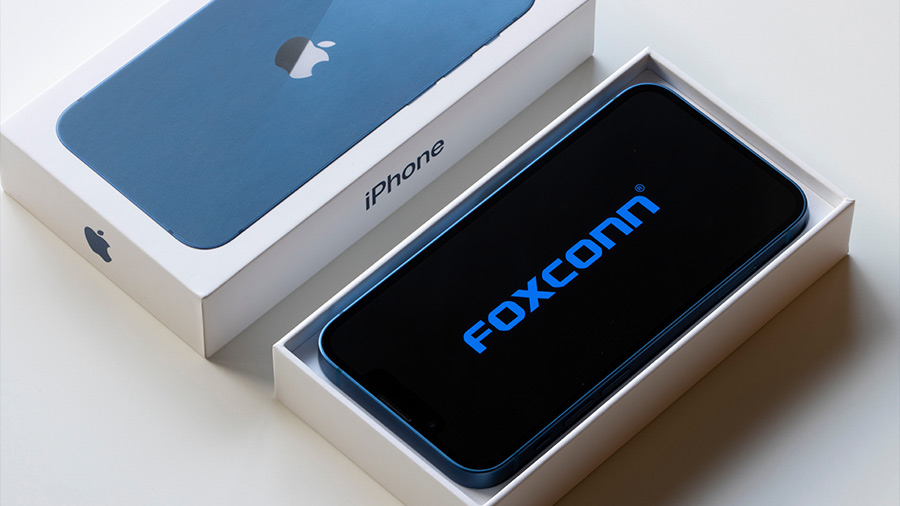

iPhone Production Begins at Tata’s New Facility as Foxconn Gears Up, Signaling Apple’s Growing Focus on India

Apple is steadily expanding its manufacturing footprint in India, with a new plant in southern India recently commencing iPhone production. This move marks a strategic effort to diversify production away from its primary manufacturing base in China, which has faced challenges amid escalating trade tensions between the US and China. The new facility, operated by Tata Electronics in Hosur, Tamil Nadu, has begun assembling older iPhone models, signaling Apple’s commitment to scaling operations in the region.

The backdrop to this expansion is the ongoing trade war between Washington and Beijing, where US tariffs on Chinese goods have raised concerns about supply chain disruptions and increased costs. Although electronics have so far been exempted from tariffs, the threat of future levies has prompted Apple to seek alternatives. India’s growing manufacturing ecosystem and favorable government policies have made it an attractive destination for Apple to mitigate risks and reduce dependency on Chinese production.

In addition to Tata Electronics’ plant, a $2.6 billion facility run by Foxconn is nearing completion in Bengaluru, Karnataka. According to multiple sources, the Foxconn plant is expected to start initial operations soon, with production ramping up through one assembly line initially. The factory is projected to produce the latest iPhone 16 and 16e models and will eventually create around 50,000 jobs when it reaches full capacity, anticipated by the end of 2027.

This expansion reflects Apple’s long-term vision to strengthen its supply chain resilience and capitalize on India’s manufacturing potential. By establishing multiple production hubs in India, Apple not only reduces its exposure to geopolitical risks but also taps into a vast and growing market. The company’s investment signals confidence in India as a vital player in the global smartphone supply chain in the years to come.

Samsung Galaxy Z Flip Debut in July Powered by Exynos 2500 Chipset

Samsung is gearing up to launch the Galaxy Z Flip 7 later this year, following the success of the Galaxy Z Flip 6. While the current Flip 6 runs on the powerful Snapdragon 8 Gen 3 chipset, rumors about the Flip 7’s processor have been conflicting. Initially, it was expected to debut with the Snapdragon 8 Elite SoC, but recent reports suggest that Samsung might instead opt for its own Exynos 2500 chipset. This new information sheds light on the upcoming foldable’s production timeline and the strategic decisions behind its hardware choices.

According to a report from ChosunBiz, the Galaxy Z Flip 7 will indeed be powered by the Exynos 2500, marking a shift away from the Snapdragon chipsets that have traditionally powered Samsung’s foldables. The report also mentions that mass production of the Flip 7 is scheduled to begin as early as May, with about 200,000 units expected to roll off production lines by June. This sets the stage for a potential launch in July, giving Samsung a mid-year window to introduce its latest clamshell foldable to the market.

One of the driving factors behind Samsung’s decision to use the Exynos 2500 appears to be cost and production efficiency. With a relatively limited production run of 200,000 units, Samsung may find it more feasible and economical to use its in-house chipset rather than relying on Qualcomm’s Snapdragon processors. This move could allow Samsung to either offer the Galaxy Z Flip 7 at a more competitive price or maintain healthier profit margins. This approach would also reinforce Samsung’s growing confidence in its own chip manufacturing capabilities.

Separately, there have been rumors of a more affordable, slimmer variant of the Galaxy Z Flip 7, possibly branded as an FE or Xe model. This version is expected to come equipped with the Exynos 2400e, another in-house chip designed for cost-effective performance. Together, these developments suggest Samsung is diversifying its foldable lineup to cater to different market segments while balancing innovation, pricing, and production constraints.