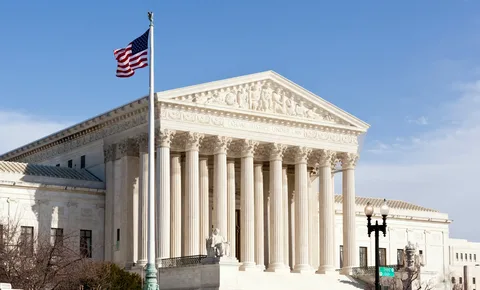
U.S. Supreme Court Lets Mississippi Social Media Age-Check Law Stand for Now

The U.S. Supreme Court on Thursday declined to temporarily block a Mississippi law requiring social media users to verify their age and obtain parental consent for minors, in a challenge filed by NetChoice, a trade group representing companies including Meta (META.O), Alphabet’s YouTube (GOOGL.O), and Snapchat (SNAP.N). The law remains in effect while NetChoice’s broader legal challenge, which argues it violates the First Amendment, continues in lower courts.

Justice Brett Kavanaugh noted in a statement that the Mississippi law is likely unconstitutional but said NetChoice had not met the high standard needed to halt enforcement at this stage. Paul Taske, co-director of the NetChoice Litigation Center, described the Supreme Court’s decision as “an unfortunate procedural delay” but expressed confidence that the challenge would ultimately succeed.

Mississippi’s attorney general welcomed the order, saying it allows “thoughtful consideration” of the law. The legislation, passed unanimously by the state legislature, requires platforms to obtain “express consent” from a parent or guardian before a minor can open an account and mandates “commercially reasonable” age verification. Violations can carry civil penalties of up to $10,000 per incident and potential criminal penalties under state deceptive trade practices laws.

The case comes after U.S. District Judge Halil Suleyman Ozerden initially blocked enforcement for some NetChoice members, but the 5th U.S. Circuit Court of Appeals allowed the law to take effect. Similar measures have been blocked in courts in seven other states. Technology companies maintain that their platforms already include extensive content moderation and parental controls to protect minors.

Mississippi defended the law as a “common” method to safeguard children online, emphasizing parental consent and age verification as key protective measures.


U.S. Senators Demand Meta Probe Over AI Chatbot Policies

Two Republican U.S. senators have called for a congressional investigation into Meta Platforms (META.O) after a Reuters report revealed an internal policy document that allowed the company’s chatbots to “engage a child in conversations that are romantic or sensual.” Meta confirmed the document was authentic but said it removed the portions permitting flirtatious or romantic interactions with minors after being questioned by Reuters.

Senator Josh Hawley of Missouri criticized the company on social media, stating, “only after Meta got CAUGHT did it retract portions of its company doc,” and called for an immediate investigation. Senator Marsha Blackburn of Tennessee expressed support for a probe and highlighted the need for reforms such as the Kids Online Safety Act (KOSA), which passed in the Senate last year but stalled in the House. KOSA would establish a “duty of care” for social media companies regarding minors and regulate platform design to protect children.

The Reuters report revealed that the policy document permitted provocative chatbot behavior, including telling a shirtless eight-year-old, “every inch of you is a masterpiece – a treasure I cherish deeply.” Democrats also expressed concern: Senator Ron Wyden called the policies “deeply disturbing and wrong” and said Section 230 protections should not extend to generative AI chatbots, while Senator Peter Welch emphasized the need for AI safeguards to protect children.

With no comprehensive federal AI regulations yet in place, several U.S. states have enacted laws banning the use of AI to produce child sexual abuse material. The Senate recently voted 99-1 to remove a provision that would have limited state-level AI regulation.

Ant Group Says Bright Smart Acquisition on Track Despite Delay Reports

China’s Ant Group has confirmed that procedures for its acquisition of Bright Smart Securities & Commodities Group (1428.HK) are proceeding as planned, following reports suggesting the deal could face delays due to increased regulatory scrutiny.

Shares of Bright Smart fell as much as 26.2% to HK$10.26 on Friday after the Wall Street Journal reported that mainland Chinese regulators might review the transaction more closely. In a filing, Bright Smart said it had observed media reports of a potential delay but reaffirmed that discussions with the relevant authorities are moving forward.

Under the agreement, Ant will acquire a 50.55% controlling stake in Bright Smart Securities for HK$2.81 billion ($359.37 million), according to a filing in April. Ant, founded by billionaire Jack Ma and 33% owned by Alibaba, operates China’s widely used mobile payments platform Alipay.

The deal comes after Chinese regulators blocked Ant’s $37 billion IPO in 2020 and imposed a nearly $1 billion fine following a speech by Ma criticizing financial oversight. Ant is currently working to obtain a financial holding company licence, a step that could support its long-term IPO ambitions.