Beijing E-Town Sues Applied Materials Over Alleged Trade Secret Theft

Beijing E-Town Semiconductor Technologies, a government-backed Chinese semiconductor equipment company, has filed a lawsuit against U.S. chip equipment supplier Applied Materials, accusing it of illegally obtaining and using trade secrets related to plasma sources and wafer surface treatment. The company seeks 99.99 million yuan ($13.94 million) in damages.

According to Beijing E-Town, Applied Materials disclosed technical secrets by applying for a patent in China and claiming the patent’s application rights. Applied Materials has not responded to requests for comment.

The dispute traces back to 2016 when Beijing E-Town acquired California-based semiconductor equipment designer Mattson Technology. Applied Materials previously sued Mattson in 2022, alleging it had hired former Applied Materials employees to steal trade secrets. Mattson countered with similar accusations in 2023.

In the new lawsuit filed at the Beijing Intellectual Property Court, Beijing E-Town claims that Applied Materials employed two former Mattson employees who later became principal inventors on a patent filed in China. This patent allegedly disclosed confidential technology jointly held by Beijing E-Town and Mattson. Beijing E-Town asserts that Applied Materials’ actions violated China’s fair competition law and constituted trade secret infringement.

The Beijing court has accepted the case, but no hearing has been scheduled yet.
Trump’s Nvidia Deal Sparks Corporate and National Security Concerns

U.S. President Donald Trump has created a highly unusual precedent by allowing Nvidia (NVDA.O) and AMD (AMD.O) to resume AI chip exports to China in exchange for a 15% revenue cut to the U.S. government, raising questions about corporate risk and national security.

KEY DETAILS

  • Historically, U.S. export controls on sensitive technologies were non-negotiable, meaning companies could not circumvent restrictions through payments.

  • Trump’s move reverses a prior ban on H20 chips and suggests a potential future sale of scaled-down Blackwell chips to China.

  • The administration claims the national security risks are minimal, noting the H20 is Nvidia’s “fourth-best chip” and widely available in China.

REACTIONS FROM LAWMAKERS AND EXPERTS

  • Bipartisan U.S. lawmakers expressed concern about creating a “pay-for-play” framework for sensitive technology exports.

    • Rep. John Moolenaar: “Export controls are a frontline defense in protecting our national security.”

    • Rep. Raja Krishnamoorthi: “Putting a price on our security concerns signals that national security principles are negotiable.”

  • Legal experts question the arrangement’s legality, debating whether it constitutes an export tax, which the U.S. Constitution prohibits.

  • Analysts warn it could pressure chipmakers’ margins and create a precedent for taxing strategic U.S. exports to China.

CORPORATE IMPLICATIONS

  • Nvidia confirmed compliance with U.S. export rules but did not detail the revenue-sharing mechanism.

  • AMD noted approval for chip exports but also did not clarify financial terms.

  • Analysts predict the 15% remittance could reduce margins for China-bound processors by 5–15 percentage points, impacting overall profitability.

CONCLUSION
Trump’s intervention marks a rare case of direct government influence on corporate exports, blending national security policy with financial leverage. Observers warn it could reshape how U.S. companies approach sales of sensitive technology in global markets.

Brazil’s Lula Announces Social Media Regulation Proposal Ready for Congress

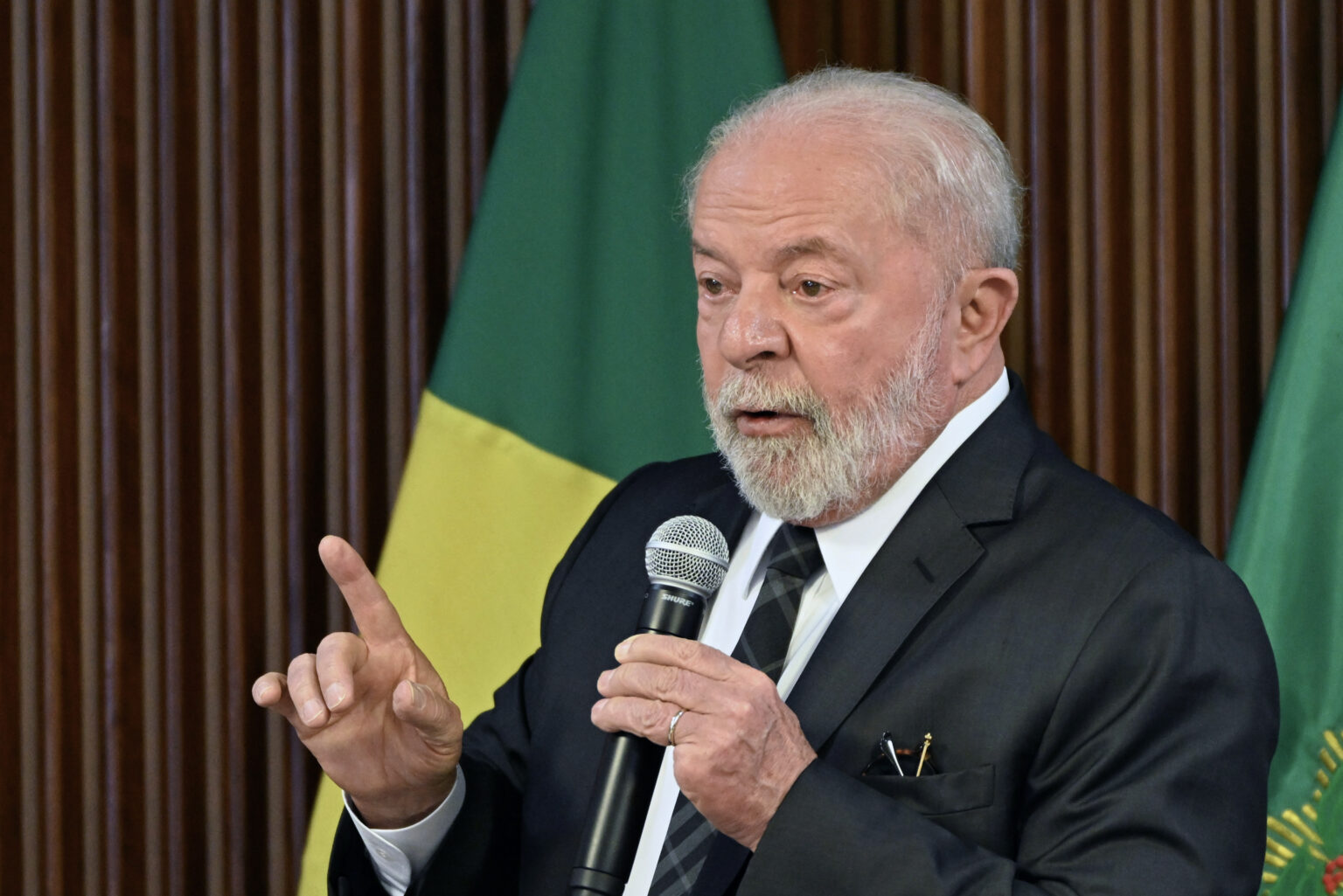
Brazilian President Luiz Inacio Lula da Silva stated on Tuesday that a proposal to regulate social media platforms in Brazil is finalized and will be sent to Congress shortly.

KEY DETAILS

  • Lula told BandNews the proposal will be on his desk on Wednesday afternoon, enabling the government to forward it to lawmakers.

  • The initiative comes amid ongoing global discussions on digital regulation and content moderation.

TRADE AND DIPLOMACY CONTEXT

  • Earlier this month, U.S. President Donald Trump imposed 50% tariffs on Brazilian imports, citing “unfair trade practices” in digital trade and political tensions related to former President Jair Bolsonaro.

  • Lula expressed willingness to meet Trump, emphasizing a civilized dialogue between heads of state.

  • The Brazilian leader also confirmed sending an invitation to Trump for COP30, the global climate summit to be hosted in Brazil later this year.

  • Lula plans to call leaders from France, Germany, and the EU next week to discuss ongoing negotiations between the EU and the South American Mercosur bloc.

CONCLUSION
The proposal marks a significant step in Brazil’s efforts to regulate digital platforms, amid rising international attention on social media governance and trade relations with the United States.