
Ferrari’s stock plunges 16% as new 2030 goals underwhelm despite EV reveal

Ferrari shares tumbled over 16% on Thursday, erasing nearly €13.5 billion ($15.7 billion) in market value, after investors were disappointed by the company’s 2030 financial targets unveiled alongside the debut of its first electric vehicle (EV) platform.

The luxury carmaker raised its long-term revenue goal to €9 billion by 2030, up from €7.1 billion projected for this year. However, analysts called the target “underwhelming” compared to market expectations. “People were expecting a higher top line,” CEO Benedetto Vigna said during the presentation in Maranello, adding that Ferrari preferred realistic goals over overpromising.

Ferrari also scaled back its EV ambitions, now targeting a 2030 lineup comprising 40% internal combustion engines (ICE), 40% hybrids, and 20% fully electric vehicles, compared to the 2022 plan that aimed for 40% EVs.

At the event, Ferrari unveiled the Elettrica, its first electric car, showcasing a production-ready chassis with in-house-designed battery packs and electric motors from its new “e-building” facility in Maranello. The car will feature over 1,000 horsepower and seat four but has no confirmed price or release date yet.

Analysts at Citi said the updated guidance “fell below consensus expectations,” triggering the sharpest one-day decline in Ferrari’s shares since early 2024.

The company reaffirmed plans to launch four new models annually between 2026 and 2030 and expand its luxury lifestyle business with “Tailor Made” centers in Tokyo and Los Angeles and flagship stores in London and New York.

TCS tops quarterly revenue forecasts, eyes stronger growth in second half

Tata Consultancy Services (TCS) exceeded second-quarter revenue estimates, lifted by growth in its banking, financial services, and insurance (BFSI) segment, and said it expects better performance in the latter half of the fiscal year. The results have bolstered optimism for India’s $283 billion IT industry, which has faced weak client spending amid global uncertainty.

Sales for the quarter ending September rose 2.4% to ₹657.99 billion ($7.4 billion), surpassing the ₹650.86 billion forecast. Profit edged up 1.4% to ₹120.75 billion, though it fell short of analyst projections due to ₹11.35 billion in severance costs linked to a planned 2% workforce reduction affecting 12,200 employees.

CEO K. Krithivasan said deferred projects had decreased and expressed confidence that AI solutions and deeper client engagement would drive growth momentum in the second half. The BFSI unit grew 1%, offsetting declines in the consumer, healthcare, and manufacturing sectors.

TCS also announced plans to establish a new AI-focused business with a 1 GW data center in India, expected within five to seven years. Analysts estimate the project could involve up to $5 billion in capital expenditure and make TCS one of India’s top five data center operators.

Order bookings hit $10 billion, up from $9.4 billion last quarter, showing signs of steady recovery in global demand despite new U.S. outsourcing tax and visa challenges.

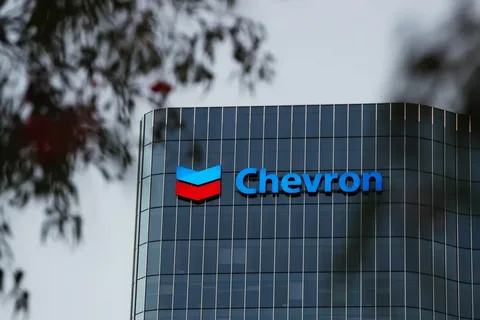
Chevron expands Bengaluru innovation hub to drive digital and AI transformation

Chevron has expanded its Engineering and Innovation Excellence Center (ENGINE) in Bengaluru, opening a new 312,000-square-foot facility to boost its digital and AI capabilities. The move marks a major step in the U.S. energy giant’s global effort to streamline operations and leverage India’s deep technology talent pool.

The expansion comes a year after the launch of ENGINE, which consolidates Chevron’s global technical work and supports its target of up to $3 billion in cost savings by 2026. “We were a very decentralized organization until recently,” said Akshay Sahni, Chevron’s India country head. “We use AI to improve machine performance and drilling efficiency—it’s about smarter operations, not just cost cuts.”

Chevron’s focus on Bengaluru reflects the growing importance of India’s STEM and IT ecosystem in the energy transition. The center employs more than 1,000 professionals across disciplines such as mechanical, civil, and petroleum engineering, and plans to invest around $1 billion over the next few years in technology, infrastructure, and workforce development.

The facility features high-performance computing systems for real-time geological modeling and digital twins—virtual replicas of Chevron’s plants that enhance monitoring and maintenance.

Despite global workforce reductions of up to 20%, Chevron emphasized that its India operations are about innovation and future growth. “For now, our focus is on expanding Bengaluru and upskilling our people as technology evolves,” Sahni said.