
Harvard Medical School licenses health content to Microsoft for Copilot AI

Harvard Medical School has signed a licensing agreement with Microsoft, giving the tech giant access to its consumer health content on diseases and wellness topics, the university confirmed Wednesday. The deal, made through Harvard Health Publishing, aims to integrate verified medical information into Microsoft’s Copilot AI assistant.

A licensing fee will be paid to Harvard, though financial details were not disclosed. The content will enhance Copilot’s ability to provide accurate, evidence-based health insights, complementing its existing productivity tools like Word and Outlook.

The partnership is part of Microsoft’s broader push to reduce reliance on OpenAI’s models, which currently power much of its AI infrastructure. The Wall Street Journal reported that the new version of Copilot, expected to launch this month, will include Harvard’s content to deliver more reliable answers on medical and wellness topics.

Microsoft has also begun integrating Anthropic’s Claude and is developing its own AI models as part of a strategy to diversify its AI portfolio.

By combining Microsoft’s generative AI with Harvard’s trusted medical expertise, the partnership seeks to make health information more accessible and reliable for everyday users while maintaining accuracy and academic integrity.
India launches pilot to enable e-commerce payments through ChatGPT

India’s National Payments Corporation (NPCI) and Razorpay have teamed up with OpenAI to launch a pilot program that enables AI-powered e-commerce payments directly within ChatGPT. The initiative leverages India’s Unified Payments Interface (UPI), allowing users to make purchases without leaving the chat platform.

The project represents the country’s first integration of agentic AI payments, where artificial intelligence systems can independently execute transactions on behalf of users. “With agentic payments, we’re transforming AI assistants from simple discovery tools into full-fledged shopping agents,” said Harshil Mathur, CEO of Razorpay.

The pilot will test how AI agents can securely manage user payment credentials to autonomously complete purchases using UPI’s new ‘reserve pay’ feature, which sets aside funds for designated merchants.

Axis Bank and Airtel Payments Bank are serving as banking partners, while Bigbasket, owned by Tata Group, has become the first e-commerce platform to enable ChatGPT-based shopping. OpenAI’s Oliver Jay said the partnership aims to combine “advanced AI with one of the world’s most trusted real-time payment networks.”

UPI currently processes over 20 billion monthly transactions, making it the backbone of India’s digital payment ecosystem. The pilot could pave the way for AI-driven commerce, transforming chatbots into autonomous retail platforms.

SoftBank to buy ABB’s robot unit for $5.4 billion in AI-robotics merger push

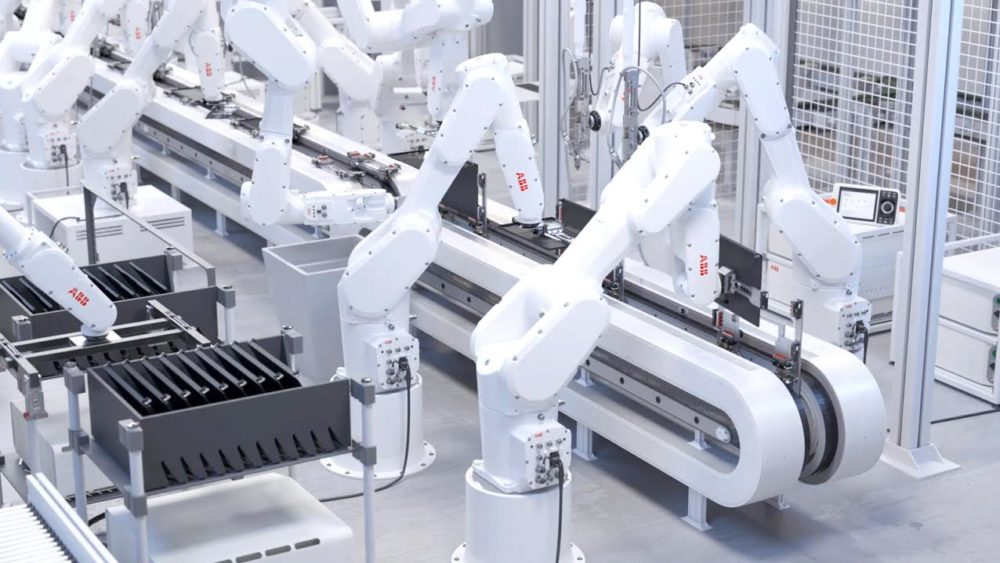
SoftBank Group has agreed to purchase the robotics division of ABB for $5.4 billion, marking a major step in CEO Masayoshi Son’s plan to unite artificial intelligence and robotics into what he calls “Physical AI.” The acquisition, announced Wednesday, gives the Japanese conglomerate control of one of the world’s leading industrial robotics makers as it deepens its bet on AI-driven automation.

The deal signals ABB’s decision to cancel its planned spin-off of the robotics unit, opting instead for a direct sale that delivers immediate liquidity. ABB CEO Morten Wierod said the sale provides stronger financial flexibility to invest in electrification, automation, and potential new acquisitions.

ABB’s robotics arm employs about 7,000 people and generated $2.3 billion in 2024 sales, roughly 7% of ABB’s total revenue. Despite its technological strength, the division struggled with volatile margins and limited overlap with ABB’s core business.

For SoftBank, the acquisition builds on a decade-long robotics journey that began with its humanoid Pepper robot and now extends into advanced factory automation. The company has recently invested in Berkshire Grey, AutoStore, and OpenAI, and earlier this year bought chip designer Ampere for $6.5 billion.

The transaction is expected to close by late 2026, subject to regulatory approvals. ABB shares rose 2% in Zurich after the announcement, while SoftBank’s stock slipped 2% in Tokyo trading.