Investors Warn of “AI Hype Bubble” as Startup Valuations Soar to Record Levels

A growing number of leading investors are warning that artificial intelligence (AI) startup valuations are overheating, with early-stage funding rounds reaching unsustainable levels amid a global rush to back the next OpenAI.

Speaking at the Milken Institute Asia Summit 2025 in Singapore, Bryan Yeo, chief investment officer of Singapore’s sovereign wealth fund GIC, cautioned that the early-stage AI market is showing signs of “hype-driven froth.”

“There’s a little bit of a hype bubble going on in the early-stage venture space,” Yeo said. “Any startup with an ‘AI’ label gets valued at massive multiples of its tiny revenue. That might be fair for some, but probably not for most.”

According to PitchBook, AI startups raised $73.1 billion globally in the first quarter of 2025, accounting for nearly 58% of all venture capital investment. The surge has been fueled by megadeals such as OpenAI’s $40 billion capital raise, as investors race to secure a stake in the sector’s perceived future winners.

Yeo warned that “market expectations could be way ahead of what the technology can deliver,” adding that the ongoing AI capital expenditure boom may be masking economic vulnerabilities beneath the surface.

Todd Sisitsky, president of private equity firm TPG, echoed Yeo’s concerns, describing the fear of missing out (FOMO) as a dangerous force driving irrational valuations. “Some AI firms are hitting $100 million in revenue within months,” he said, “while others—still in early stages—are valued between $400 million and $1.2 billion per employee. That’s breathtaking.”

The warnings reflect growing unease among veteran investors who have seen similar speculative waves—from dot-com mania in the 1990s to crypto exuberance in the 2020s—inflate asset prices far beyond their underlying value.

Still, opinions remain divided on whether the AI sector has already formed a full-blown bubble or is simply experiencing the natural excesses of a transformative technology boom.

What’s clear is that AI’s gravitational pull on global capital continues to intensify, reshaping investment priorities and heightening the risk that innovation and speculation will soon collide.

Sanctioned Rouble-Backed Crypto Firm Sponsors Major Singapore Conference as Token Use Soars

A company behind a rouble-backed cryptocurrency sanctioned by the U.S. and U.K. appeared as a platinum sponsor at TOKEN2049, one of the world’s largest crypto conferences, held this week in Singapore—underscoring how sanctioned entities continue to operate in global crypto circles.

The firm, A7A5, is based in Kyrgyzstan and runs a stablecoin pegged to the Russian rouble, launched in January by a Russian defense-linked lender and a payments company. Western governments say it is part of a network helping Russia evade sanctions imposed after its 2022 invasion of Ukraine.

Despite being targeted by U.S. and British sanctions in August, A7A5 had a prominent booth at TOKEN2049, where it was initially listed among more than 20 platinum sponsors. Conference staff reportedly wore A7A5-branded shirts, and the company’s director of regulatory and overseas affairs, Oleg Ogienko, even spoke on stage.

Following Reuters inquiries, all references to A7A5 and Ogienko were removed from the event’s website by Thursday afternoon. TOKEN2049 organizers, registered in Hong Kong, did not respond to requests for comment.

Ogienko confirmed that the A7A5 operation in Singapore was part of the sanctioned group, saying: “We were sanctioned several times.” He insisted the company complies with Kyrgyz regulations and denied any role in money laundering. “We just applied for participation, and the organizers confirmed it,” he said.

According to blockchain analytics firm Elliptic, A7A5’s trading volumes have surged, with $70.8 billion transferred since January, up from $40 billion in July. Daily transaction counts have doubled in the past month, suggesting increasing adoption of the token for cross-border transactions.

Ogienko told Reuters the token is used by Russian firms and foreign trade partners, particularly in Asia, Africa, and Latin America—regions where Moscow continues to seek alternatives to Western financial systems. “Many countries who trade with Russia use our stablecoin,” he said. “These are billions of dollars.”

Neither Singapore nor Hong Kong has imposed sanctions on A7A5 or its affiliates, leaving local regulators with little obligation to restrict participation. Legal experts told Reuters that U.S. sanctions lack jurisdiction unless American individuals or institutions are directly involved.

The controversy highlights the difficulty Western authorities face in curbing crypto-based sanctions evasion, as decentralized systems and jurisdictional loopholes allow targeted entities to remain active in the global digital economy.

TOKEN2049, attended by over 25,000 participants, featured top industry figures including Donald Trump Jr., Cantor Fitzgerald chairman Brandon Lutnick, and executives from major crypto firms. Spokespeople for Trump Jr. and Cantor Fitzgerald did not comment.

As A7A5’s presence drew scrutiny, it served as a potent symbol of how geopolitics, regulation, and blockchain technology continue to collide in a financial world increasingly beyond traditional control.

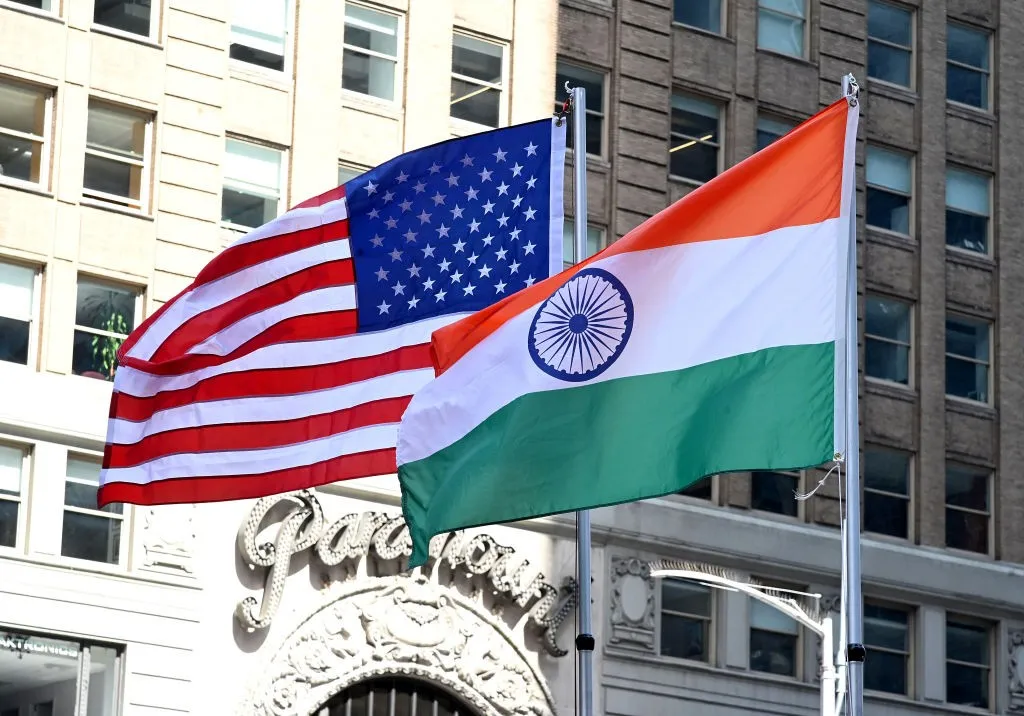
Indian Ministers Promote Homegrown Alternatives to Google, Microsoft Amid Rising U.S. Trade Tensions

Three senior ministers in Prime Minister Narendra Modi’s cabinet are urging Indians to adopt domestic alternatives to U.S. tech giants like Google, Microsoft, and Meta, marking the strongest government endorsement yet of “Made in India” technology amid escalating trade frictions with the United States.

The push follows Washington’s decision in August to impose 50% tariffs on Indian imports, a move that has fueled nationalist calls for economic self-reliance. Modi has since urged citizens to replace daily-use foreign products with “swadeshi” (indigenous) alternatives, aligning the campaign with his broader vision of digital sovereignty.

This week, Information Technology Minister Ashwini Vaishnaw showcased highway project plans using Zoho software—an Indian rival to Microsoft PowerPoint—and MapmyIndia, instead of Google Maps. “The map is from MapmyIndia, not Google Maps,” he said, smiling. “It’s looking nice, right? Swadeshi.

Vaishnaw’s social media video testing Zoho’s software attracted 6.2 million views on X, urging users to support Indian digital tools. Similarly, Commerce Minister Piyush Goyal and Education Minister Dharmendra Pradhan have promoted Zoho’s messaging app Arattai (“chat” in Tamil), calling it a symbol of India’s technological independence. Goyal posted on X, “So proud to be on @Arattai, a #MadeInIndia messaging platform that brings India closer.”

The campaign appears to be paying off: according to Sensor Tower, Arattai downloads surged from under 10,000 in August to over 400,000 in September, with daily active users doubling to 100,000 by September 26.

Still, experts caution that displacing entrenched global brands such as WhatsApp, Google Maps, and Microsoft Office will be difficult. India remains WhatsApp’s largest market, with more than 500 million users, and U.S. platforms dominate both consumer and enterprise software ecosystems.

Dilip Cherian, co-founder of Perfect Relations, warned that “only state patronage will not be enough.” For Indian challengers like Zoho to succeed, he said, they need “a unique differentiating factor, deep pockets, and strong protection against surveillance.”

Zoho’s billionaire co-founder Sridhar Vembu has become a national symbol of tech self-reliance through his rural-based business model, which runs key operations from small villages rather than major tech hubs.

India’s digital strategy increasingly reflects a geopolitical balancing act: promoting technological independence and data sovereignty while maintaining access to U.S. innovation and investment. Whether apps like Zoho and Arattai can sustain momentum without losing the enthusiasm of government boosters remains an open question.