
Experts divided over whether AI boom is a bubble or sustainable revolution

The massive wave of investment in artificial intelligence has triggered debate across global markets over whether the surge mirrors the dot-com bubble or represents a sustainable technological revolution. Companies have poured hundreds of billions of dollars into AI infrastructure, fueling record valuations — but also investor caution.

A BofA Global Research survey showed that 54% of fund managers now believe AI stocks are in a bubble, compared with 38% who disagree, highlighting the growing divide between optimism and skepticism.

The Bank of England warned on October 8 that global markets could tumble if sentiment toward AI shifts, saying “the risk of a sharp market correction has increased.”

Other experts, however, see the AI boom as a long-term growth story. Goldman Sachs economist Joseph Briggs argued that the investment surge remains macroeconomically sustainable, though he noted that “the ultimate AI winners remain less clear.”

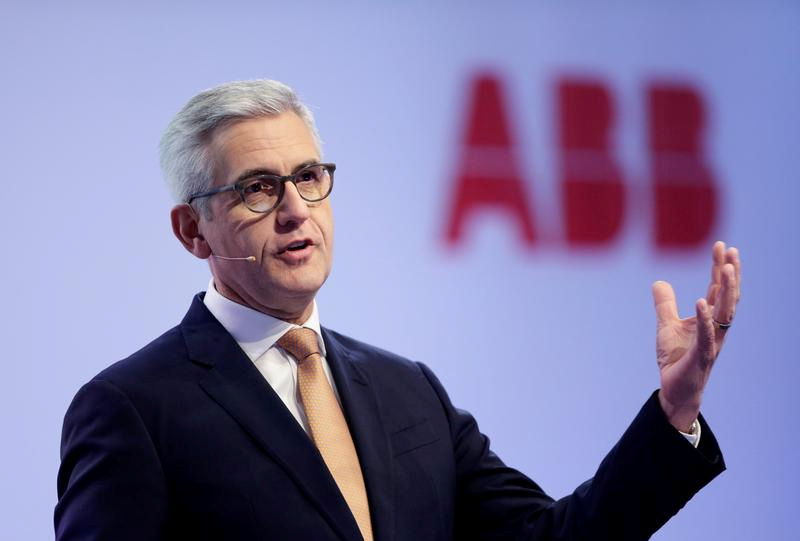
ABB CEO Morten Wierod echoed that sentiment, saying, “I don’t think there is a bubble, but we do see constraints in construction capacity,” adding that the industry is dealing with “trillions in investment” and limited human resources.

Amazon founder Jeff Bezos said investor enthusiasm is not inherently negative: “When people get very excited … every experiment gets funded. Some will fail, but society benefits when the winners emerge.”

IMF chief economist Pierre-Olivier Gourinchas compared the AI boom to the early 2000s tech frenzy but said it’s less likely to trigger a systemic crash because it’s not driven by debt.

OpenAI CEO Sam Altman offered a more candid view: “Are investors overexcited about AI? Yes. Someone is going to lose a phenomenal amount of money — and others will make a phenomenal amount.”

Despite these warnings, UBS strategists found that 90% of investors who believe in an AI bubble remain heavily invested, suggesting confidence in the sector’s long-term potential even as valuations soar.

Turkcell, Turk Telekom, and Vodafone secure key blocks in Turkey’s $2.95 billion 5G auction

Turkey’s highly anticipated 5G spectrum tender concluded on Thursday with a total of $2.95 billion in winning bids, as the nation’s three main telecom operators — Turkcell, Turk Telekom, and Vodafone — secured vital frequencies across the 700 MHz and 3.5 GHz bands.

Turkcell emerged as the biggest spender, placing the top bid of $429 million for the A1 package in the 700 MHz band and acquiring four additional blocks in the 3.5 GHz range, bringing its total to $1.22 billion.

Turk Telekom won the A3 package for $425 million and two blocks in the 3.5 GHz spectrum, with total bids of $1.1 billion. Vodafone secured the A2 package for $426 million and one 3.5 GHz block, spending $627 million overall.

The rollout of 5G services will begin in April 2026, starting in major urban centers before expanding nationwide. The tender not only allocated new frequencies but also extended the rights for existing 2G, 3G, and 4.5G networks until 2042.

The auction, overseen by Turkey’s Transport and Infrastructure Ministry, required a minimum bid of $2.13 billion (excluding VAT) across all packages. Analysts expect telecom firms to launch multi-year, multi-billion-dollar investments to upgrade their networks.

Transport Minister Abdulkadir Uraloğlu said the first 5G signal will be launched on April 1, beginning in densely populated cities and reaching nationwide coverage in about a year.

The last major mobile frequency auction in 2015 raised €4 billion ($4.66 billion) for 4.5G services.

ABB CEO says data center demand for AI power will keep growing for years

Swiss engineering giant ABB remains highly optimistic about the long-term growth of data centers driven by the global artificial intelligence boom, CEO Morten Wierod told Reuters on Thursday.

Wierod said ABB has seen double-digit growth this year in orders for its electrification products, which include switchgear and uninterruptible power systems that ensure servers stay online. “Over the next five years I am very confident about demand from data centers,” he said.

Rejecting suggestions of an AI bubble, Wierod argued that the challenge lies in construction capacity, not in demand. “We are talking about trillions in investment, but there are not enough people and resources to build all this,” he noted.

AI remains in its early stages, he added, meaning continued expansion of data infrastructure as more companies — beyond the tech giants — invest in new facilities. Data centers accounted for about 7% of ABB’s revenue in 2025, up from 6% the previous year.

Earlier this week, ABB announced a partnership with Nvidia to develop new electrification systems for next-generation chips used in high-performance computing centers. “That’s not for 2025 or 2026, it’s a long-term investment,” Wierod said.

He also highlighted growing opportunities in retrofitting and upgrading older data centers to handle the increased power demands of modern AI systems. “That is a big opportunity,” he said.