G20 watchdog warns of “significant gaps” in global crypto regulation amid market surge

The Financial Stability Board (FSB), the G20’s top financial risk regulator, has warned that major gaps persist in global cryptocurrency regulation, raising concerns that unchecked growth in digital asset markets could pose risks to financial stability.

In its review published Thursday, the FSB said that while progress has been made since its 2023 recommendations, regulatory frameworks remain “fragmented, inconsistent, and insufficient” to address the cross-border nature of crypto markets. The watchdog found that financial stability risks from crypto are limited for now, but are rising sharply as the global crypto market has doubled to $4 trillion over the past year, driven by surging bitcoin prices and a wave of new investors.

“These crypto assets can move across borders very easily, much more easily than other financial assets,” said John Schindler, the FSB’s secretary general, calling for stronger global cooperation.

One of the key weaknesses identified was the lack of clear and comprehensive rules for stablecoins, digital tokens typically pegged to the U.S. dollar. The market for stablecoins has grown by nearly 75% over the past year, reaching $290 billion, yet few countries have introduced complete regulatory frameworks.

The report examined 29 jurisdictions — including the U.S., EU, Hong Kong, and the UK — but noted uneven implementation and limited coordination, especially with countries such as El Salvador, which did not participate despite being home to Tether, the world’s largest stablecoin.

The FSB urged governments to accelerate rule-making and improve cross-border cooperation, warning that non-aligned jurisdictions could create regulatory blind spots. “Even if countries have their own rules, crypto companies operating offshore can still affect their markets,” Schindler said.

The warning follows recent market turbulence, including the largest crypto crash in history last week that triggered nearly $20 billion in liquidations, reviving fears of contagion risks.
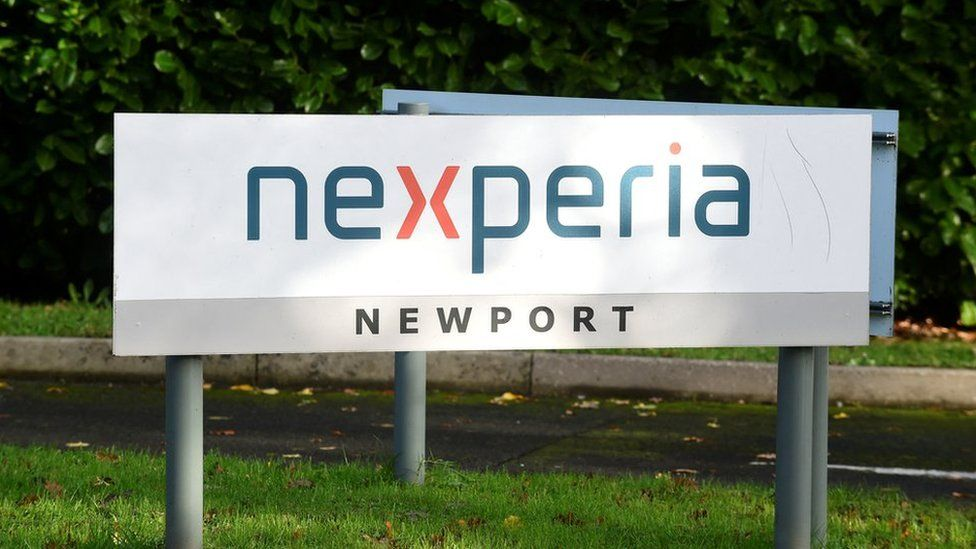

European automakers warn of production risks amid Dutch-China dispute over chipmaker Nexperia

European carmakers are warning of potential production disruptions as a trade and technology dispute between China and the Netherlands over chipmaker Nexperia threatens to choke off the supply of critical automotive chips.

The European Automobile Manufacturers’ Association (ACEA) said on Thursday it was “deeply concerned” that Nexperia’s inability to guarantee chip deliveries could halt production at European factories. “Without these chips, automotive suppliers cannot build the parts and components needed to supply vehicle manufacturers,” ACEA said, urging an immediate resolution.

Nexperia, which supplies chips essential for vehicle electronics, told customers last week that deliveries could no longer be guaranteed. The company said it is engaging with Chinese authorities to obtain an exemption from export restrictions, but declined to give further details.

The dispute erupted after the Dutch government seized control of Nexperia on September 30, citing concerns over the possible transfer of technology to its Chinese parent company Wingtech, which is subject to U.S. export controls. Washington added Wingtech to its entity list in December, triggering restrictions that now extend to Nexperia under U.S. law.

In response, China’s commerce ministry imposed export controls on Nexperia China and its subcontractors, banning them from exporting certain chip components. The escalating standoff places Europe’s car industry in the crossfire of a widening U.S.-China tech war.

Nexperia’s chips are not high-end semiconductors but are produced in mass volumes crucial for car electronics. Major manufacturers including Volkswagen, BMW, Mercedes-Benz, and Stellantis, as well as suppliers like Bosch, said they are assessing risks and exploring contingency plans.

China’s commerce ministry criticized the Dutch government’s intervention, saying it “opposes interference in enterprises through administrative means” and vowed to protect Chinese companies’ rights.

Anthropic aims to nearly triple annualized revenue in 2026 amid surging enterprise AI demand

Artificial intelligence startup Anthropic is targeting an ambitious leap in revenue, projecting to more than double—and potentially nearly triple—its annualized revenue run rate in 2026, according to sources familiar with the company’s internal forecasts.

The San Francisco-based firm expects to hit an annualized revenue run rate of $9 billion by the end of 2025, and has set 2026 goals ranging from $20 billion to $26 billion, driven by rapid adoption of its enterprise-focused AI products. Anthropic confirmed to Reuters that its current revenue run rate is approaching $7 billion, up from $5 billion in August, though it declined to comment on future projections.

The growth underscores the accelerating demand for generative AI tools across industries, even as questions arise over the sustainability of massive AI infrastructure investments. About 80% of Anthropic’s revenue now comes from its 300,000 enterprise customers, who use its Claude models for software integration, data analysis, and automation.

One major contributor has been Claude Code, Anthropic’s AI-powered programming assistant, which has already reached a $1 billion annualized run rate since launching earlier this year. The company also recently introduced its Haiku 4.5 model — a low-cost AI system aimed at making enterprise AI more accessible.

Anthropic’s growth trajectory puts it in direct competition with OpenAI, whose revenue surpassed $13 billion in August and is expected to exceed $20 billion by year’s end. Founded in 2021 by former OpenAI employees, Anthropic has been valued at $183 billion following a $13 billion funding round led by ICONIQ.

Backed by Amazon and Google, the company plans to open its first India office in Bengaluru in 2026 and significantly expand its workforce to meet surging global demand for enterprise AI solutions.