
OpenAI’s ChatGPT and Sora Services Resume Operations Following Major Outage

OpenAI faced a significant service disruption on Thursday, affecting its widely-used ChatGPT chatbot, API services, and its text-to-image generation platform, Sora. The outage, which began around 1:30 PM ET on December 26 (12:00 AM IST, December 27), left thousands of users in the US and other regions unable to access these services. According to online outage monitoring platforms, the disruption persisted for nearly five hours before OpenAI confirmed that all systems were back to full functionality.

Reports from Down Detector, an outage monitoring platform, indicated a sharp spike in user complaints about ChatGPT access starting at 1:30 PM ET. Over 50,000 users reported issues within the first hour of the outage. At 2:00 PM ET, OpenAI acknowledged the problem through an update on its official status page, stating that they were dealing with high error rates across ChatGPT, the API, and Sora. This communication reassured users that the issue was being actively investigated.

The cause of the outage was later attributed to an “upstream provider,” although OpenAI did not elaborate further. Around the same time, Microsoft reported a power issue at one of its data centers. This problem disrupted several Microsoft services, including Microsoft 365, Azure, and Xbox cloud gaming, sparking speculation about a potential link between the two events. However, neither OpenAI nor Microsoft confirmed a direct connection between their respective outages.

By evening, OpenAI updated users that the affected platforms were fully operational once again. The outage underscored the growing reliance on AI-powered tools for both personal and professional use, as well as the challenges companies face in ensuring uninterrupted service. While OpenAI has not provided further details about the incident, the quick resolution highlights its commitment to maintaining service reliability and addressing issues promptly.
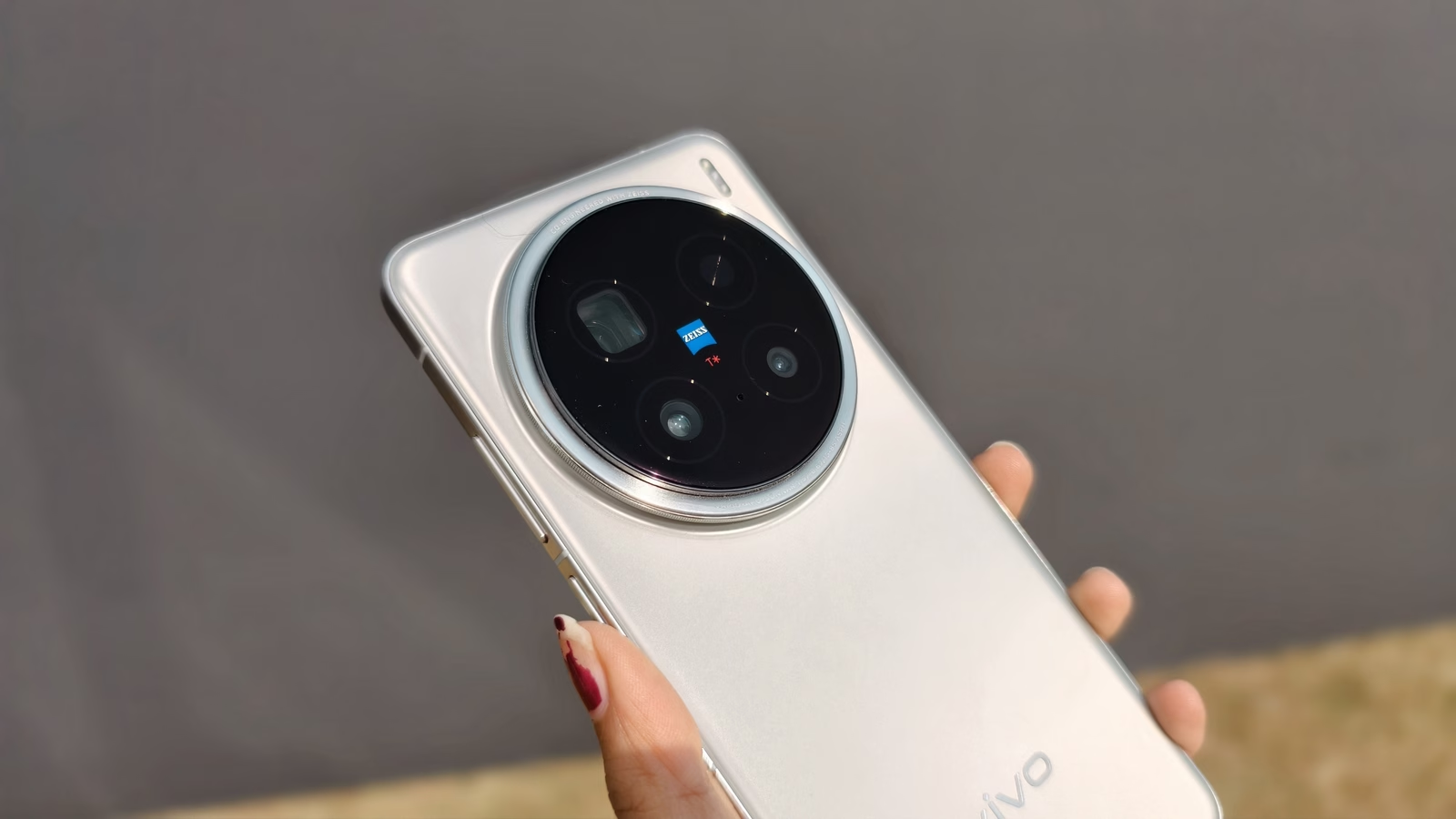

Vivo 2025 Launch Roadmap Leaked: Vivo X200 Ultra Expected in April

Vivo is gearing up for a dynamic 2025, with its product launch timeline for the year already generating buzz. Following the December release of the Vivo X200 Pro and Vivo X200 in India, the company is now rumored to be adding a new Vivo X200 Ultra to the lineup. Although Vivo has yet to confirm details, a well-known Chinese tipster has shared insights into the launch schedule for this anticipated flagship and other upcoming devices. Alongside the Vivo X200 Ultra, Vivo is reportedly planning to introduce its next-generation foldable phones in mid-2025 in China.

According to the tipster, Digital Chat Station, Vivo’s 2025 flagship release strategy will closely mirror its 2024 timeline. A new premium device featuring Qualcomm’s Snapdragon 8 Elite chipset is expected to debut as early as March or April. While the specific name of the device hasn’t been disclosed, many speculate it will be the Vivo X200 Ultra. This aligns with Vivo’s previous launch pattern, as the Vivo X100 Ultra was introduced in May of this year. If true, Vivo could be positioning the X200 Ultra as its standout offering in the premium smartphone segment.

Beyond the X200 Ultra, Vivo is also preparing to unveil its latest foldable smartphones, potentially the Vivo X Fold 4 and X Fold 4 Pro. These Snapdragon 8 Elite-powered devices are rumored to launch in June or July, targeting the growing foldable market. Vivo’s foldable lineup has been gaining traction, and these new models are expected to feature significant upgrades in design, performance, and durability, further solidifying Vivo’s foothold in this niche but expanding category.

Additionally, Vivo is said to be working on a diverse range of products for 2025. This includes a large tablet, likely aimed at productivity-focused users, and mid-range smartphones powered by MediaTek’s Dimensity 9400 chipset. These mid-range devices are expected to cater to a broader audience, offering premium features at an affordable price point. With such a comprehensive roadmap, Vivo is set to strengthen its presence across multiple market segments in the coming year.

OnePlus Buds Ace 2 Debut with 12.4mm Drivers and 43 Hours of Battery Life: Price and Key Features Revealed

OnePlus has officially launched the OnePlus Buds Ace 2 TWS earphones in China, alongside the OnePlus Ace 5 Pro and Ace 5 smartphones. These new earphones feature 12.4mm dynamic drivers for powerful audio output and include AI-enhanced dual microphone units for superior call quality. With support for active noise cancellation (ANC) and an IP55-rated build, the Buds Ace 2 offer durability against dust and water, making them a reliable companion for outdoor use. They also support dual-device connectivity and boast a low latency mode of up to 43ms, catering to gamers and multitaskers alike.

In terms of pricing, the OnePlus Buds Ace 2 are set at CNY 179 (approximately Rs. 2,100) in China. As part of a special limited-period launch offer, customers can grab them for CNY 169 (roughly Rs. 2,000). Moreover, buyers who purchase the earphones alongside any OnePlus Ace 5 series smartphone can avail them at an even lower price of CNY 159 (around Rs. 1,900). The earbuds are available through Oppo’s official online store and other e-commerce platforms in China.

The OnePlus Buds Ace 2 are available in two sleek color options—Flash Blue and Submarine Black—offering both style and functionality. These new models serve as the successors to the OnePlus Buds Ace, which were launched in February 2023. The refreshed design and improved features indicate OnePlus’s ongoing effort to enhance its audio product lineup and compete in the crowded TWS market.

With features like advanced ANC, dual-device pairing, and an IP55 rating, the OnePlus Buds Ace 2 stand out as a compelling option for users seeking premium audio quality at an affordable price. Their launch alongside the OnePlus Ace 5 series phones suggests a strategy to attract consumers with bundled offers, ensuring a seamless ecosystem experience for OnePlus users.