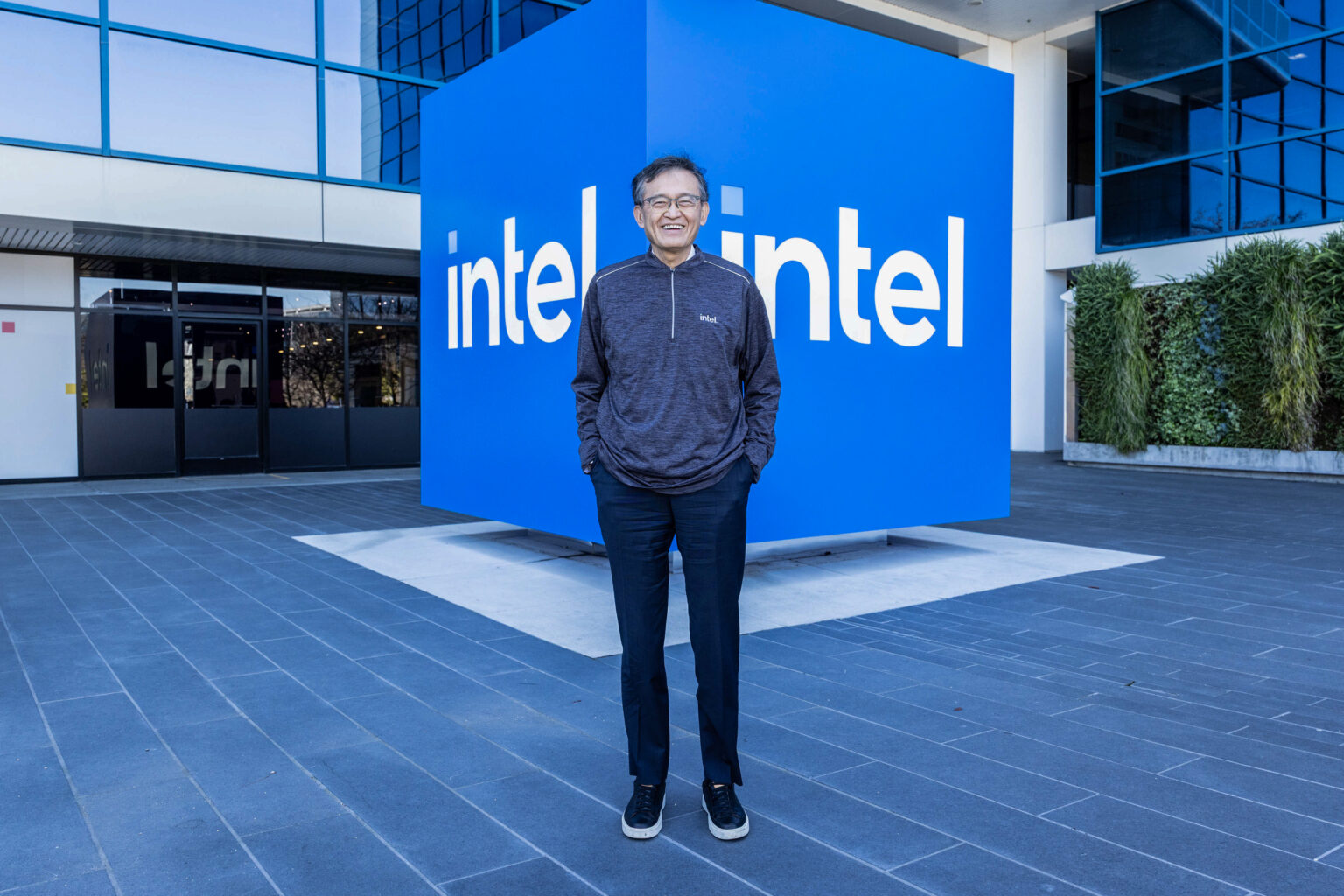
Intel CEO Lip-Bu Tan Takes Charge of AI Strategy After CTO Departs for OpenAI

Intel announced that its CEO Lip-Bu Tan will directly oversee the company’s artificial intelligence strategy, following the departure of Chief Technology Officer Sachin Katti to OpenAI, the creator of ChatGPT.

Katti, who had led Intel’s AI division since a major management reshuffle in January, revealed on X (formerly Twitter) that he joined OpenAI, where he will focus on building the company’s compute infrastructure to support artificial general intelligence (AGI) research.

Intel confirmed the move in a statement, saying: “We thank Sachin for his contributions and wish him all the best. Lip-Bu will lead the AI and Advanced Technologies Groups, working closely with the team. AI remains one of Intel’s highest strategic priorities.”

The leadership change comes at a crucial time for Intel, which is working to reposition itself in the AI chip race dominated by Nvidia and TSMC. While Intel’s CPUs are still widely used in AI server systems, the company has struggled to deliver a competitive data center AI chip to match Nvidia’s specialized silicon.

Katti joined Intel four years ago, initially heading its networking group before being promoted by then-CEO Pat Gelsinger. Under Tan, who took over in March 2025, Katti became both Chief Technology Officer and Chief AI Officer in April, part of a broader restructuring to streamline decision-making.

Tan, a seasoned industry leader known for bold turnarounds, has been reshaping Intel’s leadership. He recently expanded Naga Chandrasekaran’s responsibilities to strengthen Intel’s foundry operations and hired Kevork Kechichian, formerly of Arm, to head its data center division.

Intel continues to emphasize AI as central to its recovery strategy amid fierce global competition.

C3 AI Reportedly Exploring Sale After Founder-CEO Thomas Siebel Steps Down

C3 AI, a California-based enterprise artificial intelligence software company, is reportedly exploring a potential sale following the recent departure of its founder and long-time CEO Thomas Siebel due to health concerns, according to sources familiar with the matter.

The process is said to be in its early stages, with C3 AI also considering other strategic options, including raising private capital, the sources told Reuters. The company, headquartered in Redwood City, provides a platform used by clients such as Shell and the U.S. Air Force to build and operate large-scale AI applications. Its software is widely used across energy, manufacturing, and government sectors, positioning it as a smaller competitor to Palantir Technologies.

C3 AI currently has a market value of around $2.15 billion, but its shares have dropped over 54% this year amid financial struggles and uncertainty surrounding leadership changes.

In its most recent quarterly report, the company disclosed a net loss of $116.8 million (or $0.86 per share) for the fiscal quarter ending July 31, alongside a 19% revenue drop to $70.3 million. C3 AI also withdrew its full-year forecast in September, citing management transitions and a restructuring of its sales and service operations.

The company’s leadership transition saw Salesforce veteran Stephen Ehikian assume the CEO role on September 1, succeeding Siebel, who has moved to the position of executive chairman after revealing an autoimmune disease causing severe visual impairment.

Siebel, a renowned Silicon Valley entrepreneur, is best known for founding Siebel Systems, which he sold to Oracle in 2005 for $5.85 billion.

C3 AI’s board includes several prominent figures, such as former U.S. Secretary of State Condoleezza Rice, Fortune CEO Alan Murray, and former Apple general counsel Bruce Sewell.

SoftBank Profit More Than Doubles to $16.6 Billion on OpenAI Valuation Gains

SoftBank Group reported a stunning surge in quarterly profits, more than doubling its net income to 2.5 trillion yen ($16.6 billion) in the July–September period, thanks largely to massive valuation gains from its stake in OpenAI, the creator of ChatGPT.

The figure far exceeded analyst expectations — three LSEG analysts had forecast an average profit of just 207 billion yen — and also dwarfed the 1.18 trillion yen profit recorded during the same period last year.

SoftBank’s Vision Fund unit, which manages the company’s global technology investments, posted a 3.5 trillion yen investment gain, with 2.16 trillion yen attributed directly to its OpenAI holdings.

The result comes amid a surge in AI-related stocks and infrastructure spending, pushing SoftBank’s shares to record highs. The company has emerged as one of the biggest beneficiaries of the AI investment boom, fueled by global demand for computing power and data centers.

In March, SoftBank led a $40 billion funding round valuing OpenAI at $300 billion. By October, it joined a group of investors purchasing $6.6 billion worth of OpenAI shares from employees at a $500 billion valuation, marking one of the largest private valuations in tech history.

Still, some investors are wary of an emerging “AI bubble”, questioning whether such vast capital inflows can sustain their expected returns.

SoftBank is also ramping up other AI and semiconductor bets. It recently sold 32.1 million shares of Nvidia for $5.83 billion, raised more than 620 billion yen in bonds across three currencies, and secured bridge loans totaling over $15 billion to fund its OpenAI and Ampere chip ventures.

Founder and CEO Masayoshi Son, known for high-stakes investments in transformative technologies, remains confident in AI’s potential despite a mixed record that includes triumphs like Alibaba and failures such as WeWork.