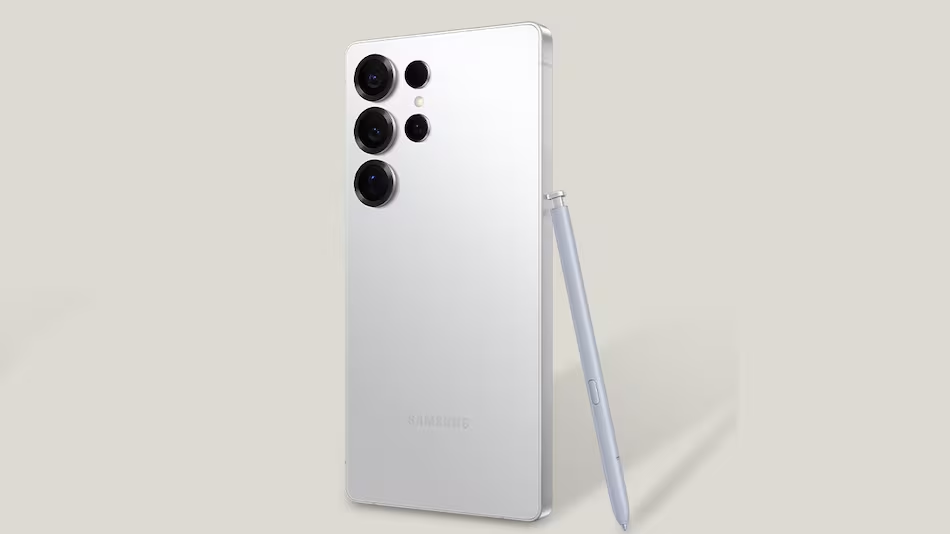
Samsung Galaxy S26 Ultra Camera and Charging Details Leak; Exynos 2600 Chipset Specs Also Surface

Samsung appears to be refining its flagship smartphone strategy with the Galaxy S26 Ultra rather than reinventing it, as per new leaks. Despite the highly anticipated debut of the Exynos 2600 chipset — which reportedly brings significant leaps in imaging and AI capabilities — the Galaxy S26 Ultra’s camera hardware may remain largely unchanged from its predecessor. This aligns with Samsung’s recent focus on optimizing performance, processing, and software-driven image quality rather than introducing entirely new camera sensors each year.

Samsung Galaxy S26 Ultra Camera Setup (Expected)

According to a post on X (formerly Twitter) by tipster @chunvn8888, the upcoming Galaxy S26 Ultra will retain the same 200-megapixel ISOCELL HP2 primary sensor, alongside a 50-megapixel ultrawide ISOCELL JN3 sensor and a 50-megapixel periscope telephoto lens featuring a Sony IMX854 sensor. The biggest reported change is in the 3x telephoto lens, which may get a small upgrade to a 12-megapixel Samsung S5K3LD sensor. For selfies, the phone is expected to sport a 12-megapixel Sony IMX874 front camera.

Exynos 2600 to Power Smarter Imaging

The Exynos 2600 chipset — expected to debut with the Galaxy S26 and S26+ — is said to feature a next-generation NPU (neural processing unit) designed for AI-enhanced photography and real-time scene optimization. It could handle more complex image segmentation and low-light processing with reduced power consumption. However, with the Galaxy S26 Ultra likely using a Snapdragon 8 Gen 4 chip globally, the Exynos-based AI enhancements may not directly benefit Ultra users, at least outside select regions.

Samsung’s Subtle Approach to Flagship Upgrades

This leak reinforces the idea that Samsung is focusing on refinement rather than reinvention for 2026. While rival brands like Xiaomi and Vivo continue to push boundaries with massive sensor upgrades and custom optics, Samsung seems intent on leveraging AI and computational photography to elevate image quality. If accurate, the Galaxy S26 Ultra may rely on its improved processing, enhanced HDR capabilities, and optimized algorithms to deliver more realistic, detail-rich images — even without a drastic hardware overhaul.
China Sends Youngest Astronaut Yet to Its ‘Heavenly Palace’ Space Station

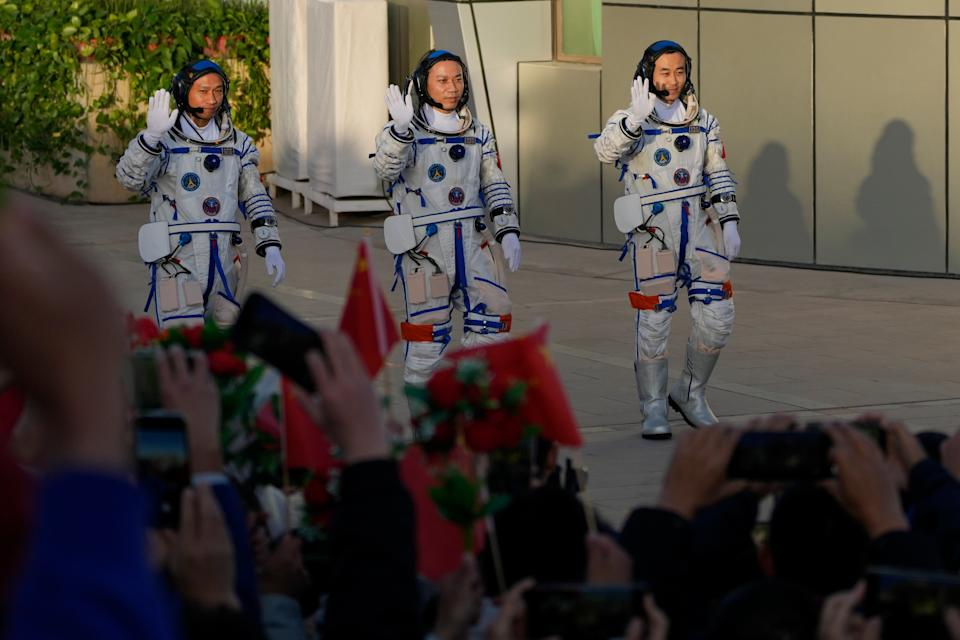
China has launched its Shenzhou-21 mission, sending a three-member crew — including the nation’s youngest astronaut to date — to the Tiangong (“Heavenly Palace”) space station, state media reported Friday.

The crew blasted off atop a Long March-2F rocket from the Jiuquan Satellite Launch Centre in northwest China, marking the seventh crewed mission to the permanently inhabited station since its completion in 2022.

The new team will spend six months aboard Tiangong, taking over duties from the Shenzhou-20 astronauts, who are expected to return to Earth in the coming days.

The mission’s commander, Zhang Lu, 48, previously flew on Shenzhou-15, while first-time astronauts Zhang Hongzhang, 39, and Wu Fei, 32 — China’s youngest astronaut ever to fly — complete the trio.

Joining them are four black mice, the first small mammals taken to the Chinese space station. They will be used in biological experiments to study reproduction in low Earth orbit, part of China’s broader push into space-based life sciences.

Biannual launches have now become standard for the Shenzhou program, which in recent years has achieved major milestones — including the first crewed missions by astronauts born in the 1990s, record-breaking spacewalks, and plans to send Pakistan’s first astronaut to Tiangong in 2026.

China’s rapid expansion in space exploration has drawn increasing attention from Washington, where NASA is racing to return American astronauts to the Moon before Beijing does. Both powers are also establishing rival frameworks for lunar exploration — the U.S.-led Artemis Accords and the China–Russia International Lunar Research Station initiative.

Qualcomm’s Strong Forecast Overshadowed by Expected Samsung Loss

Qualcomm projected stronger-than-expected quarterly sales and profit on Wednesday, buoyed by a rebound in premium smartphone demand, but its stock slipped in after-hours trading amid concerns over a potential loss of business from Samsung next year.

For the quarter ending in December, the chip designer forecast revenue and adjusted earnings at midpoints of $12.2 billion and $3.40 per share, beating analyst expectations of $11.62 billion and $3.31, according to LSEG data.

However, CEO Cristiano Amon said the company expects to supply about 75% of the modem chips for Samsung’s upcoming Galaxy S26 lineup — down from 100% for the current Galaxy S25 models. The announcement sent Qualcomm shares down 2.7% in extended trading after a 4% rise earlier in the day.

Despite the setback, Amon emphasized that Qualcomm is diversifying beyond smartphones into automotive, laptop, and data center chips, as longtime client Apple moves toward producing its own modems.

He also revealed that Qualcomm is in discussions with a “large hyperscaler” — an AI-focused computing company — following its recent deal with Humain, an AI firm backed by Saudi Arabia’s sovereign wealth fund.

The company’s fiscal fourth-quarter results also outperformed expectations, with $11.27 billion in sales and $3 per share in adjusted profit, compared to estimates of $10.79 billion and $2.88.

Amon said the forecast reflects a surge in demand for high-end smartphones capable of running AI applications, especially in markets like China and India, where consumers are “upgrading from mid-range to premium.”