
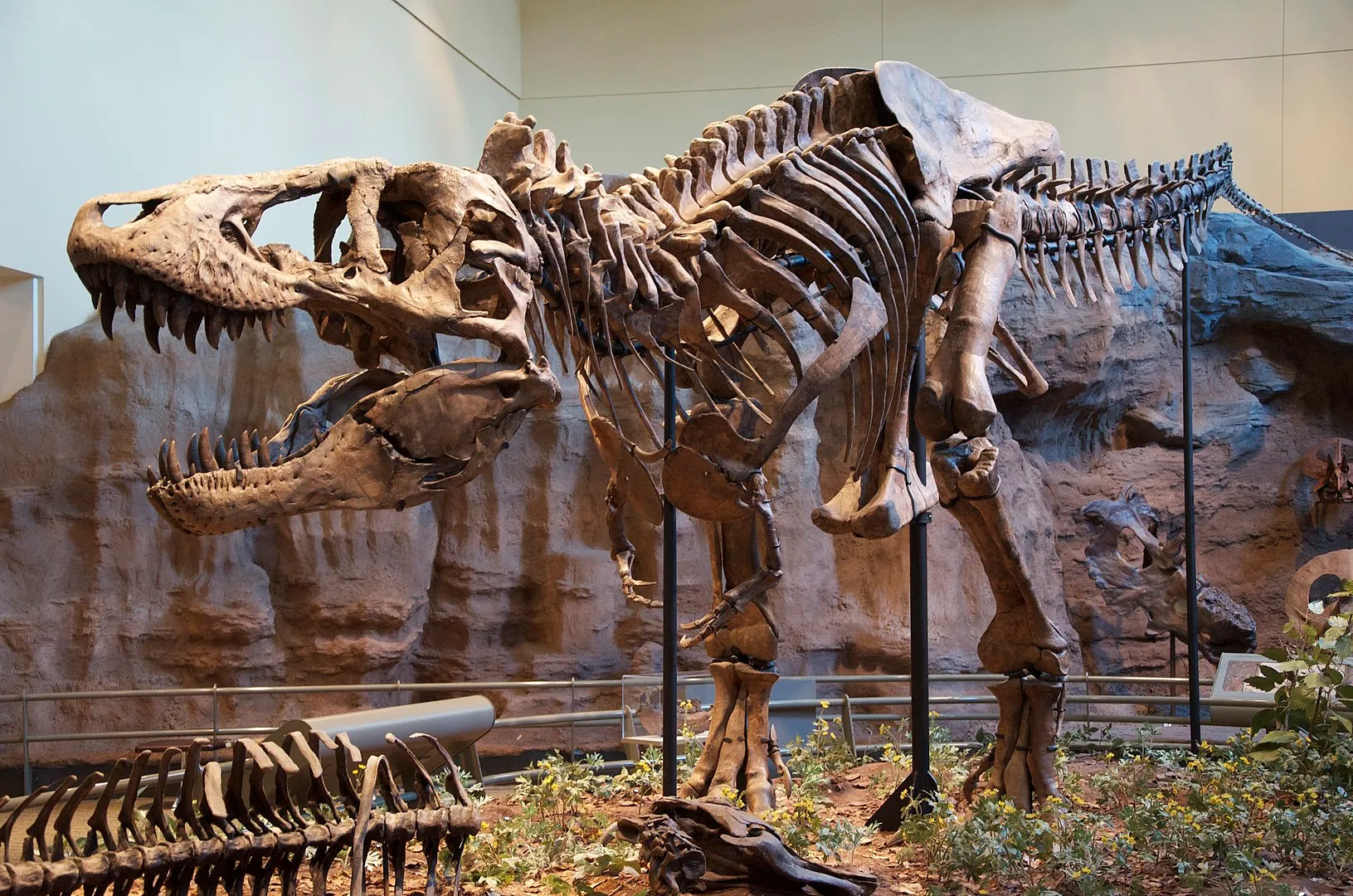
A recent study led by Thomas Carr, an associate professor of biology at Carthage College, has uncovered a troubling trend in the fossil market that is hindering scientific research into one of the most iconic prehistoric creatures: the Tyrannosaurus rex. Carr’s research reveals that private and commercial ownership of T. rex fossils has now surpassed the number of specimens housed in public museums and trusts, making it harder for researchers to access these valuable fossils. The private market is also more prolific than previously understood, with commercial entities reportedly discovering twice as many T. rex fossils as public institutions. This shift is significantly limiting the amount of information available for scientific study, particularly when it comes to understanding the full life cycle of the T. rex.
Carr’s study focused on what he termed “scientifically informative” specimens, such as complete skulls, skeletons, and significant isolated bones. These fossils provide critical insights into the physiology, behavior, and development of the T. rex. Unfortunately, the private market has made it increasingly difficult for researchers to obtain these specimens. One of the key concerns highlighted in the study is the loss of juvenile and subadult fossils, which are already rare and underrepresented in the fossil record. The absence of these fossils represents a major gap in our understanding of how the T. rex grew and developed, making it one of the most significant losses in paleontological research.
In his findings, published in Palaeontologia Electronica, Carr emphasized the disparity between public and private holdings of T. rex fossils. His research revealed that while there are 61 specimens of T. rex in public trusts, there are 71 in private hands, including 14 juveniles. The fact that more T. rex fossils are now privately owned than publicly accessible is a concerning development for the scientific community. The study’s conclusions underline the urgent need for greater regulation of the fossil trade to ensure that these specimens are preserved and made available for research.
Carr’s work is not just a call for attention to the T. rex, but to the broader implications of the growing luxury fossil market, which affects not just the famous dinosaur, but other ancient species as well. In 2024, a Stegosaurus fossil broke auction records by selling for $44.6 million, a price tag that highlights the increasing commercialization of fossils. Carr hopes that his research will spark further academic inquiry into the influence of the fossil trade on the study of prehistoric life. By raising awareness of this issue, he aims to inspire other researchers to examine how the commercialization of fossils is impacting our understanding of ancient ecosystems and species.