NASA Explores Crystal Growth in Space to Unlock Future Technological Advances
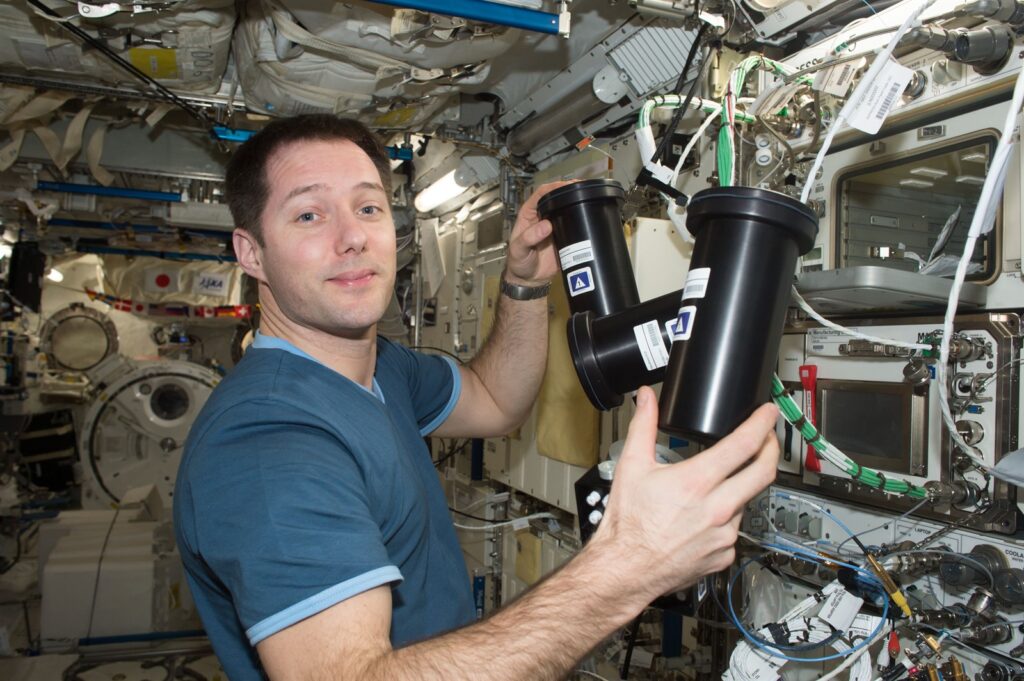
NASA scientists have long been fascinated by the process of crystallisation and its potential to improve technologies here on Earth. Most recently, researchers have turned their attention to how crystals form in microgravity aboard the International Space Station (ISS). A team led by Alexandra Ros from Arizona State University launched a series of protein crystallisation experiments using specially designed microfluidic devices. These experiments aim to evaluate whether the low-gravity environment of space enables the formation of higher-quality protein crystals compared to those grown under Earth’s gravity. If successful, this could revolutionize how we approach drug development, materials science, and more.
Crystallisation is the process through which liquid or molten materials cool and solidify into highly ordered structures known as crystals. These formations aren’t limited to gemstones or snowflakes—they are an essential part of modern life. From natural minerals to complex synthetic compounds, crystals can form from a variety of substances and serve diverse purposes across industries. Understanding how to control and optimize crystallisation can lead to better materials and more precise scientific tools.
Everyday items owe their functionality to crystals. Whether it’s the ceramic in your coffee mug, the silicon in your smartphone, or the memory chips that store your data, crystallisation plays a central role in shaping their components. Semiconductor crystals are critical for detecting radiation such as gamma and infrared rays, and optical crystals power laser technologies used in everything from barcode scanners to medical instruments. Even the durable turbine blades in jet engines rely on metal crystals designed for high strength and heat resistance.
The implications of space-based crystal research are profound. If space-grown crystals can achieve superior structure and purity, scientists could gain new insights into diseases, develop more effective medications, and engineer advanced materials with exceptional precision. As NASA and its research partners continue to explore these possibilities, microgravity experiments may become a cornerstone in developing next-generation technologies—both in orbit and back on Earth.