Astronomers Identify ‘Super-Earth’ GJ 251 c as a Top Candidate for Potential Alien Life
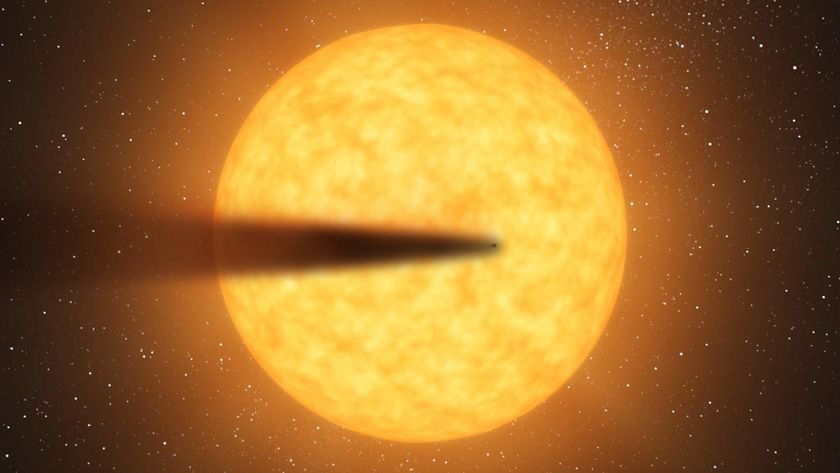
Astronomers from an international team, including researchers at Penn State, have discovered a new super-Earth exoplanet orbiting the nearby star GJ 251. Named GJ 251 c, the planet has a mass roughly four times that of Earth and is likely rocky. Importantly, it orbits within the star’s habitable zone, the range where conditions could allow liquid water to exist, making it one of the most promising candidates for potentially supporting alien life.
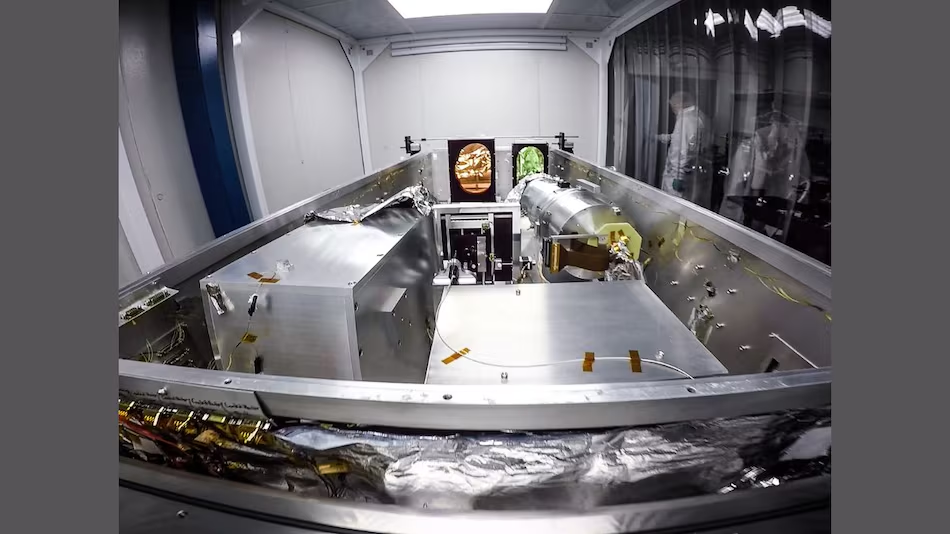
The discovery relied on the radial-velocity method, which detects tiny “wobbles” in a star’s motion caused by the gravitational pull of orbiting planets. By analyzing 20 years of observations, astronomers observed a consistent 54-day wobble in the light of GJ 251. Crucial to the detection was the Habitable Zone Planet Finder (HPF), a high-precision infrared spectrograph on the Hobby-Eberly Telescope, which splits the star’s light to reveal subtle shifts caused by the planet’s gravity.
Because GJ 251 c lies in the habitable zone, it could have conditions suitable for liquid water, a key ingredient for life as we know it. Studying its atmosphere and potential biosignatures, however, will require more advanced technology. Upcoming 30-meter-class telescopes are expected to directly image nearby rocky planets and analyze their atmospheres in detail, which could allow scientists to detect signs of life on worlds like GJ 251 c.
Researchers emphasize that GJ 251 c represents one of the best candidates for finding atmospheric signatures of life in the next decade. The discovery highlights how increasingly precise instruments and observational techniques—from space-based transit surveys to long-term radial-velocity monitoring—are bringing Earth-like exoplanets closer into scientific reach. This super-Earth could provide a critical laboratory for understanding habitability beyond our solar system.