Australia Detects Asteroid Impact, Yet Crater Remains Elusive
Lost Asteroid Crater in Australia Traced Through Ancient Glass Fragments
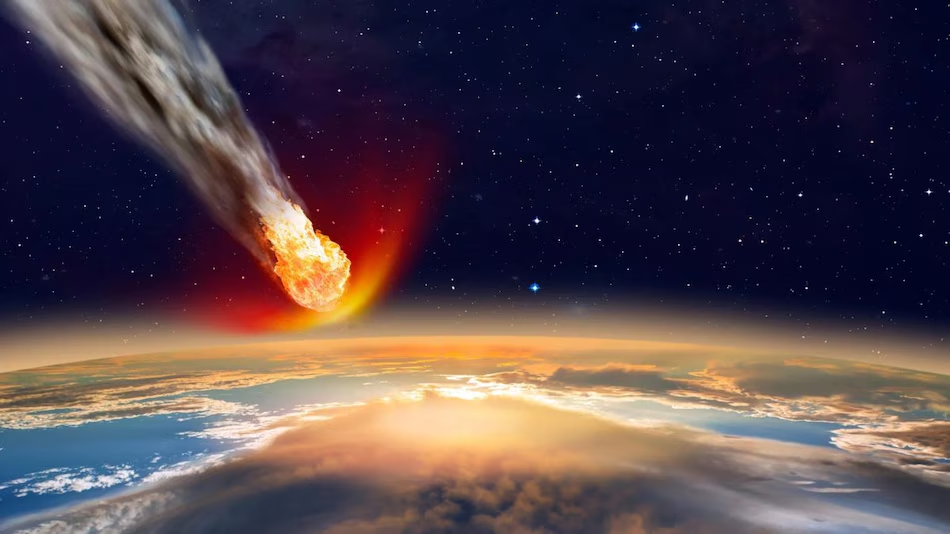
A remarkable discovery in South Australia is shedding light on a colossal asteroid impact that occurred roughly 11 million years ago. Researchers have been examining natural glass fragments scattered across the region, known as tektites, which form when a meteorite strikes the Earth with enough force to melt surface rocks and propel molten debris across vast distances. These unique fragments are now providing evidence of a catastrophic event previously unknown to science.
Despite the clear presence of these tektites, the actual impact crater remains elusive, leaving scientists puzzled about the exact location of the asteroid’s collision. The mystery of a “missing crater” adds an extra layer of intrigue to this ancient event, highlighting how much remains to be discovered about Earth’s violent history.
The findings, published in Earth and Planetary Science Letters, were led by Anna Musolino from Aix-Marseille University, alongside Professor Fred Jourdan from Curtin University. Their research focused on the unusual chemistry and ancient age of the tektites, which set them apart from all previously documented types of natural glass in Australia.
Professor Jourdan described the discovery as uncovering “time capsules from deep in Earth’s history,” explaining that the tektites “recorded an ancient impact event we did not even know about.” These fragments not only reveal the magnitude of the asteroid strike but also offer scientists a rare glimpse into the processes that shaped the planet millions of years ago.