Black Hole Destroys Star, Emits Intense Flares Half a Year Later
Giant Black Hole Tears Star Apart, Triggers Delayed Flares
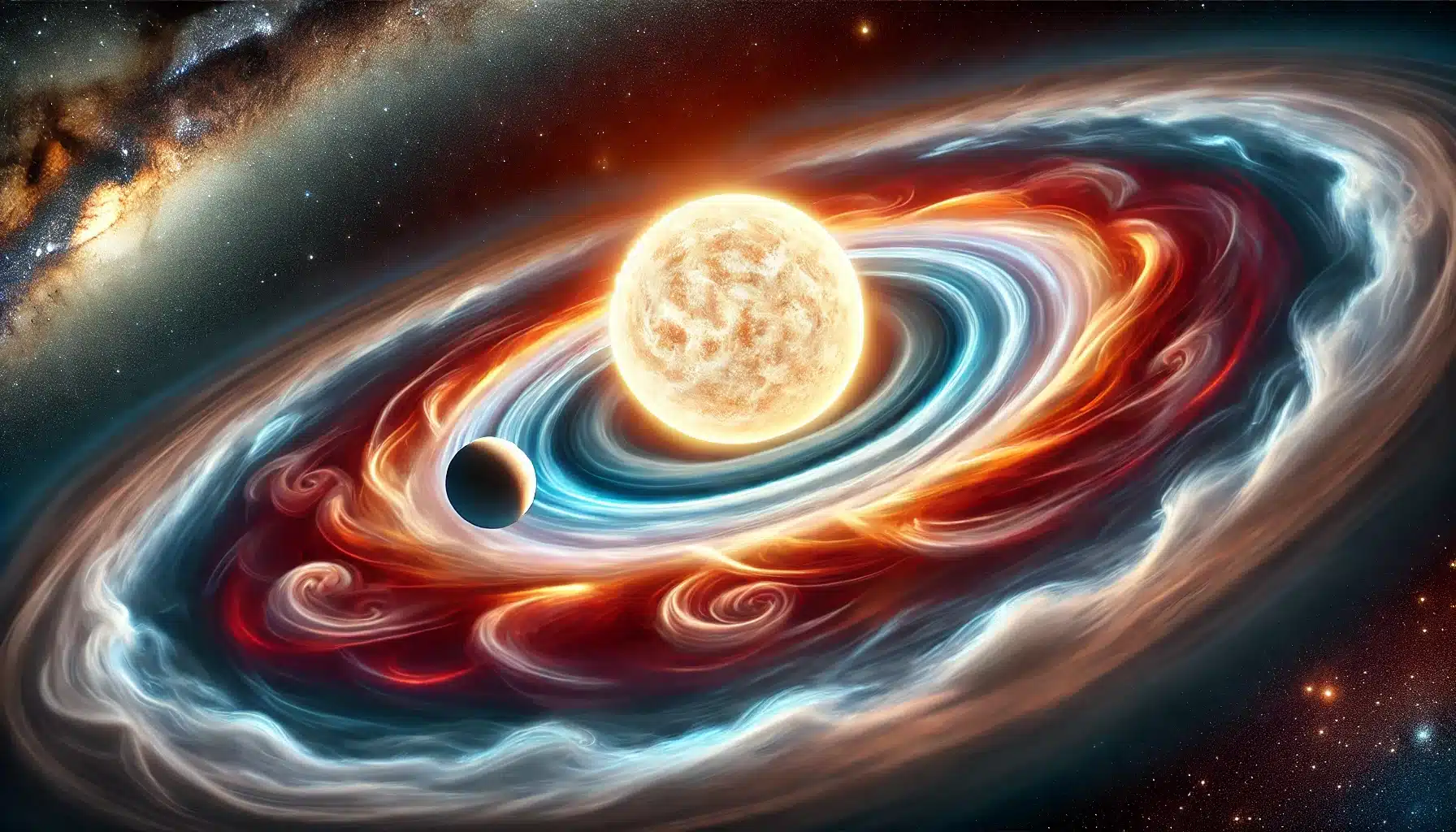
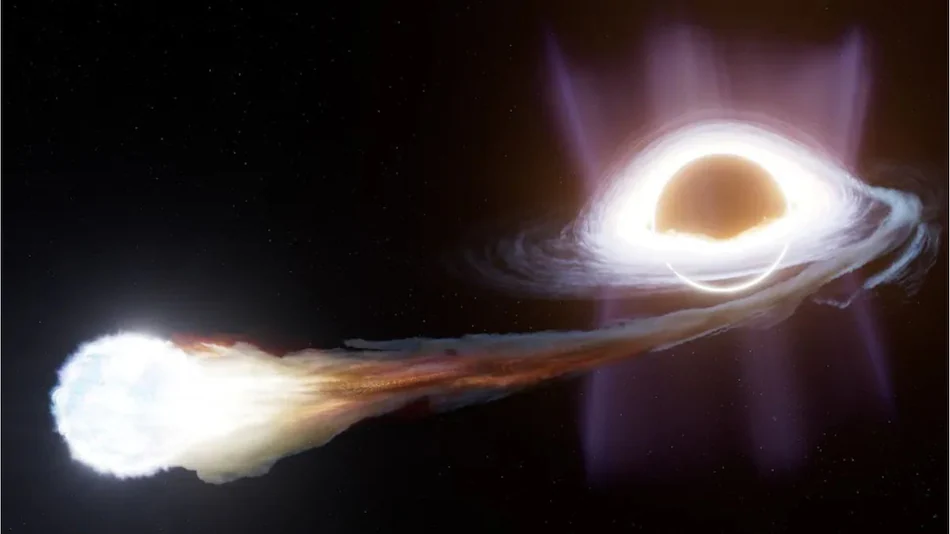
In mid-October 2025, astronomers reported a remarkable and rare event: a supermassive black hole, located approximately 650 million light-years away, tore a star apart. Nearly six months after the initial tidal disruption, the black hole emitted two sudden, powerful energetic flares, challenging existing theories about how and where black holes consume stars. This type of event, known as a tidal disruption event (TDE), was first identified in 2024 by the Zwicky Transient Facility (ZTF) at the Palomar Observatory in California.
Discovery and Initial Detection
The phenomenon was first observed in late 2024 when the ZTF, using the Samuel Oschin Telescope at Palomar, detected unusual light signatures consistent with a star being torn apart. The discovery prompted an international team of astrophysicists, led by Itai Sfaradi and Raffaella Margutti from UC Berkeley, to begin monitoring the event in detail.
Global Observations and Radio Monitoring
To track the aftermath of the stellar destruction, the team employed radio telescopes across the globe, including the Very Large Array in New Mexico and ALMA in Chile. These instruments captured two delayed radio outbursts, providing a unique glimpse into the complex processes following a star’s tidal disruption.
Implications for Astrophysics
The delayed flares and the behavior of this TDE suggest that black holes can interact with stars in ways that were previously unpredicted. By studying such rare events, scientists hope to refine models of stellar consumption, improve understanding of black hole feeding mechanisms, and gain insights into the extreme physics near these cosmic giants.