
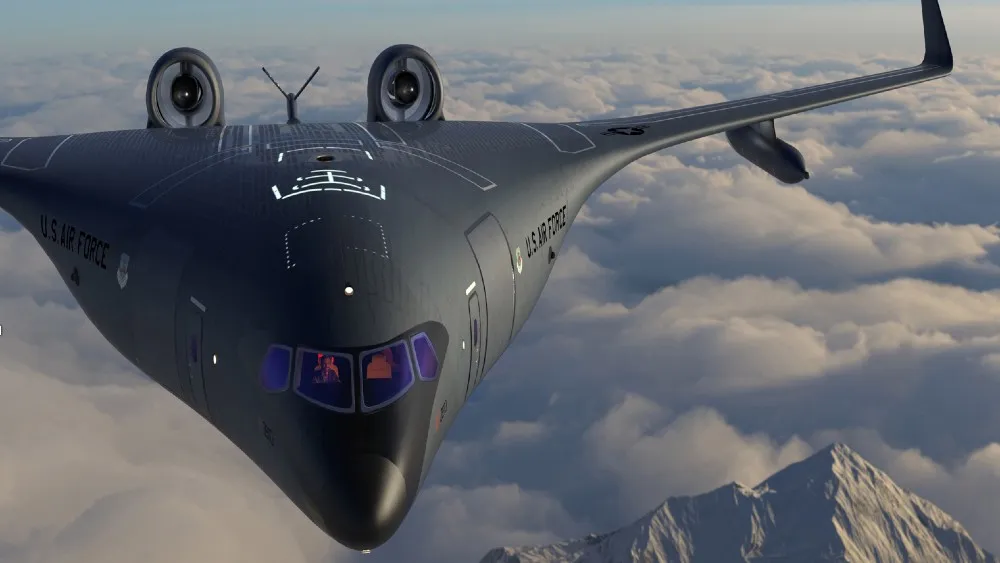
A new era of aviation may be taking shape as blended-wing aircraft—once a science fiction concept—edge closer to becoming reality.
In March 2025, a small V-shaped demonstrator named “Steve” took flight over Oregon, marking the first step toward a radical airliner design envisioned by Seattle-based startup Outbound Aerospace. The company aims to develop a 200–250 seat blended-wing airliner called Olympic, expected to debut in the 2030s.
Unlike traditional “tube-and-wing” aircraft, blended-wing designs merge the fuselage and wings into one unified aerodynamic structure, promising up to 50% lower fuel burn, quieter flight, and larger cabin space. Originally pioneered for military bombers, this concept may now find a place in commercial aviation as pressure mounts to cut emissions.
Outbound’s rapid prototyping has drawn attention—its team designed and built Steve in just nine months, far faster than traditional aerospace development cycles. “We can drastically reduce the time and cost of creating new aircraft,” said Jake Armenta, the company’s co-founder and CTO.

The demonstrator has also attracted interest from the U.S. Department of Defense and commercial drone operators thanks to its large cargo capacity, leading Outbound to develop it into a cargo drone named Gateway.
Outbound is not alone in the race. JetZero, a California startup backed by the U.S. Air Force, United Airlines, and Alaska Airlines, is developing its own Z4 blended-wing airliner with production planned for 2027. Nautilus and other competitors are also exploring similar designs.
If successful, these projects could break the Boeing-Airbus duopoly that has dominated civil aviation for decades. But experts caution that the path to certification and profitability is long and expensive.
“This has been called the holy grail of aviation,” said aerospace analyst Bill Sweetman. “The technology is impressive, but turning it into a commercial success will take enormous capital and patience.”
Still, startups like Outbound remain undeterred. “There’s a hunger for something new in aerospace,” said Aaron Boysen, Outbound’s director of business development. “We’re building that future.”