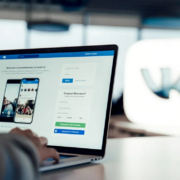
Russia Looks to WeChat and Douyin to Build Max Messaging Platform

Russia is turning to Chinese digital platforms as benchmarks for developing its domestic messaging ecosystem, with VK aiming to transform its Max app into a multifunctional “super app.”

According to CEO Vladimir Kiriyenko, the company is closely studying WeChat—developed by Tencent—and Douyin, the Chinese counterpart of TikTok, as models for integrating messaging, payments, e-commerce and business services into a single platform.

The Kremlin has been actively promoting Max as a domestic alternative to Telegram, which remains the most widely used messaging service in Russia. However, adoption has been limited, with users citing weaker functionality compared to established platforms.

VK aims to replicate the “platform economy” approach seen in China, where apps serve as ecosystems combining communication, financial services and commerce. Kiriyenko noted that Max will leverage an open architecture to integrate third-party chatbots and services, enabling businesses to interact directly with users. Around 500,000 companies have already registered on the platform.

The strategy includes incorporating features inspired by WeChat’s mini-program ecosystem and Douyin’s content-driven e-commerce model, where users discover and purchase products through creator-led content.

Russia’s push reflects broader efforts to reduce reliance on foreign technology platforms while fostering domestic digital infrastructure. However, replicating the scale and functionality of Chinese super apps presents significant technical and adoption challenges.
Citigroup Uses AI to Accelerate Onboarding and System Upgrades

Citigroup is deploying artificial intelligence to streamline operations, focusing on faster account onboarding and modernization of legacy systems.

According to Tim Ryan, AI tools are being used to migrate data from outdated infrastructure, automate software development tasks and accelerate system testing. These improvements are part of a broader effort to enhance productivity and meet regulatory requirements.

One of the most immediate impacts has been in client onboarding. AI-powered document processing has reduced review times for account openings in the bank’s U.S. services division from over an hour to approximately 15 minutes, significantly improving efficiency.

The initiative also supports Citigroup’s long-term strategy to reduce reliance on external contractors. Previously, contractors made up about 50% of the bank’s technology workforce. The company aims to bring that figure down to 20% by hiring more in-house engineers and strengthening internal capabilities.

Citigroup has expanded its technology workforce to roughly 50,000 employees and continues to increase investment in digital infrastructure. The push toward internal development aligns with its goal of deploying standardized AI tools across business units.

The bank is prioritizing automation in key operational areas, including client and employee onboarding as well as compliance processes such as “know your customer” (KYC) checks.

These efforts come as U.S. regulators, including the Federal Reserve and the Office of the Comptroller of the Currency, continue to require improvements in risk management, data governance and reporting accuracy following consent orders issued in 2020.

Citigroup’s approach reflects a broader trend in the banking sector, where AI is increasingly used to optimize operations, reduce costs and adapt to evolving regulatory and competitive pressures.

Chinese SUV Test Raises Concerns for US Automakers

A detailed evaluation by Edmunds of a Chinese SUV has highlighted growing competitive pressure on U.S. carmakers, particularly in technology and pricing.

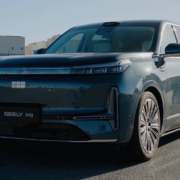
The vehicle tested, the Geely Galaxy M9 from Geely, is an extended-range hybrid SUV priced at around $25,000 in China. Despite regulatory barriers preventing its sale in the United States, Edmunds conducted a full performance assessment, including real-world driving and a 227-point evaluation.

According to Edmunds’ Editor-in-Chief Alistair Weaver, the M9’s features and technology are “ahead” of many vehicles currently available in the U.S. market. The model includes a large 30-inch infotainment display, advanced in-car entertainment features and premium additions such as a built-in refrigerator and exterior speakers.

Performance metrics also stood out. The M9 offers an estimated range of over 800 miles, combining electric driving with a gasoline-powered generator. It can travel approximately 100 miles purely on electric power, exceeding expectations for similar upcoming models in Western markets.

Edmunds concluded that the vehicle competes with significantly more expensive models such as the Hyundai Palisade, Kia Telluride and Toyota Grand Highlander—despite costing roughly half as much in its home market.

While Chinese vehicles remain largely excluded from the U.S. due to tariffs and regulatory barriers, consumer interest is rising. Surveys indicate growing openness to Chinese brands, with some buyers even exploring indirect import routes via neighboring countries.

The findings underscore a broader industry shift. Chinese automakers, operating in a highly competitive domestic market, are delivering feature-rich vehicles at aggressive price points. This dynamic is pushing global competitors, including Ford and Stellantis, to accelerate development of hybrid and next-generation vehicle technologies.

Analysts warn that if access to such vehicles remains restricted, U.S. consumers could face higher prices and slower innovation compared to global markets.