
Indian IT Firms Brace for Weak Quarter Despite Currency Boost

India’s leading IT services companies, including Tata Consultancy Services, Infosys and HCLTech, are expected to report subdued fourth-quarter results, with growth driven more by currency effects than underlying demand.

Brokerage estimates suggest revenue and profit will rise roughly 10% year-on-year. However, much of that increase is attributed to the depreciation of the Indian rupee, which boosts earnings when dollar-denominated revenues are converted into local currency.

On a constant currency basis—excluding exchange rate effects—growth remains weak, with top firms expected to post only modest gains. Analysts highlight ongoing macroeconomic uncertainty, geopolitical tensions and cautious client spending as key factors limiting expansion.

Discretionary IT spending continues to lag, particularly in sectors such as retail, healthcare and technology, while banking and financial services remain relatively stable. Longer deal cycles and a shift toward cost optimisation projects are also constraining revenue momentum.

The sector is also facing structural concerns related to artificial intelligence. New capabilities from firms like Anthropic and Palantir are raising questions about whether traditional IT outsourcing models could be disrupted.

Forecasts for the next fiscal year remain conservative. Infosys is expected to guide for 2%–4% growth, while HCLTech may project 4%–6%, reflecting continued caution among enterprise clients.

The broader $315 billion Indian IT sector, employing nearly 6 million people, has struggled to regain the double-digit growth rates last seen in 2023. Stock performance reflects these concerns, with IT shares significantly underperforming the wider market this year.

Analysts note that valuations now imply low growth expectations, meaning even modest improvements in outlook could support share prices. However, a sustained re-rating will depend on whether companies can demonstrate resilience and adaptation in an AI-driven environment.
Chinese Factory Adapts to Tariffs, Keeps Core in China

A Chinese electronics manufacturer has demonstrated how firms are adapting to geopolitical shocks, showing resilience despite tariffs introduced during the Donald Trump administration.

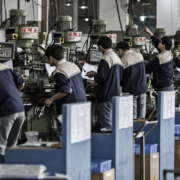
Agilian Technology, a mid-sized exporter based in Dongguan, faced severe disruption in 2025 when U.S. tariffs caused clients—many of whom account for over half its revenue—to freeze orders and push for production relocation outside China. At the peak of tensions, tariffs between the U.S. and China exceeded 100%, effectively halting trade flows.

Despite this, the company ultimately reaffirmed China as its core manufacturing base. Executives cited the country’s unmatched supply chain integration, production speed and component availability as factors that are difficult to replicate elsewhere.

Attempts to diversify production revealed structural challenges. Expansion efforts in India were slowed by regulatory delays and operational inefficiencies, while Malaysia offered a more viable alternative but still lagged behind China in execution speed. Even relocating to the U.S. proved impractical due to higher labor costs and reliance on Chinese-made components.

Meanwhile, China’s countermeasures—including export controls on critical minerals—highlighted Western dependence on its industrial ecosystem. Combined with partial tariff rollbacks following negotiations between Washington and Beijing, these factors helped revive manufacturing activity.

By the second half of 2025, Agilian reported a 29% increase in production hours, marking its busiest period on record. Orders resumed as clients adjusted to a “new normal” of elevated but manageable tariffs.

The case reflects a broader trend: rather than fully exiting China, companies are adopting a “China-plus-one” strategy—maintaining core operations domestically while building secondary capacity abroad as a hedge against future disruptions.

Economists note that tariffs have reshaped global supply chains but have not fundamentally weakened China’s manufacturing dominance. Instead, they have accelerated diversification while reinforcing the country’s central role in global production networks.

US Closes Tesla Probe on Remote Driving Feature

U.S. regulators have ended an investigation into Tesla’s remote driving feature after determining it posed limited safety risk following software improvements.

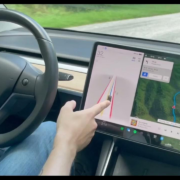
The National Highway Traffic Safety Administration (NHTSA) reviewed the company’s “Actually Smart Summon” system, which allows users to move vehicles short distances via a smartphone, typically in parking environments. The probe covered approximately 2.6 million vehicles.

Authorities identified around 100 reported incidents linked to the feature. These cases largely involved low-speed collisions with stationary objects such as parked cars, garage doors or gates. No injuries, fatalities, airbag deployments or major crashes were recorded.

Regulators concluded that the frequency and severity of these incidents did not justify further enforcement action. Tesla had already deployed software updates to address identified issues, including enhancements to obstacle detection, environmental awareness and system response to dynamic conditions.

The updates also targeted limitations caused by camera obstruction factors such as snow or condensation, which had contributed to early-stage errors during feature activation.

Despite the closure of this probe, Tesla’s broader autonomous driving systems remain under scrutiny. The NHTSA recently escalated its investigation into the company’s Full Self-Driving (FSD) technology to an engineering analysis stage, covering more than 3 million vehicles and examining reports of traffic violations and crashes.

The decision underscores a regulatory approach that differentiates between low-risk driver-assistance features and more complex autonomous systems, which continue to face heightened oversight.