
Payment System Outage Disrupts Moscow Transport and Shops

A widespread payment system disruption caused significant disruption across Moscow on Friday, affecting public transport, retail stores and services.

Shoppers and commuters reported failures in card and QR code payments, with many businesses temporarily switching to cash-only transactions. The issue also impacted the Moscow metro, where turnstiles were opened to allow passengers to travel without payment during the outage.

The disruption was linked to problems involving Sberbank, Russia’s largest financial institution, though the exact cause has not been disclosed. The bank later confirmed that services had been restored but did not provide further details.

Other services were also affected, including a regional zoo in Belgorod, which asked visitors to pay in cash due to the outage. Petrol stations and shops across the region experienced similar issues for about an hour.

Authorities, including Central Bank of Russia, have not yet commented on the root cause of the disruption.

The incident highlights the vulnerability of digital payment infrastructure in large urban centers, particularly when widely used systems experience sudden failures.

Turkey Probes Google Over Advertising Practices

Turkish Competition Board has launched an investigation into Google and its parent Alphabet Inc. over concerns related to advertising and billing practices.

The probe will examine whether Google’s commercial conduct in its online advertising services violates Turkish competition laws. Authorities are focusing on how the company charges advertisers and advertising agencies, as well as whether its billing systems and practices create unfair market conditions.

Regulators have not yet concluded whether any violations occurred, but the investigation signals increasing scrutiny of major technology firms in digital advertising markets.

Google has faced similar regulatory pressure globally, as governments assess the dominance of large platforms in online advertising and their relationships with clients and partners.

The outcome of the investigation could lead to fines or regulatory changes if authorities determine that competition rules have been breached.

Chinese SUV Test Signals Threat to US Automakers

Automotive review platform Edmunds has tested a Chinese SUV for the first time and concluded that U.S. automakers face a credible competitive threat from China’s rapidly advancing vehicle technology.

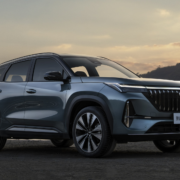
The vehicle evaluated was the Geely Galaxy M9, produced by Geely. Despite being largely unavailable in the U.S. due to tariffs and regulatory barriers, the model was tested extensively in California, including a full 227-point assessment covering performance, range and usability.

Edmunds reported that the SUV delivers features and technology that rival — and in some cases exceed — vehicles currently sold in the U.S. market. The model includes a large infotainment display, advanced in-car features such as a built-in refrigerator and entertainment systems, and a hybrid system capable of delivering an estimated 800+ miles of range.

Notably, the Galaxy M9 starts at around $25,000 in China, yet performs comparably to significantly more expensive vehicles such as the Hyundai Palisade, Kia Telluride and Toyota Grand Highlander.

Although Chinese vehicles are effectively blocked from the U.S. market by tariffs approaching 100%, consumer interest is rising. Some buyers are reportedly exploring ways to import such vehicles indirectly through neighboring markets.

Industry analysts attribute China’s rapid progress to intense domestic competition, which has driven manufacturers to deliver highly advanced vehicles at aggressive price points. Meanwhile, Western automakers are beginning to respond, with companies like Ford and Stellantis planning new hybrid models to stay competitive.

The findings highlight a broader concern: if trade barriers ease or global competition intensifies further, Chinese automakers could significantly disrupt established markets.