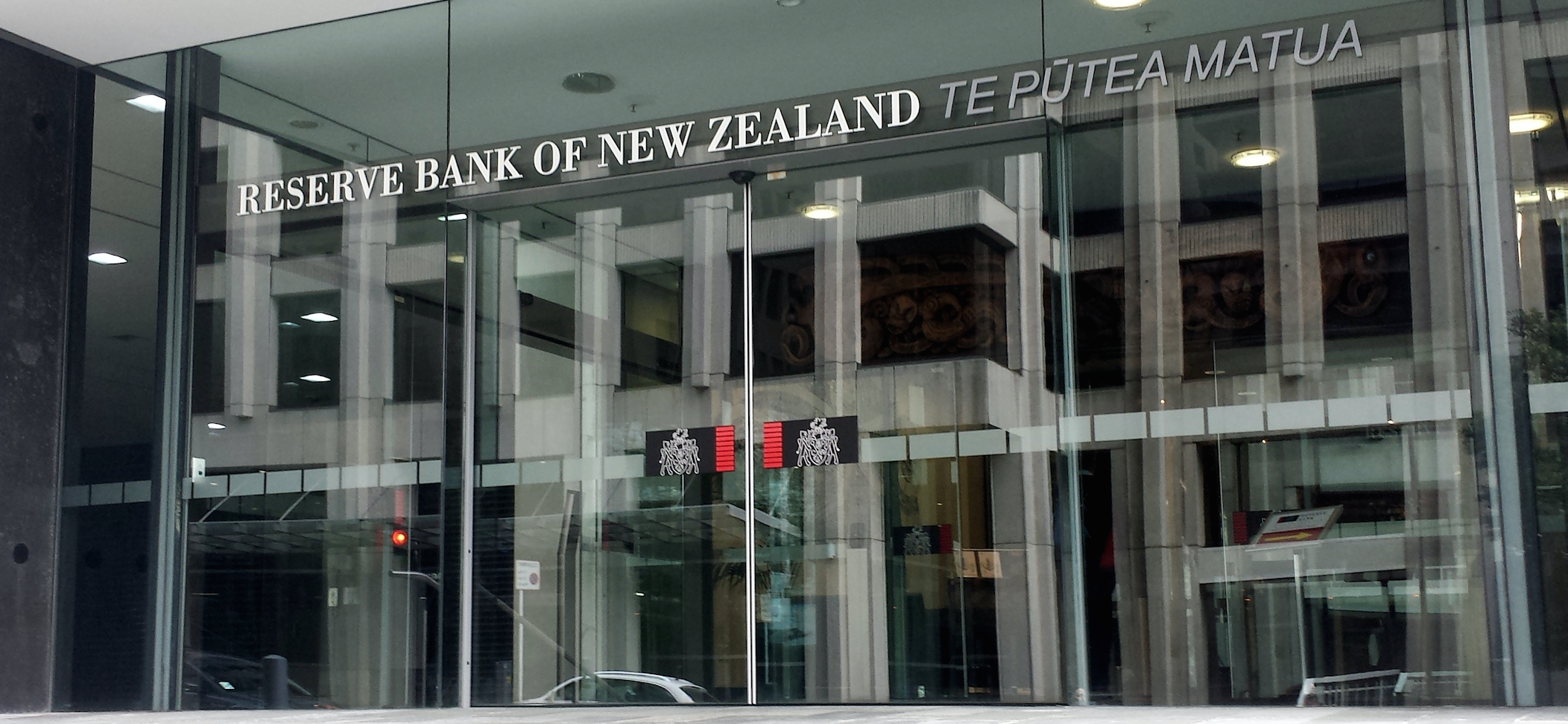
Reserve Bank of New Zealand Warns of Economic Challenges Amid Rising Unemployment

On Tuesday, the Reserve Bank of New Zealand (RBNZ) delivered a stark economic outlook, highlighting rising unemployment and financial constraints that have prompted businesses to defer investment plans. In its semi-annual Financial Stability Report, the RBNZ noted that domestic economic struggles are intensifying, with global economic stagnation and elevated interest rates further dampening demand.

The report indicated that New Zealand’s economy faced significant headwinds, with weak business profitability and subdued demand exacerbated by lingering cost pressures. This challenging trade environment, coupled with slower global growth, has complicated financial stability for many firms. “Rising unemployment is starting to create acute financial difficulties for some households,” the RBNZ report stated, pointing to increasing hardship as the labor market softens.

Over recent years, New Zealand’s economic growth has fluctuated, occasionally dipping into negative territory. The RBNZ anticipates a contraction in the third quarter of 2024, following cash rate hikes aimed at curbing inflation. While inflation has shown signs of easing, rising unemployment and low consumer confidence continue to be areas of concern.

Since August, the RBNZ has reduced the official cash rate by 75 basis points, a move intended to stimulate demand, but the effects of these rate cuts have yet to fully materialize in the broader economy. Governor Adrian Orr expressed concern over this lag effect during a press briefing, stating, “You don’t want surprises or shocks to the downside during that period.”

Despite the economic difficulties, the central bank assured that New Zealand’s financial system remains stable. The RBNZ noted that although banks are preparing for a slight uptick in non-performing loans, this level remains below those observed in past recessions. Deputy Governor Christian Hawkesby emphasized that New Zealand banks are well-positioned to support both households and businesses through these economic challenges.

 

Global Markets Steady Amid High Volatility in Currencies as US Election Approaches

Stocks remained stable on Tuesday, while currency market volatility surged in anticipation of the tightly contested U.S. election outcome. Overnight, implied volatility for euro/dollar options climbed to the highest levels since November 2016, alongside a similar spike for dollar-Mexican peso options. This increase reflects concerns that a Trump victory could renew protectionist policies, affecting economies like Mexico’s more severely than a Harris administration would.

European stocks saw modest declines, with the STOXX index down 0.2%. Meanwhile, MSCI’s Asia-Pacific index (excluding Japan) rose by 0.7%, as global stock markets braced for potential fluctuations once U.S. markets open on Wednesday. Currency markets, which operate around the clock, showed more movement. The U.S. dollar traded at 152.46 yen and $1.0879 per euro, but market sentiment remains divided, as analysts continue to weigh the potential impacts of each candidate’s policies.

Analysts predict a Trump win could boost the dollar, while a Harris victory may lead to a mild decline. “They’ve priced what they think is price-able and that’s that,” noted Westpac strategist Imre Speizer. Bitcoin also surged 2.7% to around $68,884, with Trump perceived as more favorable to cryptocurrencies than Harris.

The election concludes a highly polarized campaign season, including the withdrawal of President Joe Biden in support of Kamala Harris and even assassination attempts targeting Trump. Market focus now rests on Trump’s trade policies and their possible inflationary impacts, particularly regarding U.S. exports, with expected reactions in the bond and currency markets.

According to analysts at J.P. Morgan, “Ultimately, the U.S. election comes down to this — whether the U.S. electorate wants to vote for economic policy continuity, institutional stability, and liberal democracy (Harris) or radical trade policy, a further retreat for globalization, and strongman democracy (Trump). In short, a vote for stability or change.”

Global Markets on Edge

Concerns are mounting in China, which is vulnerable to potential tariff escalations. The yuan traded at 7.1083 per dollar, with high implied volatility against the dollar. Chinese stocks, however, surged to near one-month highs as investors anticipated Beijing’s approval of measures aimed at debt refinancing and local government spending. The CSI300 index rose 2.5%, and Hong Kong’s Hang Seng index gained 1.4%.

Meanwhile, the Reserve Bank of Australia held rates steady, as expected, and the Australian dollar showed only minor gains, trading at $0.6614. Citi currency strategists expressed a preference for selling dollar/yen and buying AUDUSD in a Harris victory scenario, while a Trump win would favor the U.S. dollar against the euro, SEK, and NOK.

In bond markets, the U.S. 10-year Treasury yield held steady at 4.32%, with expectations of a rate cut on Thursday. In Europe, German bond yields rose, with the 10-year yield at 2.41%, just below last week’s three-month high.

Oil prices also remained firm after producers delayed output increases, with Brent crude trading at $75.24 a barrel, following a 3% increase on Monday. As election results roll in after midnight GMT, key battleground states such as Georgia, Pennsylvania, and Arizona will be closely monitored. A clear result may take days, with Trump signaling intentions to contest any unfavorable outcome, as he did in 2020.


Boeing Strike Ends as West Coast Factory Workers Accept New Contract

After seven weeks of halted production, Boeing’s West Coast factory workers voted to accept a new contract, bringing an end to a prolonged strike that impacted the company’s output and finances. In a 59% majority vote, members of Boeing’s largest union, the International Association of Machinists and Aerospace Workers (IAM), agreed to a contract that includes a 38% pay raise over four years. The approval comes after two previously rejected offers, and the new contract eases pressure on Boeing’s CEO Kelly Ortberg, who assumed the role amid the company’s financial struggles.

The strike, the first in 16 years for Boeing’s factory workers, was motivated by demands for fairer wages and a return to defined-benefit pensions, which were replaced a decade ago by 401(k) retirement plans. While the new contract doesn’t restore the old pension, it does increase company contributions to 401(k) plans, addressing a longstanding concern among employees. For some workers, the 38% pay raise, which includes an annual 4% bonus, achieved their goal of a 40% increase. “We got there,” remarked David Lemon, a Boeing worker in Seattle.

Ortberg acknowledged the challenges of the past few months and emphasized a renewed commitment to teamwork in a message to employees, highlighting the shared effort needed to reestablish Boeing’s reputation for excellence.

The labor dispute, which began on September 13, affected approximately 33,000 machinists who build popular models like the 737 MAX, 767, and 777 jets. During the strike, Boeing’s losses were estimated at $100 million per day in revenue, prompting the company to raise $24 billion from investors last week to protect its credit rating.

Production is expected to resume gradually, with 737 MAX output likely to remain below pre-strike targets for some time. Boeing anticipates that it will take weeks to fully ramp up production, as some employees may require retraining after the extended time away from the factory floor.

President Joe Biden and Acting Labor Secretary Julie Su, who helped facilitate the contract negotiations, commended both sides on the agreement. “We’ve shown that collective bargaining works,” Biden said, underscoring his administration’s support for unions.

Despite the agreement, some union members expressed dissatisfaction. Thomas Amilowski, who works on Boeing’s 777 line, voted against the contract, criticizing union leaders for what he saw as a “defeatist mindset.” Jon Holden, IAM’s lead negotiator, acknowledged that 59% approval meant that “there were those who definitely were not happy with the vote,” but expressed optimism about rebuilding trust with Boeing’s leadership.

With the new contract in place, Boeing’s average machinists’ salary is expected to rise from $75,608 to $119,309 over four years, adding an estimated $1.1 billion to Boeing’s wage expenses. Additionally, the contract includes a $12,000 ratification bonus for each union member, contributing another $396 million in costs.

Union turnout was significant, with over 26,000 members voting, representing about 80% of the workforce. As workers prepare to return to production, Boeing and its employees face the challenge of rebuilding their relationship after a tense period of negotiations.