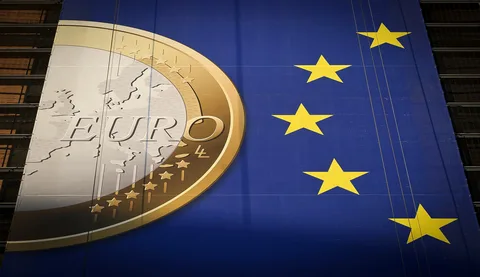
Europe’s Economic Rebound Hindered by Rising Savings Rate and Economic Uncertainty

European households are accumulating savings at a significant rate, dampening the expected boost to the economy despite recent income growth. This savings trend, which counters typical consumer spending behavior during periods of income increase, has economists questioning whether a long-term change may be underway, one that could stall Europe’s economic recovery.

Currently, households in the eurozone save an average of 15.7% of their disposable income, a notable rise from pre-pandemic levels of around 12%. This increase has been observed across Europe, including in the UK, where the savings rate is at 10%. By contrast, U.S. consumers have been spending more confidently, with savings rates there declining, driven by confidence in growth.

Some experts believe this savings increase is temporary, motivated by consumers looking to rebuild financial stability after recent high inflation rates. Heightened living costs, energy price volatility, and war in Ukraine have created ongoing financial uncertainty, prompting families to hold more cash as a buffer. Others suggest structural shifts might underlie this trend, with recent crises like the pandemic and geopolitical instability prompting more conservative long-term saving behavior.

Moreover, cautious economic outlooks and fears around climate change, deglobalization, and aging workforces add to consumer hesitation. A survey by the German Savings Banks Association illustrated this sentiment: when asked what they would do with an unexpected 500 euros, most consumers indicated they would save it, reflecting an ingrained cautious outlook that spans both younger and older generations.

Despite a generally slow rise in household spending (just 0.1% in the EU for the last quarter), some positive signs are emerging. Lower interest rates and reduced inflation—now nearing 2%—might encourage consumers to reduce savings and spend more. Meanwhile, labor market stability, characterized by steady demand for skilled workers and manageable vacancy rates, supports consumer confidence. European Central Bank officials have noted these trends, with ECB member Martin Kazaks suggesting that current household confidence could indicate a peak in savings rates.

While Belgium’s central bank governor Pierre Wunsch sees a potential economic recovery beginning by 2025, possibly exceeding expectations, much hinges on whether consumers regain confidence in their financial outlook.


 

Rights Group: Over 100 North Korean Defectors Disappear After Arrest by Secret Police

A report by the Seoul-based Transitional Justice Working Group (TJWG) reveals that over 100 North Korean defectors have vanished following arrests by North Korea’s secret police, with some individuals taken after attempting to contact family members in South Korea. The report, based on interviews with 62 North Korean escapees now in South Korea, outlines a disturbing pattern of enforced disappearances. According to TJWG, a database of 66 disappearance cases, developed in collaboration with international organizations, includes mapped routes showing detainee transfers.

Of the 113 individuals noted in the report, 80% were arrested within North Korea and the remainder in China or Russia, with roughly 30% of these arrests occurring since Kim Jong Un came to power in 2011. Nearly 40% were detained for attempted defections, and others disappeared after facing accusations like maintaining contact with people abroad. The report highlights that over 81% of these individuals vanished after being detained by North Korea’s Ministry of State Security (MSS), or “bowibu.” In one account, a recent defector reported that a friend was arrested for attempting to retrieve a Chinese cell phone and was later rumored to have died in custody.

TJWG’s project director, Kang Jeong-hyun, emphasized that these disappearances point to enforced disappearances and crimes extending beyond North Korea, involving China and Russia as well. This report comes just ahead of the U.N. Human Rights Council’s Universal Periodic Review on North Korea. A previous U.N. report estimates up to 200,000 people are held in the North’s detention camps, with prisoners enduring forced labor, torture, starvation, and other human rights abuses.

North Korea’s leadership has long branded defectors as “human scum” and has increased border restrictions in recent years. Meanwhile, China’s government denies the presence of defectors, labeling them as illegal economic migrants. North Korea’s Association for Human Rights Studies recently dismissed a U.N. report detailing human rights violations as fabricated Western propaganda.

Should There Be a Ban on Teenage Popstars? A Discussion on Industry Responsibility Following Liam Payne’s Death

As the music world mourns the death of Liam Payne, former One Direction member, discussions surrounding the duty of care for young artists have intensified. Payne’s tragic story, marked by fame at 16 and struggles with addiction, underscores a pressing issue: should there be a ban on teenage popstars to protect their mental health?

On October 16, the news of Payne’s passing at 31 sparked conversations about the challenges faced by young musicians thrust into the spotlight. Payne had openly shared his experiences of anxiety and substance abuse, revealing how the relentless public scrutiny affected his mental well-being. “It’s mainly mentally where you struggle with it,” he expressed in a 2019 interview, highlighting the toll of constant visibility.

The parallels drawn between Payne’s experiences and those of other artists, such as Robbie Williams and Amy Winehouse, illustrate a troubling pattern. Williams, who joined Take That at 16, faced panic attacks and addiction issues, while Winehouse struggled with intense media scrutiny and addiction, ultimately leading to her untimely death at 27. These stories raise the question: is the music industry equipped to protect its youngest talents?

In the wake of Payne’s death, songwriter Guy Chambers suggested an outright ban on under-18s in pop music. He argued that placing minors in an adult environment can be detrimental to their development. Chambers reflected on his observations of the industry’s lack of protective measures for young stars, stating, “I don’t see much sign of change… putting a 16-year-old in an adult world like that is potentially really damaging.”

While the proposal for a ban raises significant concerns, it also invites skepticism about feasibility. Chris Herbert, a former pop manager, pointed out the challenges of implementing such a restriction in an industry that thrives on youth appeal. “There will always be a young market who want artists who are relatable,” he noted, advocating instead for enhanced education and support for young performers.

Psychologist Dr. Adi Jaffe emphasized the vulnerability of young artists, stating, “We run them through a heavily incentivised capitalistic system… Many artists struggle and are caught in that same machine.” The demanding schedules and pressures to perform can lead to unhealthy coping mechanisms, as seen with numerous artists who have succumbed to addiction and mental health issues.

Existing child performance laws in the UK protect children up to 16, but once they reach school-leaving age, they are left without safeguards. This gap leaves 16- and 17-year-olds at risk, as the onus falls on their management teams and families to ensure their well-being. Ed Magee from the National Network for Children in Employment and Entertainment emphasized the need for proper support structures around young artists.

Advocates like Jaffe call for a re-evaluation of how the industry operates, suggesting that young artists be empowered to establish their own boundaries and access aftercare as they transition back to normalcy after fame. Lily Allen echoed this sentiment in her podcast, highlighting the profit-driven nature of the industry, where artists often lack the protections afforded to employees.

Ultimately, the debate over banning teenage popstars raises important questions about the music industry’s responsibility to its youngest members. While some argue that a ban might protect vulnerable youth, others stress the need for systemic changes that prioritize mental health support and education. As Herbert poignantly stated, “The music industry is littered with casualties,” and it remains to be seen if meaningful reforms will be enacted to safeguard future generations of artists.