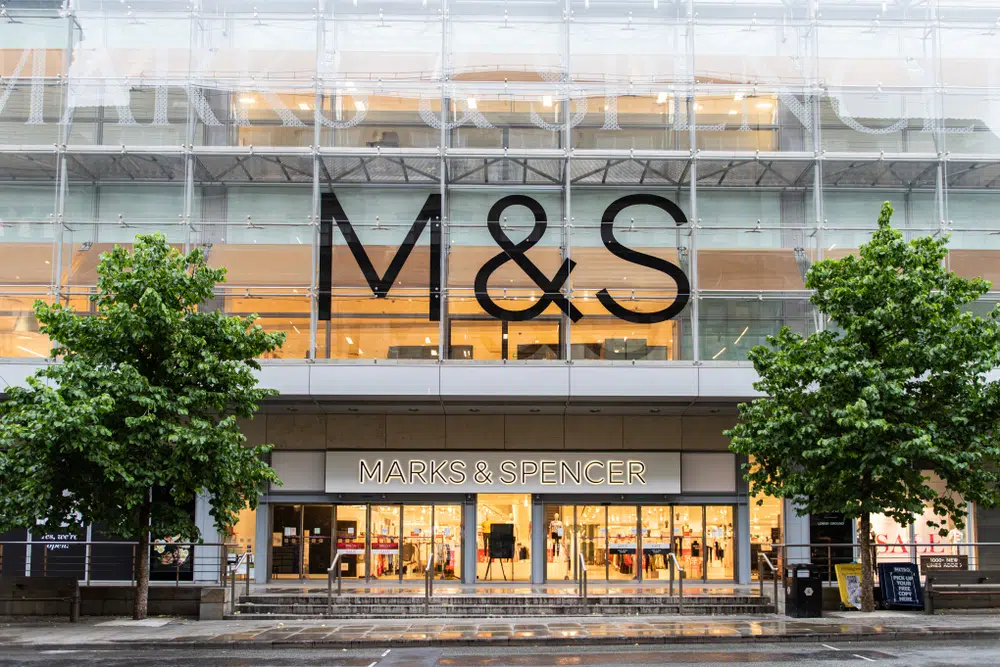
Marks & Spencer Resumes Online Orders After 46-Day Cyberattack Shutdown

British retailer Marks & Spencer (M&S) has resumed online orders for its clothing range after a 46-day suspension due to a cyberattack. The company’s shares rose 3.5% following the restart of standard home deliveries in England, Scotland, and Wales for most clothing items.

An M&S spokesperson noted that not all products are currently available online, with the initial focus on best-selling and new items. The retailer plans to expand the available product selection daily. Deliveries to Northern Ireland, as well as click-and-collect, next-day, nominated-day, and international delivery services, are expected to resume in the coming weeks.

M&S halted clothing and home orders through its website and app on April 25 after technical issues during the Easter holiday weekend disrupted contactless payments and click-and-collect services. The company had initially disclosed managing a “cyber incident” on April 22.

Last month, M&S projected that online disruptions would continue into July and estimated the financial impact at approximately £300 million ($404 million) in lost operating profit for the 2025/26 financial year. However, the company aims to reduce this loss through insurance claims and cost-cutting measures. The cyberattack also interfered with M&S’s supply chain, hindering its ability to stock stores during a period of high demand driven by warm weather.

Industry analysts anticipate that the upcoming end-of-season sale will feature larger inventories and deeper discounts than usual. Despite Tuesday’s share price recovery, M&S shares remain 9.5% lower since the cyberattack was first reported.

The breach occurred when hackers exploited a vulnerability by deceiving employees at a third-party contractor, allowing them to bypass M&S’s digital security measures. In response, M&S plans to use this incident as an opportunity to accelerate technological upgrades.

In recent weeks, several global retailers have reported similar cyber incidents, including UK grocer the Co-op Group, German sportswear brand Adidas, luxury jeweller Cartier, and U.S. lingerie retailer Victoria’s Secret.


Atlassian Rival Linear Raises $82 Million at $1.25 Billion Valuation

Linear, an enterprise software startup offering development and project planning tools, announced a successful $82 million Series C funding round, valuing the company at $1.25 billion. The round was led by venture capital firm Accel, with participation from existing backers 01A and Sequoia, as well as new investors Seven Seven Six and Designer Fund.

The 80-employee, remote-first company competes directly with Atlassian’s popular project management tool Jira. Linear reported a 280% profit increase last year and serves over 15,000 customers, including notable AI-focused companies such as OpenAI, Scale AI, and Perplexity.

CEO Karri Saarinen emphasized that Linear’s software targets specific software development workflows rather than broad customization, helping users avoid being overwhelmed by complex tools. Key features include a triage inbox for bug and feature requests and sprint management to streamline development cycles. The company also provides AI management capabilities, allowing AI to collaborate as a team member in software projects, reflecting the growing integration of AI in development.

Miles Clements, partner at Accel and Linear investor, praised the company’s focus on customer needs over flashy AI gimmicks, noting that many vendors flood the market with unwanted AI features, whereas Linear delivers practical solutions tailored to users.

Linear plans to use the fresh capital to expand its product lineup and attract larger enterprise clients.

UK Regulator Greenlights Private Share Trading Platform PISCES to Launch This Year

Britain’s Financial Conduct Authority (FCA) has finalized rules for a new private share trading platform called the Private Intermittent Securities and Capital Exchange System (PISCES), with trading expected to start later this year through a regulatory “sandbox.” The platform aims to facilitate trading of shares in private companies, helping early investors and employees to sell shares and new investors to fund growing businesses.

PISCES will operate by enabling intermittent trading events where private company owners can offer shares at set prices to new investors. This model is designed to bridge the gap for small and early-stage firms that may not be ready for a full initial public offering (IPO) but want to access capital markets and gain investor visibility.

Simon Walls, FCA’s executive director of markets, highlighted that PISCES will give investors greater access and confidence to invest in promising companies, while also allowing early backers and employees liquidity options. The UK Treasury’s Economic Secretary Emma Reynolds welcomed the initiative, emphasizing its role in strengthening capital markets and supporting economic growth.

Operators interested in running PISCES platforms, such as the London Stock Exchange, must apply for FCA approval. The regulator has adapted final rules based on market feedback, including a 25% threshold for major shareholder identification, eased disclosure requirements, and increased control for companies over their investor base.

While some industry players, including bankers, have expressed concerns about potential revenue impacts and competition with existing markets like the Main Market and AIM, legal experts view PISCES as an innovative step to invigorate UK capital markets.

The FCA will continue testing the platform under the sandbox regime before establishing a permanent regulatory framework by 2030.