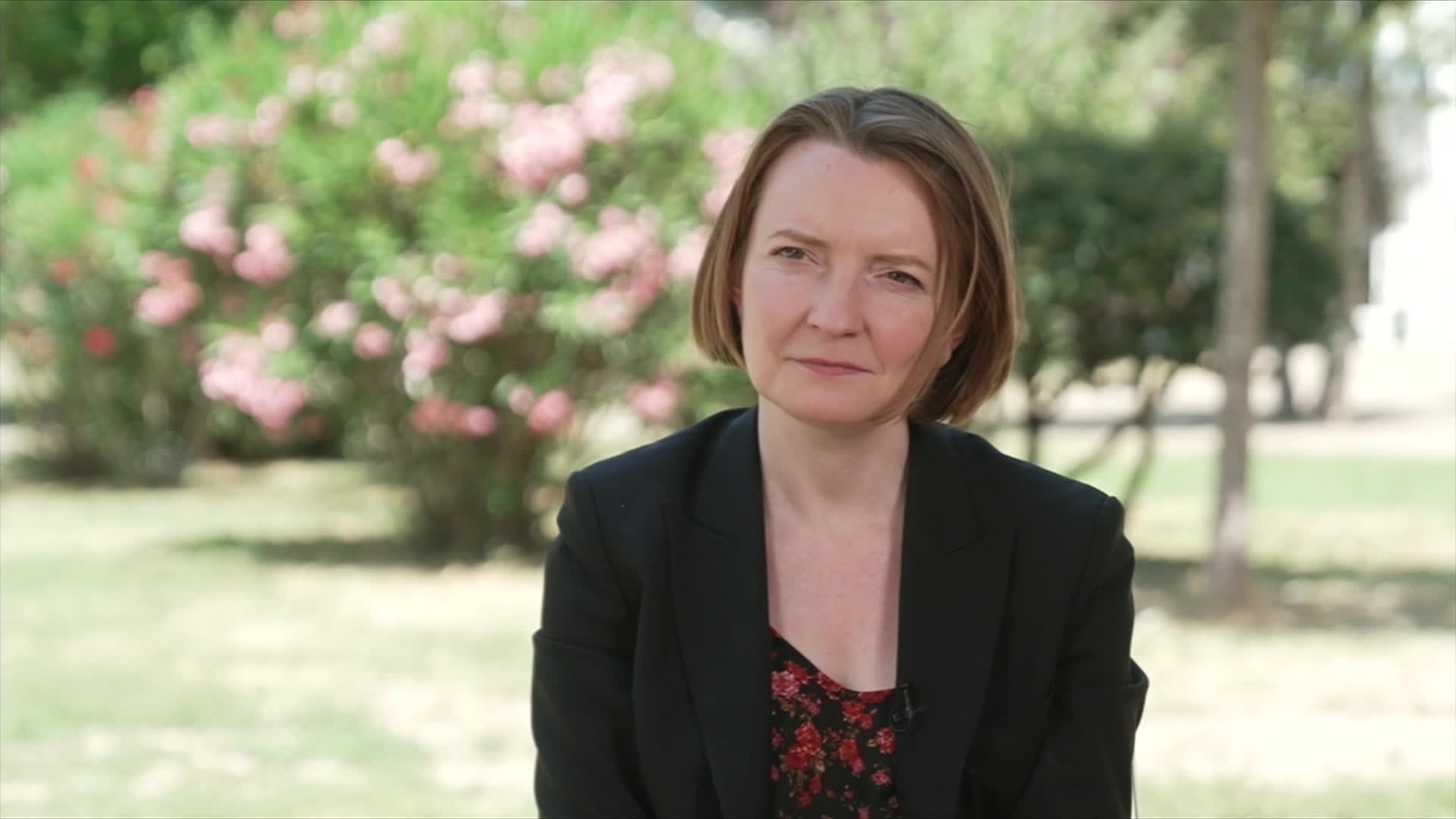
BoE’s Lombardelli Expresses Concern Over Inflation Risks, Advocates Gradual Rate Reductions

Bank of England (BoE) Deputy Governor Clare Lombardelli voiced concerns about inflation potentially exceeding the central bank’s forecasts, advocating for a cautious and gradual approach to cutting interest rates. Speaking at King’s Business School, this was her first major address since taking office in July.

Lombardelli highlighted the delicate balance of risks, with recent business surveys hinting at cooling inflation, while robust wage growth remained a significant inflationary pressure. “At this point, I am more worried about the possible consequences if the upside materialized, as this could require a more costly monetary policy response,” she said.

Her comments prompted a slight rise in sterling, reflecting market sensitivity to the BoE’s inflation outlook and rate policy.

Policy Context and Concerns

The BoE has implemented two rate cuts since August, lowering its base rate to 4.75% from 5.25%, in contrast to the larger reductions by the European Central Bank (ECB) and the U.S. Federal Reserve. The cautious pace is driven by persistent inflation pressures, especially in the UK labor market.

Lombardelli’s stance aligns closely with Chief Economist Huw Pill, who recently warned of stubbornly high wage growth. On the other hand, Deputy Governor Dave Ramsden has suggested that inflation may fall below forecasts, potentially warranting faster rate cuts.

Financial markets currently anticipate three BoE rate cuts through the end of 2024, compared to six for the ECB and four for the Fed, underlining the BoE’s more reserved approach.

Inflation and Wage Growth Challenges

Lombardelli expressed particular concern over a scenario where wage growth stabilizes around 3.5%-4%, and inflation persists at approximately 3%, higher than the BoE’s 2% target. Such a shift in expectations among businesses and consumers could embed higher inflationary pressures, making monetary policy adjustments more challenging and costly.

This caution comes amid some economists forecasting inflation could rise to 3% by early 2025, following stronger-than-expected October inflation figures. Despite recent signs of economic slowing from purchasing manager index (PMI) data, Lombardelli emphasized the need to monitor trends rather than reacting to isolated data points.

Economic and Forecasting Reforms

Lombardelli also addressed weaknesses in the eurozone and their potential impact on the UK economy. She stressed the importance of timely policy responses to prevent prolonged economic deterioration.

As part of her remit, Lombardelli is overseeing significant reforms in the BoE’s forecasting and analysis methods. Following a review led by former U.S. Federal Reserve Chair Ben Bernanke, she outlined plans for comprehensive changes to modernize the BoE’s technology and improve data processing. While progress has been made, she cautioned that the overhaul would take years to fully implement.

“This program is going to take time to work through – years not months,” she said, signaling her commitment to enhancing the BoE’s predictive capabilities.

Lombardelli’s remarks underscore the BoE’s cautious stance as it navigates persistent inflationary risks while addressing broader economic challenges.
 

Austria Ends Half-Century Gas Relationship with Gazprom After Seizure Incident

Austria’s OMV has severed ties with Gazprom, ending a partnership spanning over five decades, after seizing Russian gas as payment for an arbitration award. The move, described by industry insiders as unprecedented, signals a pivotal shift in Austria’s energy strategy amidst the broader European pivot away from Russian gas dependency.

On November 13, OMV announced its victory in a German arbitration case against Gazprom, securing €230 million ($239 million) due to irregular supplies. To enforce the ruling, OMV withheld an equivalent amount of gas from Gazprom’s October deliveries. This action marked the first instance of a European Union customer seizing Gazprom’s gas as compensation, sources familiar with the matter disclosed.

Three days after the seizure, Gazprom suspended supplies to OMV, citing the non-payment as a breach of contract. OMV’s decision was reportedly influenced by the looming threat of Ukraine ceasing Russian gas transit by early 2024. With its contracts with Gazprom running until 2040, OMV’s move to confiscate the gas is seen as a strategic step to argue for a breach on Gazprom’s part, potentially paving the way for a complete withdrawal from Russian gas reliance.

OMV had been one of the last European buyers of Russian gas following Moscow’s invasion of Ukraine in 2022. Before the war, Russia was Europe’s primary natural gas supplier. Austria’s loyalty to Gazprom had remained steadfast, even as other EU nations diversified energy imports from sources like Norway, the U.S., and Qatar. However, OMV’s shift marks a significant departure from this stance, aligning with efforts to reduce reliance on Russian energy.

Impact of the Break

Gazprom’s influence in Central Europe, particularly in Austria, had been bolstered by its competitive pricing and Austria’s extensive gas storage facilities. During 2022, Austria benefited from significantly lower prices, paying $300-$400 per 1,000 cubic meters compared to the market peak of over $1,000 per 1,000 cubic meters. Despite the cutoff, Russian gas continues to reach Austrian buyers indirectly through Slovakian intermediaries, illustrating the complexities of Europe’s energy network.

OMV’s CEO Alfred Stern has been actively working to diversify the company’s energy sources since assuming leadership in 2021. OMV has already launched additional arbitration cases against Gazprom and written down €2.46 billion in Russian investments following Moscow’s seizure of its stakes in the Yuzhno Russkoye gas field.

Political and Regional Context

Austria’s neutral political stance has not shielded it from the fallout of its energy ties with Russia. Although supporting EU sanctions against Moscow, Austria faces internal political challenges, including managing its government structure post-elections and balancing relations with Russia-friendly entities such as the Freedom Party (FPO).

Austria’s energy minister Leonore Gewessler emphasized OMV’s autonomy in deciding the future of its Gazprom contracts. She noted that the government’s role was to establish conditions that facilitate Austria’s transition away from Russian gas dependency.

The abrupt end of Austria’s longstanding relationship with Gazprom underscores the broader geopolitical and economic recalibrations reshaping Europe’s energy landscape.


The Skyscrapers Where Nobody Lives: Inside the World of Elevator Test Towers

In Germany’s Black Forest, near the medieval town of Rottweil, a towering structure called TK Elevator Testturm rises 807 feet into the sky. While it ranks among the country’s tallest buildings, this skyscraper is not home to offices or luxury apartments — it’s a massive elevator testing facility.

The tower, built by German manufacturer TK Elevator, is primarily used to test the latest elevator models. Inside, 12 shafts allow for rigorous testing of safety features and performance. TK Elevator, known for installing elevators in skyscrapers like New York’s One World Trade Center, also operates test towers in Atlanta and Zhongshan, China, with the latter standing 813 feet tall, nearly three times the height of the Statue of Liberty.

Test towers serve a critical role in elevator safety, according to Tomio Pihkala, chief technology officer at Finnish manufacturer Kone. “It’s like a test track for a Formula One team,” he explained. “Certain safety functionalities can only be verified in a real-world environment.”

To simulate real operating conditions, test towers augment conditions that elevators would face in functioning buildings, but without passengers. One notable test is the freefall simulation, which tests an elevator’s emergency braking system. With modern elevators reaching speeds over 30 feet per second, these tall test towers provide ample space for acceleration and deceleration.

For extremely high-speed elevators, even taller towers are necessary. For example, the H1 Tower in Guangzhou, China, reaches 948 feet and is one of the tallest buildings in the city. It’s also taller than many structures in New York and Los Angeles. But some tests, like those conducted in Tytyri, Finland, take place underground, where an old limestone mine serves as a long, deep elevator testing facility.

Test towers aren’t just for function — they also need to be sturdy. Like skyscrapers, they must withstand strong winds and potential earthquakes, which can affect elevator testing. To mitigate these forces, some towers are equipped with mass dampers, large pendulums that counteract vibrations. The TK Elevator Testturm in Rottweil uses a 200-ton tuned mass damper, which engineers can manipulate to simulate challenging conditions like earthquakes and strong winds.

Despite its practical function, the Rottweil tower has become a local landmark since it opened in 2017. The structure features a sleek, fiberglass exterior that protects it from the elements, and it has drawn visitors to its observation deck, which offers panoramic views of the Black Forest and, on clear days, the Swiss Alps. Visitors ascend to the deck in just 30 seconds via an elevator that moves at a speed of 26 feet per second. The tower even hosts an annual stair run, attracting over 1,000 participants.

Though it’s not designed for residential or office use, the tower serves as a testbed for cutting-edge technology, and for many, it offers a unique glimpse into the future of high-speed elevators — all while being an unexpected tourist destination.