Why Are We Seeing the Northern Lights So Often Lately?

Once considered a rare spectacle seen only near the Arctic Circle, the Northern Lights, or Aurora Borealis, have become increasingly visible across various parts of the world, including much of the US. On Thursday night, these vivid colors were once again on display. Experts point to heightened solar activity as the main reason for the frequency of these sightings.

The Northern Lights are tied to the sun’s 11-year solar cycle, which governs solar activity. Currently, the sun is nearing the “solar maximum,” a phase of the cycle characterized by increased solar flares and eruptions. During this period, the sun’s magnetic poles flip, causing significant solar storms that affect Earth.

NASA explains that at the solar minimum, the sun is relatively calm, but at its maximum, bright solar flares and Coronal Mass Ejections (CMEs) occur, sending streams of charged particles, known as solar wind, hurtling toward Earth. When these particles interact with gases in Earth’s atmosphere, especially near the magnetic poles, they create the brilliant light displays we recognize as auroras.

The current solar cycle, the 25th since records began in 1755, started in 2019 and is expected to reach its peak in 2025. As the sun continues its active phase, the chances of witnessing these displays will remain high over the next several months.

The recent surge in auroral activity stems from an eruption on October 8, when a large sunspot sent charged particles towards Earth. As these particles collide with gases like oxygen and nitrogen in the atmosphere, light is emitted in various colors, forming the shimmering displays of green, pink, purple, and red.

While the Northern Lights are typically most visible near the Arctic Circle, increased solar activity can push the auroral zone farther south, allowing more people to witness the phenomenon. With a high number of sunspots and ongoing solar eruptions, scientists predict that more auroras are likely in the near future.

To catch a glimpse of the Northern Lights, it’s best to find a dark location, away from artificial light, and ensure the skies are clear of clouds. As solar activity remains strong, the beauty of the Northern Lights may continue to be more accessible to people across the globe in the coming months.


Human Foot Found on Everest May Hold Key to Solving a Mountaineering Mystery

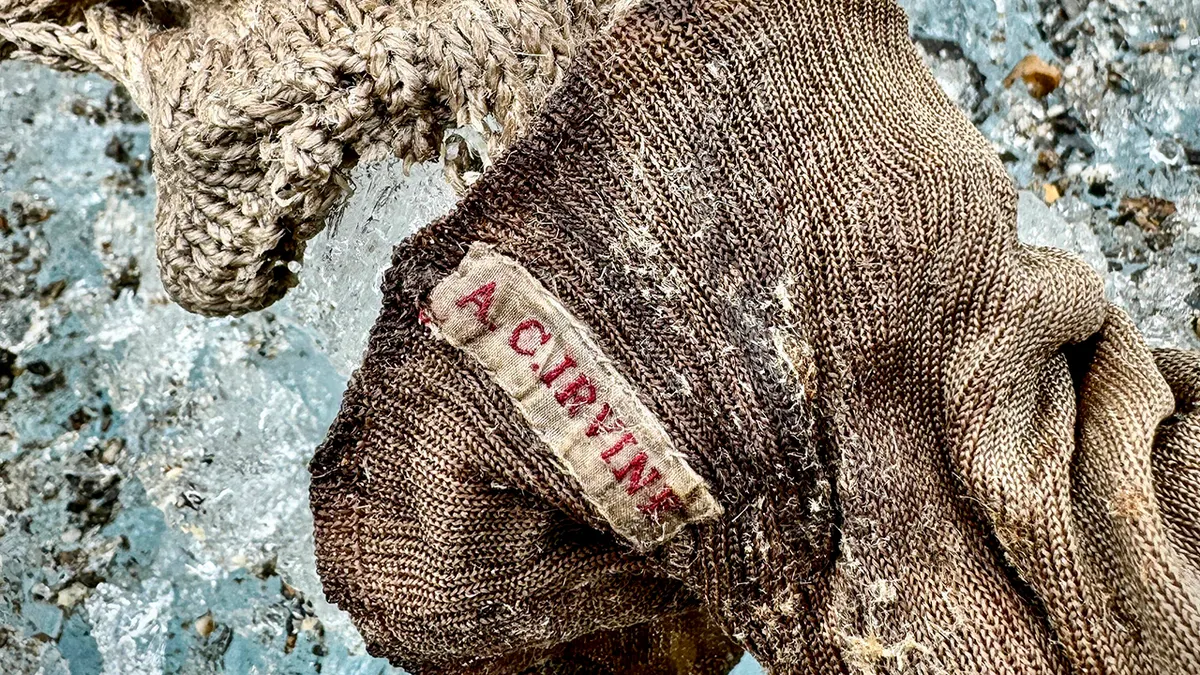
In September, a National Geographic documentary team made a startling discovery on Mount Everest that could potentially solve one of mountaineering’s greatest mysteries. A foot found inside a boot, protruding from a melting glacier, is believed to belong to British climber Andrew “Sandy” Irvine, who vanished alongside George Mallory during their 1924 expedition. Their disappearance has fueled nearly a century of speculation about whether they reached Everest’s summit before their deaths, a feat that could make them the first humans to do so.

The boot’s sock was labeled “A.C. Irvine,” linking it to Irvine, though DNA tests are still pending. The discovery raises hopes that Irvine’s body — and the camera he was carrying, which might contain proof of their historic summit — could soon be recovered.

The Mystery of Mallory and Irvine

Irvine and Mallory disappeared on June 8, 1924, while attempting to become the first climbers to reach the summit of Mount Everest. They were last spotted 800 feet below the summit before vanishing into the thin Himalayan air. Mallory’s body was found in 1999, but Irvine and the camera he carried, which might offer crucial evidence, remained elusive.

This latest discovery came after the documentary team, which included “Free Solo” co-director Jimmy Chin, followed a lead from a 1933 expedition. That earlier group had found Irvine’s ice axe on the northeast ridge of Everest, sparking theories about the climber’s final resting place. A few days before finding the boot, the team uncovered an oxygen cylinder from the 1933 expedition, further narrowing their search.

Potential Breakthrough for Climbing History

Finding Irvine’s body, or the camera he carried, would be an extraordinary breakthrough, potentially answering the enduring question of whether the pair reached Everest’s summit before perishing. Though Mallory’s body was discovered in 1999, it provided no conclusive evidence regarding their success.

“This is the first real evidence of where Sandy ended up,” Chin remarked. The discovery, while potentially historic, also offers closure to Irvine’s family, including his great-niece Julie Summers. She has long been intrigued by the mystery, having authored a book on her uncle’s expedition.

Summers described the moment she learned of the discovery as “extraordinary and poignant,” recalling how her father first told her of the tragedy when she was a child. For Summers and many others, the search for Irvine had long seemed a distant hope. But this new evidence revives the possibility that the mystery surrounding Mallory and Irvine’s fate might finally be resolved.

A Glimpse Into the Past

The documentary team’s discovery is significant not only for the mystery it might solve but also for what it reveals about the impact of climate change. The foot and boot were uncovered due to glacier melt, a stark reminder of the environmental changes reshaping the world’s highest peaks. Chin speculated that the boot had likely been exposed just a week before they found it, as they noticed birds disturbing the scene.

After discovering the boot, the team handed it over to the China-Tibet Mountaineering Association (CTMA) to protect it from wildlife and to aid in further analysis. DNA testing will determine if the foot truly belongs to Irvine, but many believe that this is the strongest evidence yet of his final resting place.

The Climbing Community Awaits Answers

For decades, mountaineers, historians, and enthusiasts have speculated about what happened to Mallory and Irvine. If Irvine’s camera is ever found and its contents preserved, it could answer the burning question: Did they or didn’t they reach Everest’s summit before their deaths?

For now, the climbing community and the Irvine family await further developments, with hopes that this extraordinary discovery will finally provide the definitive answers they’ve long sought. As Summers reflected, after nearly a century of uncertainty, this find offers both a potential solution to a historic mystery and a deeply personal resolution for the Irvine family.

Zealand Pharma Heralds Obesity Drug Alternative: “Our Crown Jewel” Amid Fierce Competition

Zealand Pharma, a Danish biotech company, is aiming to revolutionize the obesity treatment market with what it calls the “next generation” of weight loss drugs. Competing against major players like Novo Nordisk and Eli Lilly, Zealand Pharma’s CEO, Adam Steensberg, expressed optimism about the company’s experimental drugs that could set new standards for weight management, particularly with its amylin analog candidate, Petrelintide. Steensberg referred to Petrelintide as their “crown jewel,” positioning it as an alternative to the increasingly popular GLP-1 treatments, such as Novo Nordisk’s Wegovy and Eli Lilly’s Zepbound.

The Promise of Petrelintide and Dapiglutide

While Zealand Pharma has already reported positive results from early-stage trials of Dapiglutide, a GLP-1/GLP-2 receptor dual agonist, the company’s real focus is on Petrelintide, which offers a novel approach by mimicking the hormone amylin. Amylin, co-secreted with insulin, helps regulate feelings of fullness (satiety), a mechanism different from GLP-1 treatments that suppress appetite by mimicking gut hormones. This differentiation is key, as Petrelintide aims to offer significant weight loss with fewer side effects and reduced muscle loss—common concerns associated with current GLP-1 treatments.

According to Steensberg, the goal is to offer patients a more “pleasant experience” with long-term treatment possibilities. Amylin analogs like Petrelintide are emerging as a new category in obesity treatment, with the potential to become a foundational therapy in the coming years.

Strong Early Results and Growing Competition

In June 2024, Zealand Pharma announced promising results from a phase 1b trial of Petrelintide, which demonstrated an average body weight reduction of up to 8.6% over a 16-week course. The company believes this robust data supports Petrelintide as a viable alternative to GLP-1 treatments, particularly for those who struggle with their side effects.

Novo Nordisk, which currently dominates the obesity market, is also working on its own amylin-based therapy by combining semaglutide (the active ingredient in Wegovy) with amylin analog Cagrilintide in a candidate drug called CagriSema. This further highlights the growing interest in amylin-based therapies within the competitive obesity treatment landscape.

Zealand Pharma’s smaller size presents a challenge in competing with the pharmaceutical giants. Emily Field, head of European pharmaceuticals research at Barclays, noted that while Zealand Pharma’s developments are promising, the company will likely need a larger pharmaceutical partner to scale its operations effectively.

Searching for a Global Pharma Partner

Zealand Pharma, which has seen its share price more than double this year due to excitement around its obesity drugs, is now actively seeking a global pharmaceutical partner to help bring its treatments to market. Steensberg acknowledged that despite the company’s recent $1 billion capital raise, partnership is essential for the next phase of development, particularly as both Petrelintide and Dapiglutide move into phase 2 trials in 2024 and 2025.

With rising competition, including established players like Novo Nordisk and Eli Lilly and an estimated $200 billion market by 2030, partnering with a global firm would provide Zealand Pharma with the resources necessary to scale production and marketing efforts.

Future of Obesity Treatment and Market Fragmentation

The obesity drug market is expected to become increasingly fragmented as different pharmaceutical companies target specific segments and patient needs. Analysts believe that focusing on niche areas, such as treatments that reduce muscle loss, will help smaller companies like Zealand Pharma carve out space alongside the market leaders. As demand for these treatments continues to surge globally, companies are racing to create the next big breakthrough in weight management.

Zealand Pharma’s strategic focus on amylin analogs, coupled with its search for a strong pharmaceutical partner, positions the company to make a significant impact in the coming years. Steensberg remains optimistic, viewing their developments as “an attractive opportunity” for potential partners and asserting that amylin analogs could become a first-line therapy in the near future.

Conclusion

Zealand Pharma’s innovative obesity drug candidates, particularly Petrelintide, hold great promise in reshaping the future of weight management treatments. As the company advances its clinical trials and seeks a global pharmaceutical partner, it faces both opportunities and challenges in an increasingly competitive and lucrative market. With the growing demand for effective and tolerable weight loss solutions, Zealand Pharma’s next-generation treatments may very well play a pivotal role in the future of obesity care.