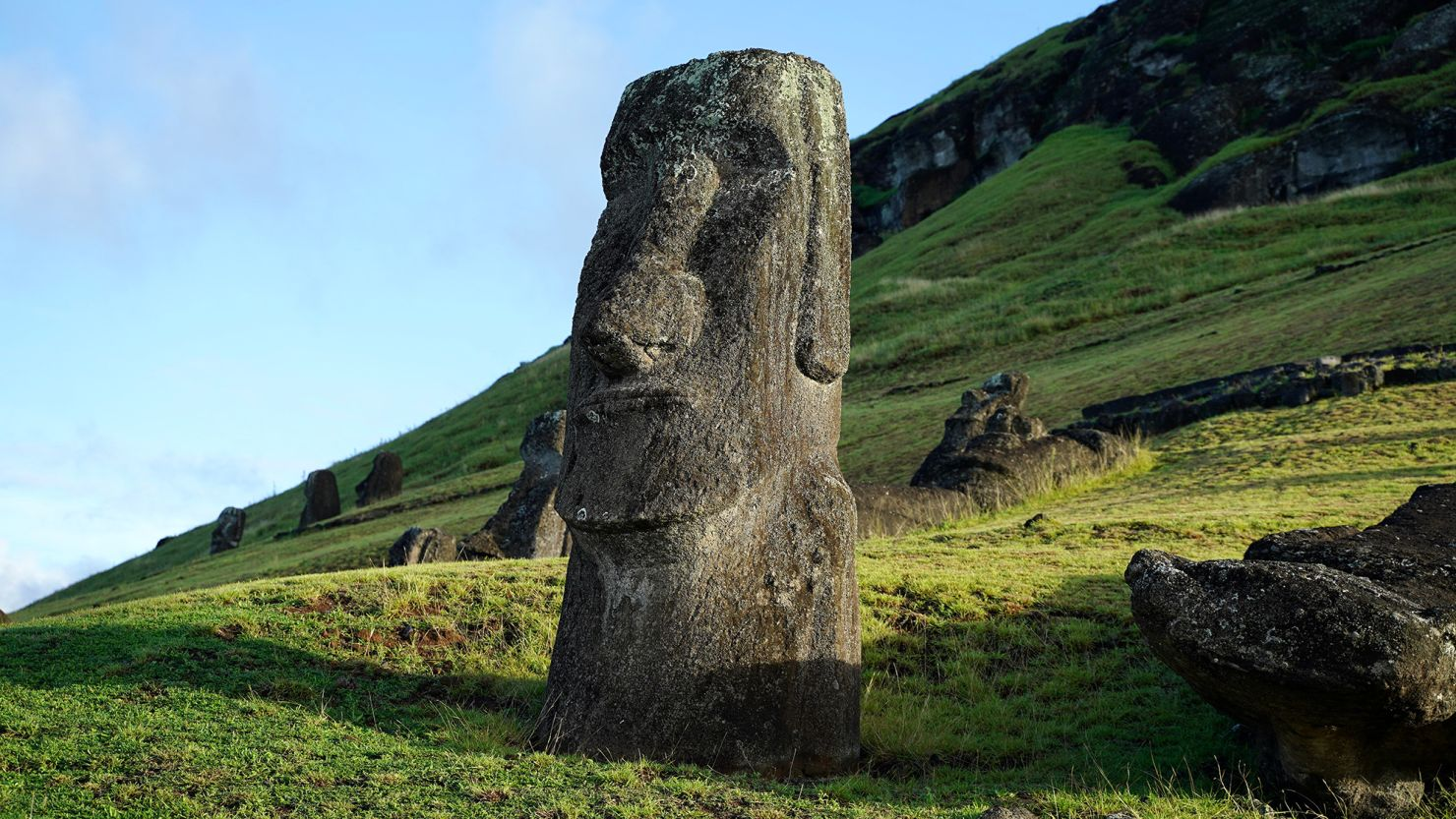
New Evidence Challenges Easter Island Collapse Theory

New research using ancient DNA has cast doubt on the long-held belief that Easter Island, or Rapa Nui, experienced a catastrophic population collapse due to resource depletion and ecological devastation. The study analyzed the genomes of 15 ancient inhabitants and found no evidence of a significant population decline. Instead, it suggests that the island’s population grew steadily until the 1860s when a third of its people were forcibly removed by Peruvian slave traders.

This new analysis provides a fresh perspective on the island’s history, countering theories like those presented in Jared Diamond’s book Collapse, which linked the island’s supposed societal breakdown to the over-exploitation of resources. Instead, the findings suggest that Rapa Nui maintained a stable society despite its geographic isolation.

Additionally, the DNA evidence indicates that the islanders had contact with Native Americans long before European explorers arrived. The study found genetic traces of South American ancestry in the Rapa Nui population, suggesting Polynesian seafarers reached the Americas between 1250 and 1430. This discovery strengthens the theory that these master navigators, who were among the best in the world, made contact with South America before Columbus.

The study’s coauthor, J. Víctor Moreno-Mayar, and other experts, like Lisa Matisoo-Smith, believe the new evidence supports a more nuanced understanding of Easter Island’s history. This research is part of a growing body of evidence that challenges the narrative of a self-inflicted societal collapse, instead portraying Rapa Nui as a small but sustainable Polynesian society.

The researchers worked closely with the Rapa Nui community and local government institutions to obtain consent for the study, and they hope the findings will facilitate the repatriation of the ancient remains used in the research.

 

Ancient Magma Ocean Discovered Near Moon’s South Pole by Chandrayaan-3 Pragyan Rover

During its nine-day journey, Pragyan explored 103 meters and analyzed 23 unique sites on the lunar surface. Devamını Oku

Massive Greenland Landslide Triggered Nine-Day Tsunami, Shaking the Earth

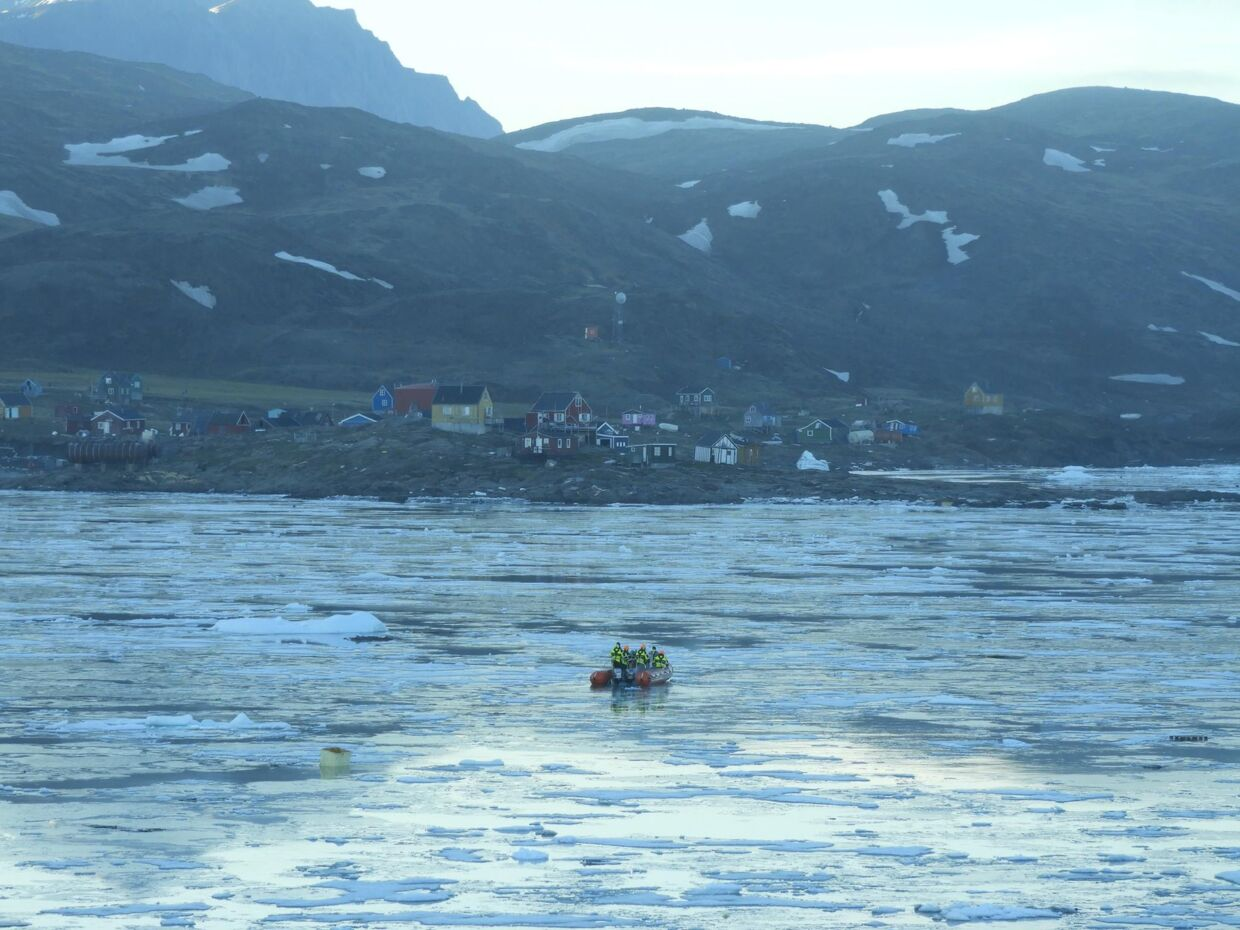
A monumental landslide in Greenland’s Dickson Fjord caused a colossal tsunami that reverberated through the Earth’s crust for nine days. This unprecedented event, which occurred last September, was initially detected as an unusual seismic signal picked up by global sensors, prompting an international scientific investigation.

Tsunami’s Origin and Impact

The landslide involved a massive collapse of a mountainside, dislodging approximately 25 million cubic meters of rock—equivalent to 25 Empire State Buildings. This debris, along with glacial ice, generated a 200-meter-high mega-tsunami. Unlike typical tsunamis, which dissipate quickly in the open ocean, this wave remained trapped within the fjord’s complex, narrow system. The wave’s energy was contained, causing it to oscillate back and forth within the fjord for an extraordinary nine days.

Dr. Stephen Hicks from UCL, who was part of the investigative team, noted that the seismic signals from this event were markedly different from those of an earthquake. “When we first detected the signal, it was unlike anything we had seen before,” Hicks explained. The persistent seismic vibrations, appearing every 90 seconds, led scientists to initially classify them as an “unidentified seismic object.”

Investigation and Findings

The investigation, which involved collaboration between an international team of scientists and the Danish Navy, used a combination of seismic data, satellite imagery, and photographic evidence. The team pinpointed the source of the seismic signals to Dickson Fjord in East Greenland, where a satellite image revealed a cloud of dust in a gully. Subsequent photographs showed that a mountain had collapsed, sending part of a glacier into the fjord.

The researchers’ model demonstrated that the tsunami’s energy did not dissipate but instead created a prolonged series of wave movements within the fjord, an unprecedented phenomenon in the field of tsunami research.

Climate Change and Rising Tsunami Risks

The landslide was attributed to rising temperatures in Greenland, which have caused glaciers to thin and lose their supporting role for surrounding mountains. Dr. Hicks highlighted that this event underscores the impact of climate change on geological stability. “The glacier that supported the mountain had become so thin that it could no longer hold the mountain up,” he said. “This shows how climate change is affecting these areas.”

Although this event occurred in a remote fjord, it serves as a warning about the potential risks associated with climate change. The lead researcher, Dr. Kristian Svennevig from the National Geological Surveys for Denmark and Greenland (GEUS), emphasized that such giant landslides and tsunamis are becoming increasingly common in the Arctic. “While this specific event does not confirm a broader trend, its scale highlights the need for further research into these phenomena,” Svennevig stated.

Conclusion

The Dickson Fjord landslide and its resulting mega-tsunami represent a significant and novel climate change impact, with effects observable in seismic data worldwide. This event underscores the urgent need for continued monitoring and research into the environmental changes driving such dramatic geological occurrences.