NASA Explores Crystal Growth in Space to Unlock Future Technological Advances

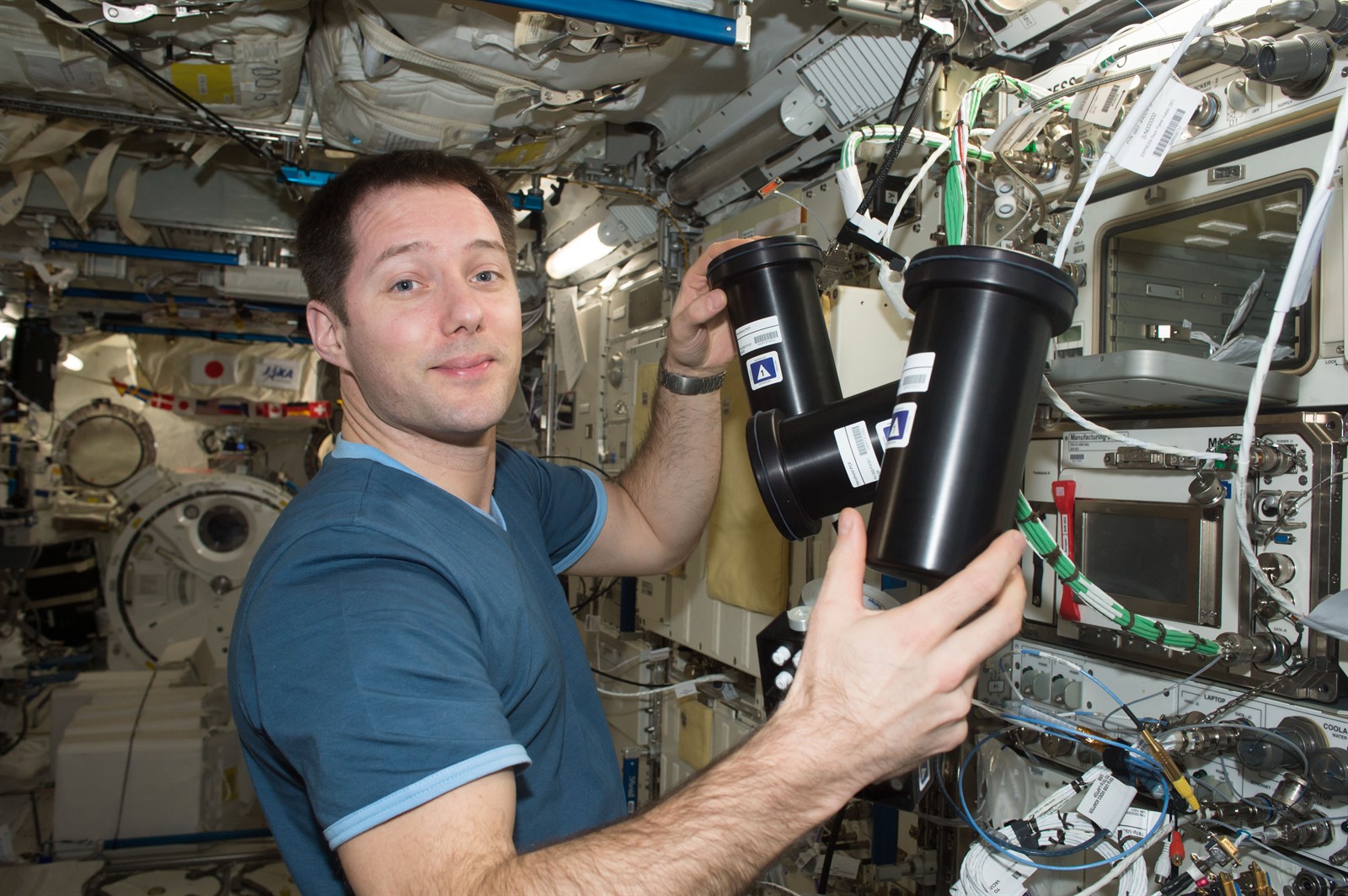
NASA scientists have long been fascinated by the process of crystallisation and its potential to improve technologies here on Earth. Most recently, researchers have turned their attention to how crystals form in microgravity aboard the International Space Station (ISS). A team led by Alexandra Ros from Arizona State University launched a series of protein crystallisation experiments using specially designed microfluidic devices. These experiments aim to evaluate whether the low-gravity environment of space enables the formation of higher-quality protein crystals compared to those grown under Earth’s gravity. If successful, this could revolutionize how we approach drug development, materials science, and more.

Crystallisation is the process through which liquid or molten materials cool and solidify into highly ordered structures known as crystals. These formations aren’t limited to gemstones or snowflakes—they are an essential part of modern life. From natural minerals to complex synthetic compounds, crystals can form from a variety of substances and serve diverse purposes across industries. Understanding how to control and optimize crystallisation can lead to better materials and more precise scientific tools.

Everyday items owe their functionality to crystals. Whether it’s the ceramic in your coffee mug, the silicon in your smartphone, or the memory chips that store your data, crystallisation plays a central role in shaping their components. Semiconductor crystals are critical for detecting radiation such as gamma and infrared rays, and optical crystals power laser technologies used in everything from barcode scanners to medical instruments. Even the durable turbine blades in jet engines rely on metal crystals designed for high strength and heat resistance.

The implications of space-based crystal research are profound. If space-grown crystals can achieve superior structure and purity, scientists could gain new insights into diseases, develop more effective medications, and engineer advanced materials with exceptional precision. As NASA and its research partners continue to explore these possibilities, microgravity experiments may become a cornerstone in developing next-generation technologies—both in orbit and back on Earth.
Student’s Accidental Discovery of Shape-Shifting Liquid Sparks Rethink of Thermodynamic Principles

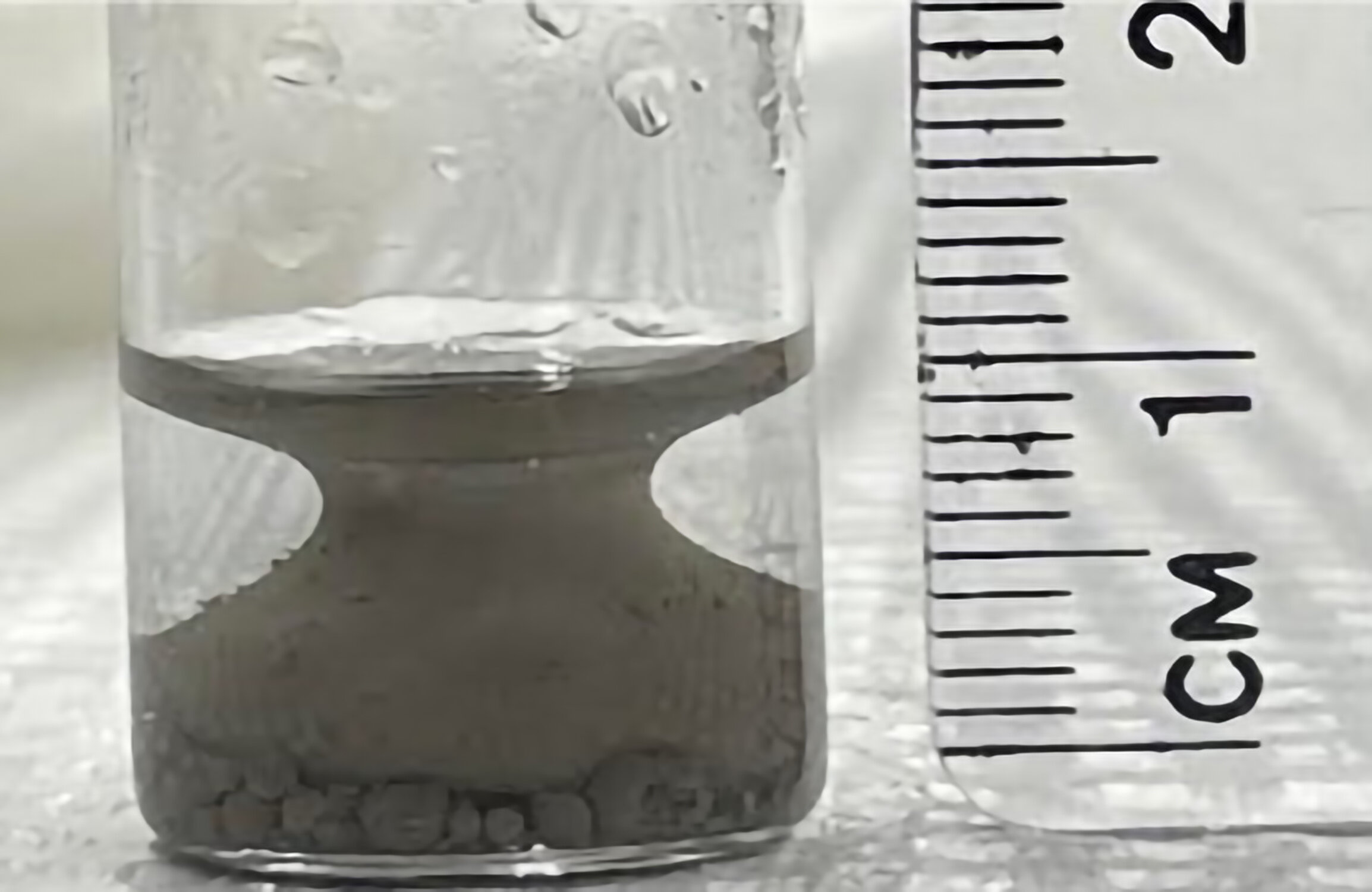
A surprising breakthrough in fluid dynamics has emerged from an accidental experiment conducted by a graduate student at the University of Massachusetts Amherst. While working on an unrelated project, Anthony Raykh, a student of polymer science and engineering, unintentionally created a shape-recovering liquid by mixing oil, water, and nickel particles. What should have been an unstable emulsion instead stabilized into a persistent and unexpected form—one resembling a Grecian urn. The phenomenon defied conventional expectations and was detailed in a study published April 4 in Nature Physics.

The discovery took place when Raykh shook a vial containing the mixture, expecting it to either separate or form spherical droplets, as dictated by established thermodynamic behavior. But instead of dispersing or coalescing into spheres, the emulsion repeatedly returned to the same ornate, vase-like shape—even after multiple disturbances. Professor Thomas Russell, who supervised the work, remarked that such behavior is highly unusual. In traditional emulsions, different liquids like oil and water do not mix and tend to revert to equilibrium states with minimal surface interaction, not form elaborate, self-recovering structures.

This persistence of shape directly challenges a key concept of thermodynamics: the tendency of systems to minimize interfacial energy. Typically, emulsions form spherical droplets to reduce the contact area between immiscible liquids, a process governed by the second law of thermodynamics. The Grecian urn shape, with its larger surface area, contradicts that principle. This anomaly has sparked scientific intrigue, as it suggests that under certain conditions, complex shapes can emerge and stabilize even when they appear thermodynamically unfavorable.

Researchers are now exploring whether this behavior can be replicated and controlled for practical purposes. The implications could be wide-ranging—from developing new smart fluids and programmable materials to revisiting the theoretical limits of self-assembly and equilibrium in soft matter physics. For now, what began as an unintentional mishap may be opening a new frontier in our understanding of the fundamental laws that govern matter and energy.

Farthest Spiral Galaxy Unveiled by James Webb Telescope, Offering New Insights Into Galactic Evolution

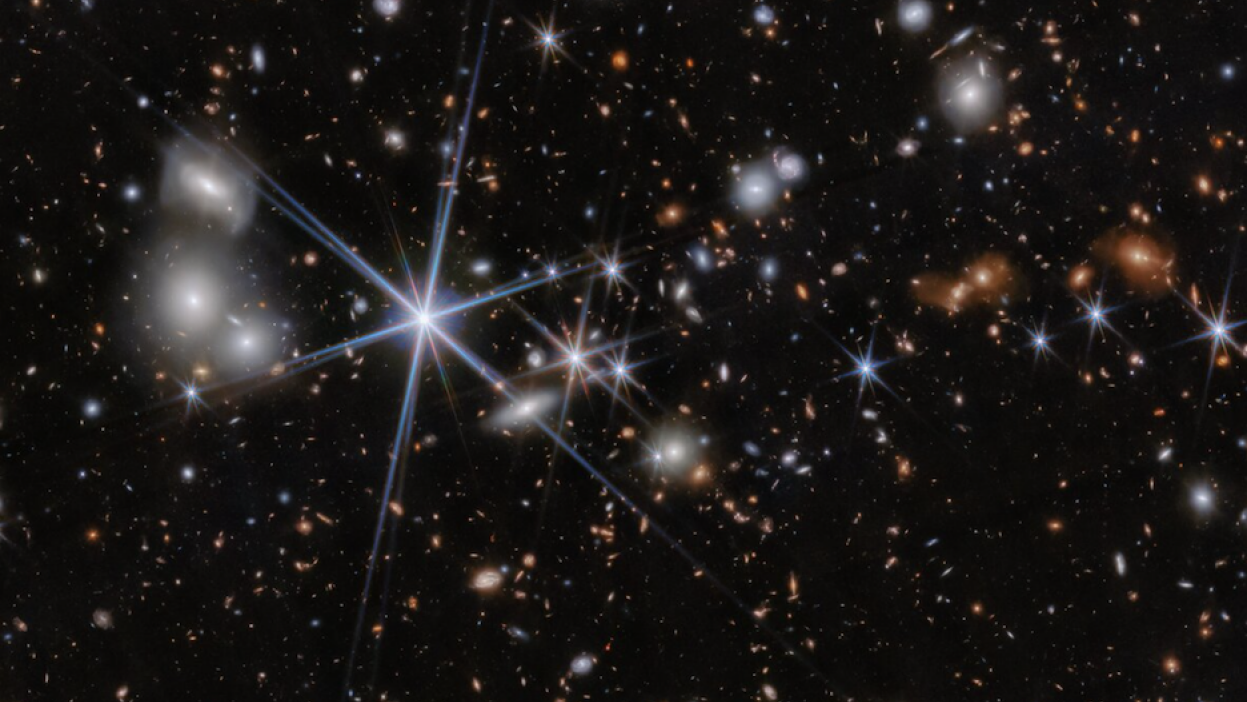
In a groundbreaking discovery, NASA’s James Webb Space Telescope (JWST) has revealed a galaxy that closely mirrors our own Milky Way—yet it formed much earlier in the universe’s history. This newly identified galaxy, named Zhúlóng, features hallmark traits of a mature spiral galaxy: a dense central bulge of ancient stars, a bright disk of ongoing star formation, and two clearly defined spiral arms. Its remarkable resemblance to the Milky Way—despite existing in the early universe—challenges long-standing cosmological models that suggest such massive galaxies evolve through a gradual process of smaller galaxy mergers over billions of years.

Zhúlóng’s impressive scale further intensifies the mystery. Estimated to contain about 100 billion solar masses—making it slightly more massive than the Milky Way—the galaxy’s star-forming disk spans roughly 60,000 light-years. What sets this discovery apart is not just its size, but its timing: Zhúlóng existed more than a billion years earlier than Ceers-2112, another early spiral galaxy, and at a time when the universe was only a quarter of its current age. This raises crucial questions about how such complex structures could have emerged so soon after the Big Bang.

The findings, published in Astronomy & Astrophysics, underscore the transformative power of JWST in exploring the deep past of our cosmos. The telescope’s sensitive instruments have captured the swirling spiral arms of Zhúlóng with astonishing clarity, allowing researchers to trace its structure and composition across billions of light-years. These observations contradict the prevailing belief that well-ordered, Milky Way-like galaxies are the end products of chaotic evolutionary histories stretching over eons. Instead, Zhúlóng appears as a fully formed spiral galaxy just a billion years after the universe’s birth.

This discovery not only shakes the foundation of current galaxy formation theories but also reinforces the notion that our understanding of cosmic history is still evolving. Scientists are now calling for follow-up observations using both JWST and the Atacama Large Millimetre/submillimetre Array (ALMA) in Chile. By examining galaxies like Zhúlóng more closely, astronomers hope to uncover how such early, massive spirals came to exist—and in doing so, may rewrite key chapters of how the universe, and ultimately galaxies like our own, came to be.