NASA Launches Twin Mars Probes to Uncover How the Red Planet Lost Its Atmosphere

NASA is preparing to send two identical probes to Mars in a groundbreaking effort to uncover how the Red Planet lost its atmosphere — and what that might mean for Earth’s future.

Billions of years ago, Mars had a thick atmosphere, liquid water, and Earth-like chemistry. But today, it’s a frozen, airless desert. The question scientists are asking is simple yet profound: what went wrong?

The ESCAPADE mission — short for Escape and Plasma Acceleration and Dynamics Explorers — will send twin satellites, nicknamed Gold and Blue, to orbit Mars in formation, offering the first-ever 3D view of its magnetic and atmospheric interactions.

The probes, each about the size of a mini-fridge, are scheduled to launch Sunday from Kennedy Space Center aboard Blue Origin’s New Glenn rocket, which will make only its second flight. Instead of the usual direct trajectory, ESCAPADE will take a unique route — looping around a Lagrange point for a year before slingshotting toward Mars, a maneuver that could revolutionize future interplanetary mission planning.

NASA and the University of California, Berkeley’s Space Sciences Laboratory designed the mission to explore how solar wind — the stream of charged particles from the Sun — has stripped away Mars’ atmosphere over time. Without a strong magnetic field like Earth’s, Mars was left vulnerable to this cosmic erosion.

By 2027, the orbiters will study how solar storms affect Mars’ magnetosphere in real time, helping researchers understand both planetary climate loss and how to protect future astronauts from harmful space radiation.

“This is a low-cost mission — about $70 to $80 million — but with enormous scientific value,” said Casey Dreier of the Planetary Society. “Understanding Mars’ atmospheric loss helps us grasp how delicate Earth’s own system really is.”

As NASA faces tightening budgets, ESCAPADE represents a new model: small, efficient missions tackling big scientific questions — and a reminder that studying Mars may teach us more about saving Earth than we expect.
China Sends Youngest Astronaut Yet to Its ‘Heavenly Palace’ Space Station

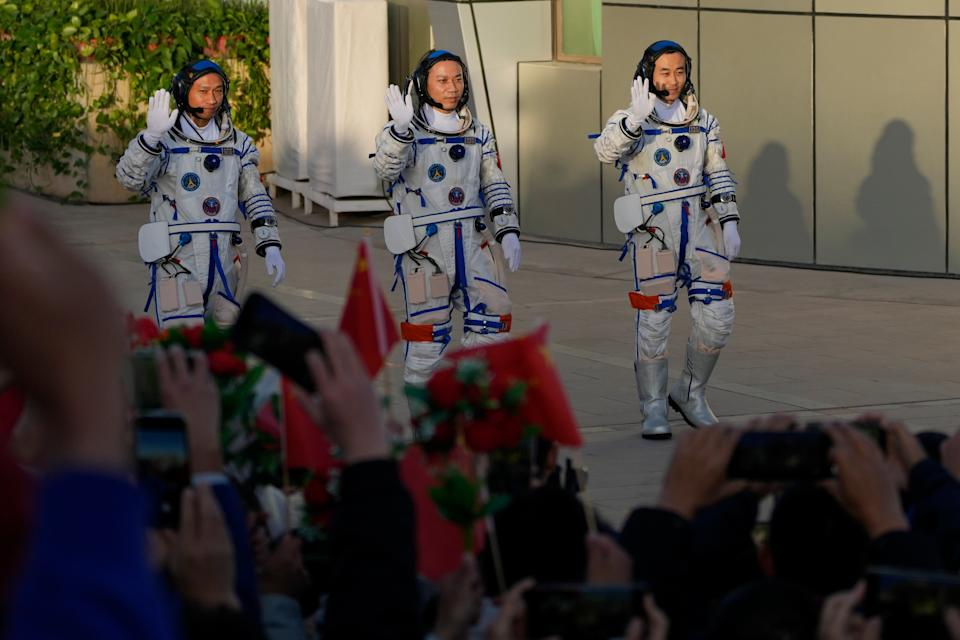
China has launched its Shenzhou-21 mission, sending a three-member crew — including the nation’s youngest astronaut to date — to the Tiangong (“Heavenly Palace”) space station, state media reported Friday.

The crew blasted off atop a Long March-2F rocket from the Jiuquan Satellite Launch Centre in northwest China, marking the seventh crewed mission to the permanently inhabited station since its completion in 2022.

The new team will spend six months aboard Tiangong, taking over duties from the Shenzhou-20 astronauts, who are expected to return to Earth in the coming days.

The mission’s commander, Zhang Lu, 48, previously flew on Shenzhou-15, while first-time astronauts Zhang Hongzhang, 39, and Wu Fei, 32 — China’s youngest astronaut ever to fly — complete the trio.

Joining them are four black mice, the first small mammals taken to the Chinese space station. They will be used in biological experiments to study reproduction in low Earth orbit, part of China’s broader push into space-based life sciences.

Biannual launches have now become standard for the Shenzhou program, which in recent years has achieved major milestones — including the first crewed missions by astronauts born in the 1990s, record-breaking spacewalks, and plans to send Pakistan’s first astronaut to Tiangong in 2026.

China’s rapid expansion in space exploration has drawn increasing attention from Washington, where NASA is racing to return American astronauts to the Moon before Beijing does. Both powers are also establishing rival frameworks for lunar exploration — the U.S.-led Artemis Accords and the China–Russia International Lunar Research Station initiative.

Scientists Observe Brightest-Ever Flare from a Supermassive Black Hole

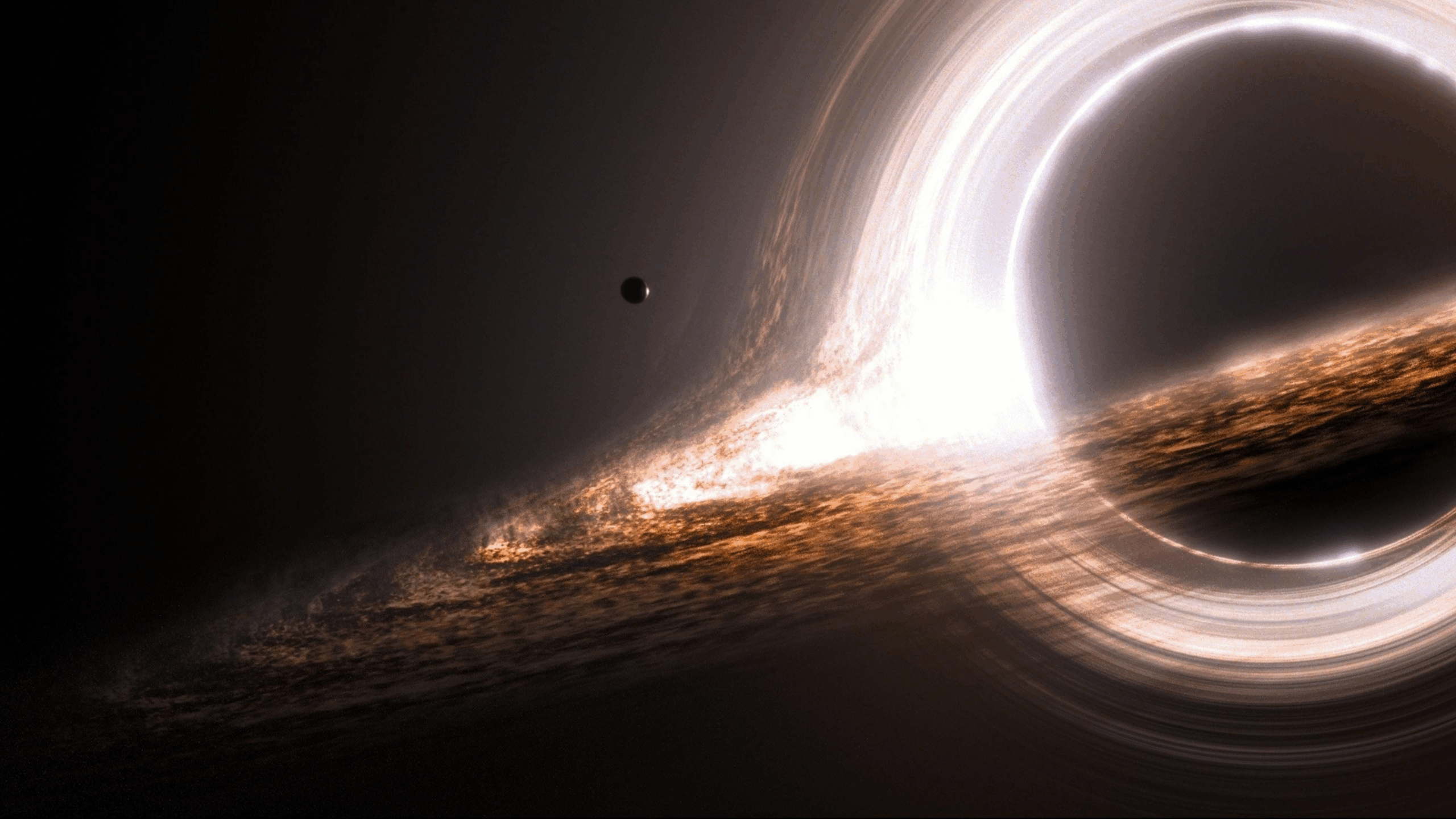
Astronomers have observed the brightest flare ever recorded from a supermassive black hole — an event so luminous it shone with the energy of 10 trillion suns.

The cosmic flash, discovered by the Palomar Observatory in California in 2018, reached its peak brightness over three months and has been gradually fading ever since. Researchers believe the phenomenon occurred when a massive star drifted too close to the black hole and was torn apart by its immense gravitational pull.

“At first, we didn’t really believe the numbers about the energy,” said Matthew Graham of the California Institute of Technology, which operates the observatory. The findings were published Tuesday in Nature Astronomy.

The flare originated from a supermassive black hole located about 10 billion light-years away — the most distant of its kind ever observed. Because the light took so long to reach Earth, the event offers a glimpse into a time when the universe was still young.

Supermassive black holes, which lurk at the centers of most galaxies, including the Milky Way, remain among the most mysterious cosmic objects. Scientists suspect they form early in galactic evolution, but the exact process is still unknown.

By studying flares like this one, researchers hope to better understand the extreme environments around these enormous gravitational wells and how they influence the growth and structure of galaxies.

Joseph Michail of the Harvard-Smithsonian Center for Astrophysics, who was not involved in the research, said the discovery allows scientists “to probe the interaction of supermassive black holes with their environments early in the universe.”

These distant cosmic fireworks, he added, illuminate not just the depths of space, but the history of the universe itself.