Romania’s Mysterious ‘Living’ Rocks Grow and Multiply Through an Unusual Natural Phenomenon

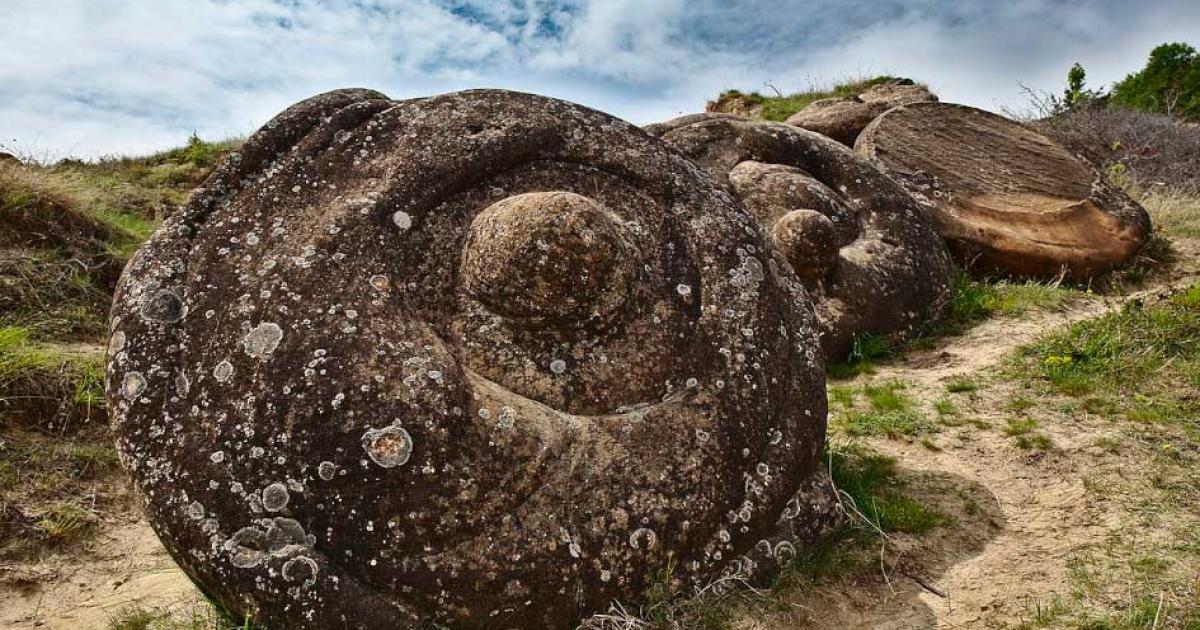
In the heart of Romania, near the village of Costești, a fascinating natural phenomenon has captured the curiosity of both scientists and locals alike. These peculiar geological formations, known as trovants, have been making headlines due to their unique characteristics that seem to defy conventional understanding of rock formation. Resembling smooth, bulbous stones, trovants are said to grow and even reproduce over time, a feature that has given rise to numerous myths and legends. Some have likened them to dinosaur eggs, alien artifacts, or even plant fossils, but their true nature is rooted in a fascinating geological process.

Trovants are primarily composed of a solid stone core encased in a porous sandstone shell. This outer shell has the ability to absorb minerals, especially calcium carbonate, from rainwater. The process causes the rock to expand slowly, adding roughly 5 centimeters to its circumference every 1,000 years. Over time, the rocks may develop lumps on their surface that can eventually break off, forming new trovants. This ongoing expansion and reproduction of the rocks is one of the reasons they’ve been referred to as “living” rocks, although the phenomenon is actually a result of a unique combination of minerals and environmental conditions rather than biological processes.

The origins of the trovants are tied to ancient geological events that occurred more than 5 million years ago. Seismic activity, including earthquakes, played a significant role in compacting sedimentary deposits in an aquatic environment, eventually leading to the formation of these spherical structures. Fossils of bivalves and gastropods found within the trovants suggest that the rocks may have formed in a marine setting, adding further credence to this theory. While similar formations have been documented in other parts of the world, such as Russia, Turkey, and the United States, Romania’s Costești region is home to the largest and most famous trovant deposits.

Despite their oddity, trovants are a fascinating example of how nature can produce strange and beautiful geological features. The slow yet constant process by which they grow and multiply offers a window into the dynamic forces that shape the Earth’s surface. While the legend of the “living” rocks may remain a source of intrigue, scientists continue to study these formations to better understand the complex interplay of minerals, water, and environmental conditions that lead to their creation

Asteroid 2024 YR4 Shows 1-in-43 Odds of Colliding with Earth in 2032

A newly discovered asteroid, 2024 YR4, has raised concerns among scientists due to its potential risk of impacting Earth in 2032. The asteroid, which measures around 55 meters in diameter, was first detected on December 27, 2024, by NASA’s Asteroid Terrestrial-impact Last Alert System. While the chances of a collision are relatively low, with an estimated 1-in-43 probability, the consequences of an impact could be catastrophic, potentially causing massive destruction. If it were to strike, the energy released would be approximately 8 megatons, significantly higher than the atomic bomb that devastated Hiroshima in 1945.

Despite the concerning possibilities, experts have reassured the public that 2024 YR4 is not expected to pose an existential threat. However, the asteroid’s trajectory includes several close approaches to Earth in the coming decades, with the most likely impact date projected for December 22, 2032. NASA and other space agencies are carefully monitoring its movements, tracking the asteroid’s path through the Torino Impact Hazard Scale. Currently, it sits at a Level 3 classification, meaning it requires ongoing observation to assess the likelihood of impact and determine any necessary actions.

The Torino Impact Hazard Scale is a key tool used by scientists to assess the potential risk posed by near-Earth objects (NEOs). While many asteroids flagged at Level 3 are often later downgraded to Level 0 (indicating no imminent danger), experts are not taking any chances. Continuous surveillance of 2024 YR4 is crucial to refining impact predictions and providing ample time for any needed planetary defense measures. NASA’s Double Asteroid Redirection Test (DART) mission, for example, has shown promising results in testing asteroid deflection methods, which could be used to alter the course of hazardous objects if necessary.

Given the uncertainty of the asteroid’s exact path, experts emphasize the importance of ongoing observation and preparation. While it is too early to determine whether 2024 YR4 will actually pose a threat, planetary defense initiatives are rapidly advancing. Should its risk increase in the future, scientists will have a range of strategies at their disposal to mitigate the potential impact, ensuring that Earth is better prepared for any unforeseen asteroid collisions.

Perseverance Rover Uncovers Ancient Martian Rock in Jezero Crater

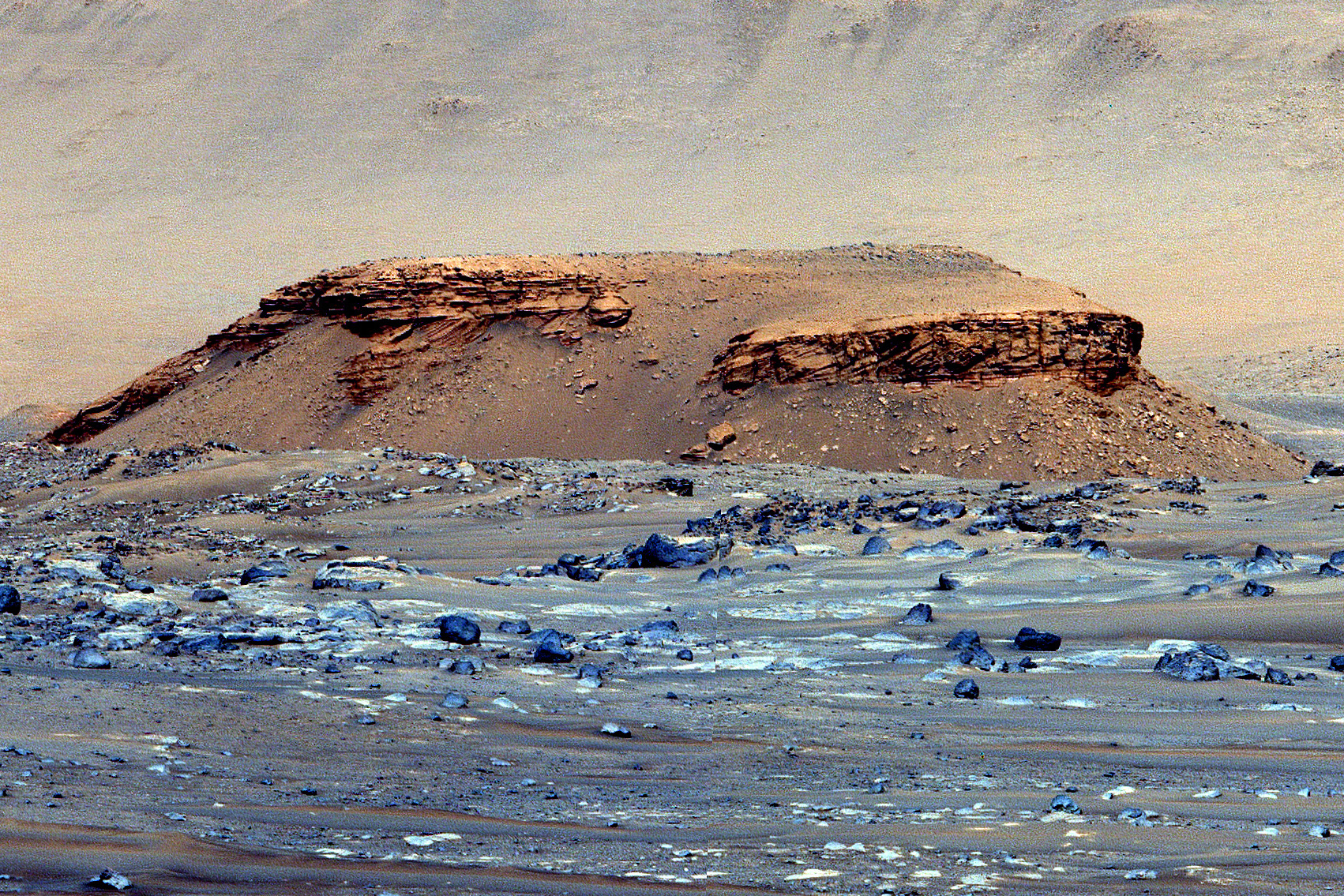
NASA’s Perseverance rover has collected a unique rock sample from the Jezero Crater, revealing previously unseen textures that could provide new insights into Mars’ ancient past. The sample, named “Silver Mountain,” measures 2.9 centimeters and is considered a rare geological find. Scientists believe it originates from some of the oldest known Martian rock formations, potentially dating back billions of years. The discovery was confirmed through images captured by the rover’s Sample Caching System Camera (CacheCam), marking another significant milestone in the mission’s exploration of Mars’ geological history.

According to NASA’s Jet Propulsion Laboratory (JPL), the rocks in this region are among the oldest in the solar system. These formations likely emerged following a major impact event that exposed deep layers of Mars’ crust. By studying the composition of such ancient rocks, scientists hope to gain a better understanding of the planet’s early evolution, including how its surface changed over time. If the sample contains traces of certain minerals, it could offer further clues about Mars’ past volcanic activity and climate conditions.

Jezero Crater has long been a target of interest for planetary scientists, as evidence suggests it once held a lake that could have supported microbial life. Since landing in 2021, Perseverance has been collecting rock and soil samples to analyze signs of past water activity. Previous findings have indicated the presence of minerals formed through water-rock interactions, reinforcing the idea that Mars once had conditions suitable for life. The Silver Mountain sample is expected to add to this growing body of knowledge by providing additional context about the planet’s environmental history.

NASA scientists plan to study this newly acquired sample in detail, with the goal of uncovering its precise mineral composition and formation process. Future missions, such as the Mars Sample Return initiative, may eventually bring it back to Earth for more advanced laboratory analysis. If successful, this could mark a breakthrough in understanding not only Mars’ past habitability but also broader planetary processes that shaped the early solar system.