Taiwanese Microsatellite Demonstrates High-Resolution Imaging Capabilities, Says Japan’s ArkEdge

Japanese space startup ArkEdge Space announced on Friday that a microsatellite it helped build for Taiwan’s space agency has produced high-quality Earth images that may be the best ever captured by a satellite smaller than a suitcase.

The small optical observation satellite, ONGLAISAT, achieved a 2.5-meter resolution from orbit approximately 400 kilometers above Earth after its December launch. “The pictures are as clear as aerial photography (despite) being taken by a satellite of this size,” said Takayoshi Fukuyo, CEO of ArkEdge, during a media briefing earlier this week. He noted that it was likely the highest-resolution imagery ever recorded by a small “cubesat.”

ArkEdge released black-and-white images captured by ONGLAISAT late last month, showcasing detailed views of locations such as a Seattle suburb and Argentina’s Patagonia region.

ONGLAISAT—short for “onboard globe-looking and imaging satellite”—is equipped with optical imaging technology from the Taiwan Space Agency (TASA) and co-developed by ArkEdge and a University of Tokyo aerospace lab. Its mission is expected to conclude in early March, though TASA stated the demonstrated optical technology will be applied to future remote sensing missions.

Taiwan is accelerating its space infrastructure efforts amid rising tensions with China. These initiatives include the launch of a domestically produced weather satellite in 2023 and ongoing discussions with Amazon to adopt its satellite internet service, Kuiper.

Taiwan’s space expansion has also deepened its collaboration with Japanese commercial space companies. TASA announced partnerships with Japanese startups such as Space One and ispace, a moon exploration company. Additionally, Taiwanese private company TiSpace, founded by a former TASA official, plans to test its rocket at a private launch pad in northern Japan this year.

AI Study Suggests Asteroid Impacts Likely Delivered Organic Molecules to Ceres

AI Study Suggests Asteroid Impacts Delivered Organic Molecules to Ceres

A new study utilizing AI analysis of data from NASA’s Dawn spacecraft has offered fresh insights into the presence of organic molecules on the dwarf planet Ceres. Researchers have mapped regions rich in these compounds to understand whether they originated on Ceres itself or were brought from external sources. While it was previously assumed that cryovolcanic activity transported these molecules from beneath the surface, the latest findings point to asteroid impacts as the likely source, challenging earlier theories about Ceres’ internal processes.

AI Analysis Reveals Organic Molecule Distribution

The study, led by scientists from the Max Planck Institute for Solar System Research (MPS) in Germany, used AI-powered analysis of spectral imaging data from the Dawn spacecraft. The results revealed a clear map of areas on Ceres with high concentrations of organic material. Interestingly, these organic deposits were not associated with cryovolcanic sites. Ranjan Sarkar, one of the researchers, noted that such organic-rich areas are rare on Ceres and lack any signs of cryovolcanic activity. This finding contradicts previous assumptions that cryovolcanoes were the primary mechanism for transporting organic compounds to the surface.

Asteroids from the Outer Belt: A Likely Source of Organics

The study suggests that low-velocity asteroid impacts, particularly from the outer asteroid belt, were likely responsible for delivering the organic molecules to Ceres. Simulations conducted as part of the research show that these asteroids frequently collide with Ceres, but their slower speeds prevent the destruction of organic materials by heat. According to Martin Hoffmann, a researcher at MPS, the lack of any evidence of volcanic or tectonic activity at the sites of organic deposits further supports the idea that these compounds were delivered externally, rather than originating from internal geological processes.

Implications for Understanding Organic Chemistry in the Solar System

These findings have significant implications for our understanding of organic chemistry and the potential for life in the solar system. The presence of organic molecules on Ceres, now thought to be brought by asteroid impacts, suggests that organic materials could be more widespread across the solar system than previously thought. It also raises intriguing possibilities about the role of such compounds in the early development of life on Earth and other celestial bodies. As researchers continue to study Ceres and other objects in the asteroid belt, this new perspective could open up fresh avenues for investigating the origins of organic chemistry in space.

NASA Announces Crew for Axiom Space’s Fourth Private Astronaut Mission in 2025

NASA Finalizes Crew for Axiom Space’s Fourth Private Astronaut Mission in 2025

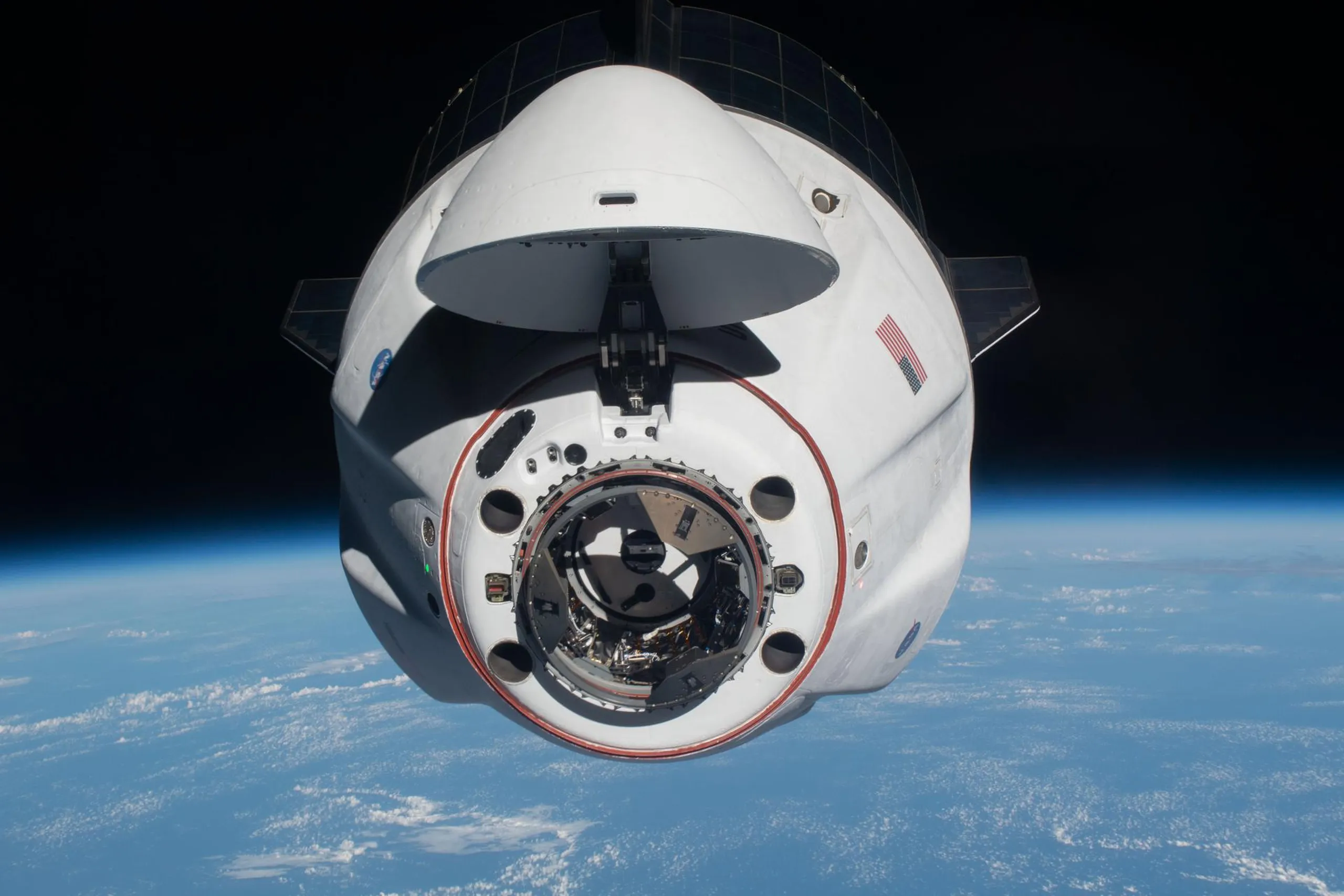
NASA and its international partners have officially confirmed the crew for Axiom Space’s fourth private astronaut mission, which is set to launch no earlier than spring 2025. The mission, departing from NASA’s Kennedy Space Center in Florida, will see four astronauts travel aboard a SpaceX Dragon spacecraft to spend up to 14 days aboard the International Space Station (ISS). The team includes former NASA astronaut and Axiom Space’s director of human spaceflight, Peggy Whitson, who will serve as the mission commander, along with ISRO astronaut Shubhanshu Shukla as pilot. Additionally, mission specialists Sławosz Uznański-Wiśniewski from the European Space Agency (ESA) and Tibor Kapu from Hungary will join the crew.

Expanding Access to Space Through Private Missions

Private astronaut missions have played a crucial role in advancing operations in low Earth orbit, according to NASA’s ISS Program Manager, Dana Weigel. These missions are opening the door for more commercial activities in space and enabling a greater number of scientists and researchers to access the microgravity environment of the ISS. The upcoming mission is especially significant as it will be the first time an astronaut from the Indian Space Research Organisation (ISRO) will visit the ISS, underscoring the growing international collaboration in space exploration. It will also mark the first stay on the ISS for astronauts from Poland and Hungary, further broadening the global reach of these private spaceflights.

Axiom Space’s Role in Private Space Exploration

Axiom Space has been rapidly expanding its private spaceflight program, with the upcoming mission marking another milestone for the company. Since its first mission in April 2022, Axiom has steadily increased its presence in commercial space operations. The most recent mission, Axiom Mission 3, saw astronauts spend 18 days aboard the ISS in January 2024, continuing the trend of extended stays. Peggy Whitson, who also commanded Axiom Mission 2 in May 2023, has emphasized the importance of international cooperation in private space exploration, noting that each mission fosters new opportunities for collaboration and growth in the commercial space sector.

The Significance of the Mission for Global Space Partnerships

The inclusion of astronauts from various space agencies highlights the increasing importance of international partnerships in the field of space exploration. Axiom Space’s missions are becoming platforms for global cooperation, bringing together astronauts from different nations to work together aboard the ISS. These missions not only contribute to the growth of commercial spaceflight but also enable valuable scientific research and technological advancements that benefit humanity as a whole. With each new mission, Axiom Space and its collaborators are shaping the future of space exploration, making space more accessible to a wider range of countries and organizations.