
Bill Nelson Steps Down as NASA Administrator, Janet Petro Appointed Acting Chief

Bill Nelson Retires as NASA Administrator, Janet Petro Named Acting Head

Bill Nelson, who served as NASA Administrator under the Biden administration, officially stepped down as the head of the space agency on January 20, 2025, coinciding with the beginning of Donald Trump’s second presidential term. With a career in public service spanning over five decades, Nelson’s retirement was announced alongside that of NASA Deputy Administrator Pam Melroy. Reflecting on his time at NASA, Nelson expressed gratitude for his tenure, calling it a humbling and rewarding experience, and emphasized the agency’s progress during his leadership.

Janet Petro Appointed Acting NASA Administrator

In a move to ensure a smooth transition at NASA, the Trump administration appointed Janet Petro as acting Administrator. Petro, who had previously served as the director of Kennedy Space Center in Florida, is well-regarded for her experience in leading critical space exploration initiatives. As acting head of NASA, she is expected to maintain continuity in the agency’s ongoing projects. Concurrently, President Trump nominated tech entrepreneur and private spaceflight pioneer Jared Isaacman for the permanent position of NASA Administrator. His nomination is awaiting confirmation from the Senate.

Nelson’s Achievements and NASA’s Progress

During Bill Nelson’s time at the helm of NASA, the agency achieved significant milestones. Under his leadership, NASA launched the James Webb Space Telescope, marking a major advancement in space exploration. Additionally, the DART asteroid mission, the Europa Clipper probe, and Artemis 1 — the first mission of the Artemis lunar program — were all launched, cementing NASA’s position at the forefront of scientific exploration. Nelson’s background as a former astronaut, having flown aboard the STS-61-C mission in 1986, provided a unique perspective that greatly influenced his approach to NASA’s goals and initiatives.

Looking to the Future of NASA

With Janet Petro stepping in as acting Administrator and Jared Isaacman awaiting confirmation as the permanent head, NASA is poised for a new chapter. Petro’s leadership, coupled with Isaacman’s potential arrival, promises to bring fresh perspectives to the agency, ensuring that NASA continues its mission of exploring the unknown and advancing humanity’s reach in space. The coming years will likely see further developments in the Artemis program and new missions that will build on Nelson’s legacy of exploration and innovation.

Roman-Era Cemetery Discovered in Cambridgeshire Unveils Rare Gypsum Burial and Artifacts

Roman-Era Cemetery Unearthed in Cambridgeshire Reveals Rare Gypsum Burial and Artifacts

In a remarkable archaeological discovery in Cambridgeshire, researchers have uncovered a Roman-era cemetery that includes an extraordinary burial involving liquid gypsum. The central grave, believed to belong to a high-status individual, was encased in a stone coffin with gypsum poured around the body. While this practice was documented in Roman times, it remains poorly understood, offering rare insights into ancient Roman burial rituals. The gypsum used in the burial preserved fabric impressions, providing a unique glimpse into the clothing worn by the deceased.

Uncovering the Gypsum Burial and Its Significance

Headland Archaeology, the firm overseeing the excavation, noted that this type of gypsum burial is more commonly found in Roman urban centers, making its discovery in a rural area particularly significant. The gypsum used in the burial was sourced from a quarry located about 50 kilometers away, a sign of the considerable expense and effort required to transport the material. This suggests that the deceased held a prominent status, as the burial ritual would have been costly and involved significant resources. Jessica Lowther, a community archaeologist with Headland, emphasized that the elaborate burial process highlighted the individual’s elite standing in society.

Exploring the Cemetery and Its Diverse Burials

The cemetery was uncovered during pre-construction excavations for a highway expansion project, revealing 14 graves surrounding the central gypsum burial. Additionally, seven more graves were located beyond a boundary ditch. The diversity in burial practices within the cemetery adds to its historical value. Alongside the gypsum burial, archaeologists found cist burials, cremations, and even decapitations. Some graves featured wooden coffins, identified by iron nails, further enriching the variety of burial traditions practiced in the area during the Roman period.

A Window into Roman Life and Death

This discovery offers a rare opportunity to study Roman-era burial customs in a rural setting, shedding light on the social stratification and rituals of the time. The presence of the gypsum burial, in particular, provides a unique look at the practices of elite Roman individuals, showcasing the importance placed on death rituals and the preservation of the body. As archaeologists continue to analyze the site, more insights into the ancient world are likely to emerge, offering a deeper understanding of Roman life and death in rural Britain.

Comet C/2024 G3 Shows Signs of Fragmentation Following Close Pass by the Sun

Comet C/2024 G3 May Be Breaking Apart After Close Solar Encounter

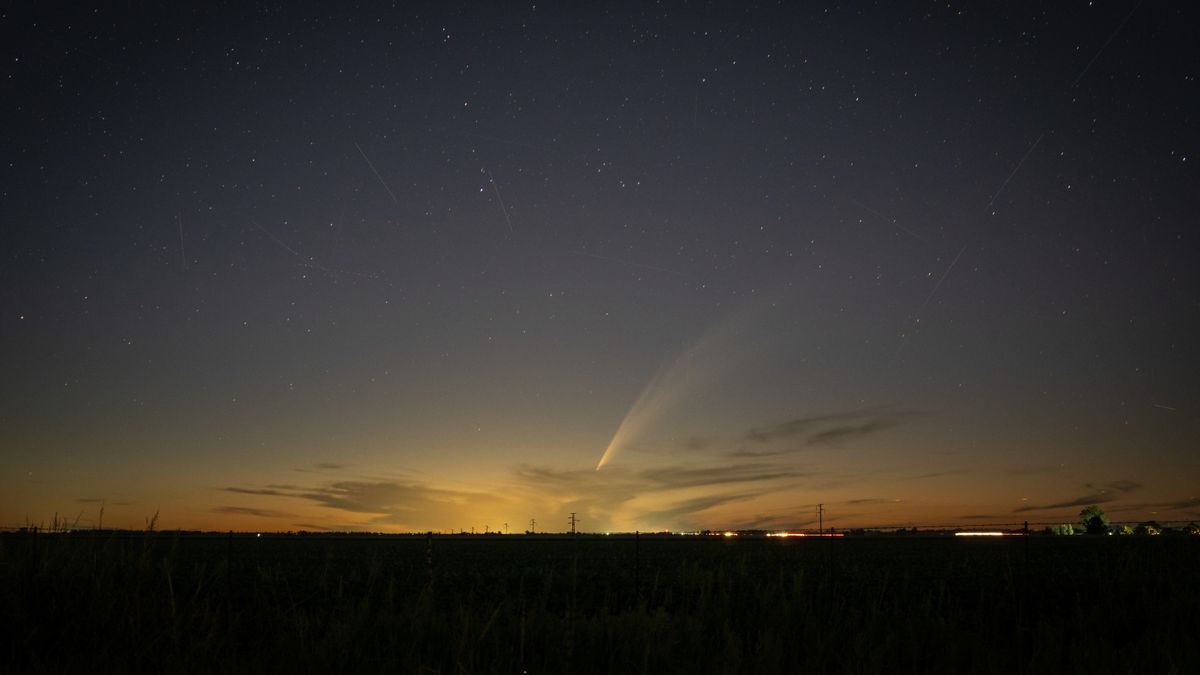
New data indicates that Comet C/2024 G3 (ATLAS), which recently became visible to the naked eye, might be undergoing disintegration following its close approach to the Sun. On January 15, during its perihelion — the point in its orbit closest to the Sun — the comet was exposed to intense solar radiation, which could have caused significant thermal stress. Initially, the comet appeared unaffected, but recent astrophotographic images have shown signs that the comet’s structure might be deteriorating. As it moves away from the Sun and back toward the distant Oort Cloud, it is expected to remain there for around 160,000 years before returning.

Signs of Potential Disintegration

Astrophotographs taken between January 18 and 20 by Hungarian photographer Lionel Majzik, from Chile, reveal notable changes in the comet. The images, which were shared on Spaceweather.com, show that the comet’s coma has dimmed significantly, and its tail now features a bright streak, or “streamer.” These changes suggest that gas and dust might be escaping from the comet, possibly due to cracks forming in its nucleus. The appearance of the streamer and the dimming of the coma point to thermal stress from the close solar encounter, which might have weakened the comet’s structure.

Expert Insights and Theories

Richard Miles, a comet expert from the British Astronomical Association, noted that early observations after the comet passed its perihelion showed no signs of damage. However, with the recent discovery of the dimming coma and the development of the streamer, experts are reconsidering the comet’s stability. Predicting the behavior of comets is notoriously difficult, especially when they are affected by such extreme forces as those from the Sun. Some experts, including amateur astronomer Nicolas Lefaudeux, believe that fluctuations in the comet’s brightness could be related to its changing position relative to the Sun. Yet, the appearance of the streamer does not align with this theory, suggesting that more significant changes may be taking place in the comet’s structure.

Looking Ahead

As Comet C/2024 G3 continues its journey back to the Oort Cloud, scientists will closely monitor its behavior. The comet’s current signs of disintegration could offer valuable insights into the physical processes that occur when a comet is subjected to intense solar heat and radiation. While its fate remains uncertain, the recent observations have added another layer of intrigue to the already fascinating journey of this newly visible comet.