Finland Joins the Artemis Accords as 53rd Member for Lunar Exploration

Finland has officially become the 53rd country to sign the Artemis Accords, marking a significant step in the nation’s involvement in global space exploration efforts. The agreement was finalized on January 21, 2025, during the Winter Satellite Workshop held in Espoo, Finland. This milestone underscores Finland’s commitment to advancing its role in collaborative space exploration, particularly in the area of lunar missions. By joining the Artemis Accords, Finland affirms its dedication to promoting responsible and peaceful exploration of the Moon and beyond, further strengthening its space sector.

The Artemis Accords, which were first introduced in October 2020, aim to establish a framework of principles for space exploration that prioritizes transparency, safety, and international cooperation. The guidelines are rooted in the 1967 Outer Space Treaty, which emphasizes the peaceful use of space. For Finland, becoming a part of this agreement provides a platform to expand its space activities and enhance its longstanding contributions to space technologies. According to Wille Rydman, Finland’s Minister of Economic Affairs, this collaboration offers an opportunity to bolster the nation’s space capabilities while also ensuring the responsible use of space resources.

The inclusion of Finland in the Artemis Accords also highlights the increasing role of smaller nations in global space exploration. Minister Rydman emphasized the potential benefits for Finnish companies and research institutions, which are poised to gain new opportunities through this partnership. By aligning with the United States and its allies, Finland hopes to strengthen its position in the rapidly evolving space sector, fostering both innovation and international collaboration. Finnish participation is seen as a step toward enhancing its competitive edge in the growing space economy.

Representatives from both Finland and NASA expressed their enthusiasm for the new partnership. NASA Associate Administrator Jim Free praised Finland’s commitment to the Accords, noting that the nation’s involvement supports the broader goals of sharing scientific data openly and preserving the space environment. This collaboration also reinforces the United States’ efforts to engage international partners in the upcoming lunar missions, with the Artemis program aiming to return astronauts to the Moon and pave the way for future missions to Mars. The signing ceremony in Espoo marked a momentous occasion for both Finland and the global space community.
New Study Illuminates Iron’s Influence on Earth’s Core Behavior

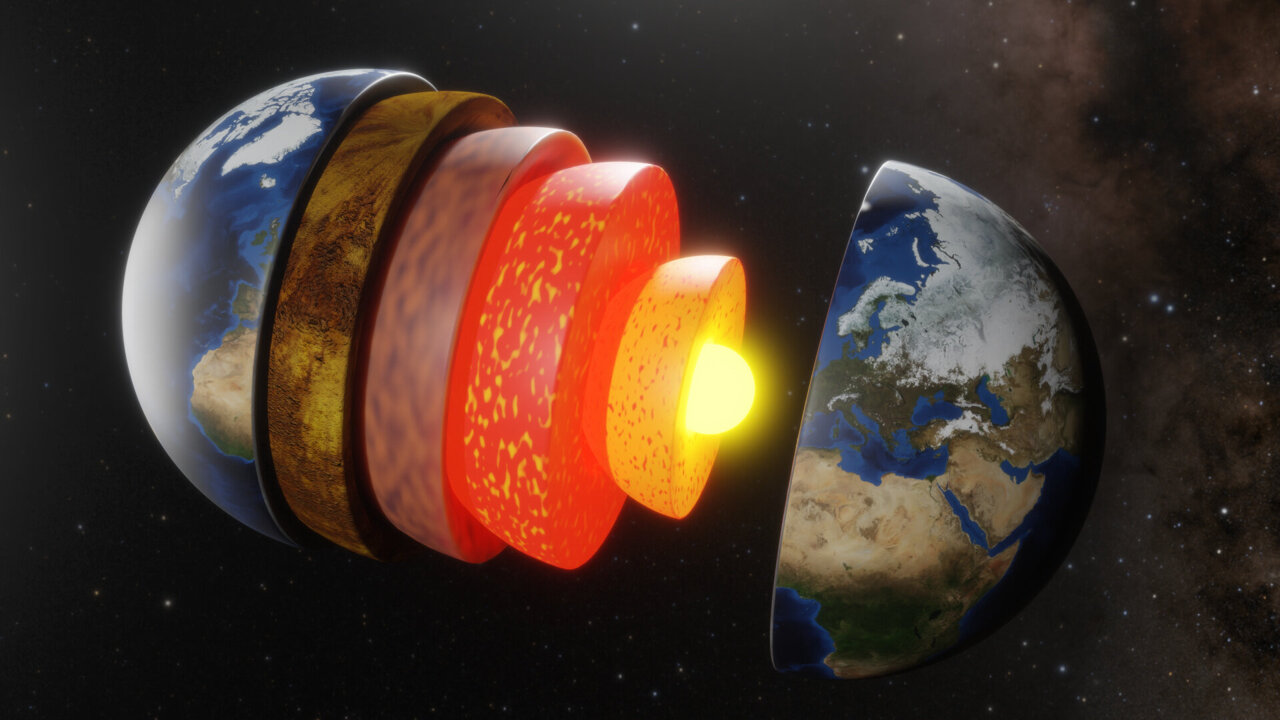
Iron, a fundamental element of Earth’s inner core, plays a critical role in the planet’s geodynamics. Under the extreme conditions found deep beneath the surface, iron undergoes unique transformations that influence the core’s behavior. A new study has focused on understanding how iron behaves when subjected to the high pressure and temperatures that mirror those found in the Earth’s core. By examining iron’s melting point and stability under these conditions, the research provides key insights into the structural and thermal properties of the material. These findings are poised to enhance our understanding of Earth’s internal structure, shedding light on the processes that shape our planet’s ongoing evolution.

Recent breakthroughs in the study of iron’s behavior at extreme conditions have been made possible through cutting-edge experimental techniques. In particular, the use of ultrafast X-ray absorption spectroscopy has revealed detailed information about the microscopic changes iron undergoes under high pressure. Conducted at the European Synchrotron Radiation Facility (ESRF) in Grenoble, the research employed the facility’s High-Power Laser to simulate the intense conditions of the Earth’s core. This innovative approach allowed scientists to probe the complex phase transitions of iron and their implications for Earth’s interior.

The study, led by Sofia Balugani, sought to explore the melting curve of iron and how its structure changes under pressure. As the pressure in the experiment reached up to 240 gigapascals (GPa)—comparable to the pressures at the boundary between the Earth’s outer and inner core—the research team was able to capture critical data on the material’s transformation. These insights into the melting behavior and structural modifications are key to understanding the mechanics of Earth’s core, especially the transition from the liquid outer core to the solid inner core.

By providing a closer look at iron’s phase diagram under extreme conditions, the study not only deepens our understanding of Earth’s internal processes but also opens the door for future investigations into the core’s dynamics. This knowledge has the potential to refine models of planetary evolution, offering valuable data for both geophysics and planetary science. Ultimately, such research plays a vital role in unlocking the mysteries of Earth’s formation and the ongoing forces that drive its internal activity.

Scientists Explore Earth’s Mysterious ‘Ignorosphere’ for Clues About Auroras

Unlocking the Secrets of Earth’s ‘Ignorosphere’: New Research Sheds Light on Auroras and Climate

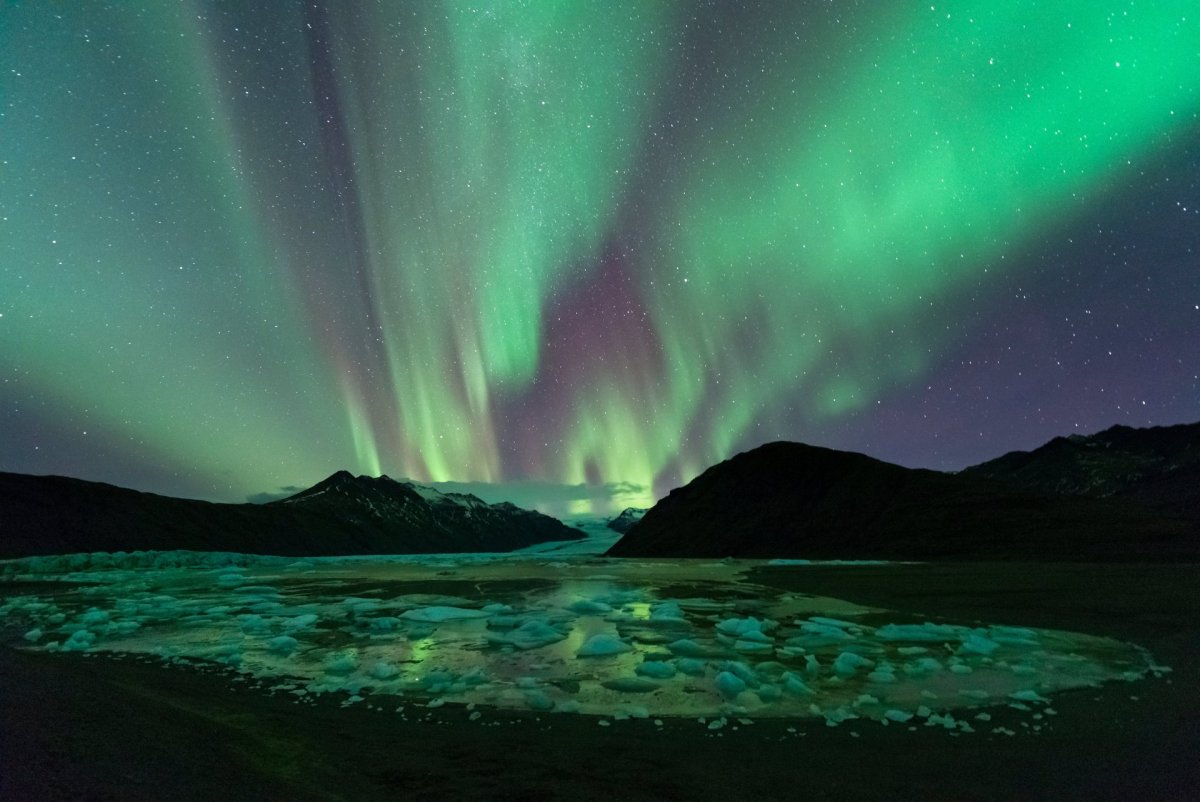
The upper layers of Earth’s atmosphere remain a scientific frontier, largely unexplored compared to the well-studied lower layers. Among these is the mesosphere, situated between the stratosphere and outer space, often referred to as the “ignorosphere” due to the scarcity of reliable data. Its inaccessibility has hindered a comprehensive understanding of atmospheric processes that influence weather patterns, climate dynamics, and natural light displays such as auroras.

A Breakthrough in Atmospheric Research
In a recent study published in Progress in Earth and Planetary Science, researchers led by Kaoru Sato, an atmospheric physics professor at the University of Tokyo, have unveiled a groundbreaking dataset covering nearly two decades. This dataset extends atmospheric models up to 110 kilometers above Earth’s surface, integrating rare observations from sounding rockets, radar systems, and lidar technology. Sato emphasized that this data helps bridge significant knowledge gaps, allowing for detailed simulations of complex phenomena like gravity waves and auroras, which were previously difficult to analyze.

Understanding Space Weather and Its Terrestrial Impact
One of the key insights from this research is the mesosphere’s critical role in mediating space weather effects. Solar storms, which release streams of charged particles, often interact with this atmospheric layer, influencing both auroral activity and ozone chemistry. These interactions can trigger gravity waves—oscillations in the atmosphere that transport energy and momentum across vast distances. Despite their importance in shaping global weather and climate systems, gravity waves have remained poorly understood due to limited observational data.

Future Implications for Climate Science and Space Exploration
The new dataset not only enhances our understanding of the ignorosphere but also holds promise for improving climate models and space weather forecasting. By accurately representing how solar activity affects Earth’s upper atmosphere, scientists can better predict disruptions to communication systems, satellite operations, and even GPS signals. Moreover, this research could inform future space missions, as understanding atmospheric dynamics at the edge of space is crucial for spacecraft re-entry and the design of high-altitude vehicles.