SpaceX Marks Success with the Launch of 131 Satellites on Transporter 12 Mission

SpaceX successfully launched 131 satellites into orbit during its Transporter 12 mission on January 14, 2025. The launch took place from Vandenberg Space Force Base in California, with the Falcon 9 rocket lifting off at 2:09 p.m. EST. This mission continues to build on SpaceX’s rideshare program, which provides an efficient way to send multiple payloads into space for various customers with a single rocket. The Transporter 12 mission not only highlights SpaceX’s technical capabilities but also its commitment to making space access more affordable and accessible for a wide range of clients, including both commercial and government entities.

One of the notable aspects of this mission was the successful landing of the Falcon 9’s first-stage booster, which touched down at Vandenberg’s Landing Zone 4 approximately 7.5 minutes after launch. This achievement further underscores SpaceX’s progress in reusable rocket technology, which significantly reduces the cost of space launches. Transporter 12 is the 12th mission in SpaceX’s Transporter series, designed to carry multiple payloads, with this flight including satellites from a variety of companies. Notably, 37 of the satellites were from Planet Labs, a company based in San Francisco, specializing in Earth observation.

Among the Planet Labs payloads were 36 SuperDove cubesats and a single Pelican-2 satellite. The SuperDove satellites are equipped for high-resolution imaging of Earth’s surface, while the Pelican-2 satellite boasts advanced AI-powered solutions designed to analyze data in near real-time. This mission not only helped deploy satellites aimed at providing critical Earth observation data but also demonstrated how space technology is evolving with the integration of artificial intelligence to enhance data collection and processing capabilities.

With the successful completion of Transporter 12, SpaceX has now launched over 1,100 satellites across 13 rideshare missions, cementing its position as a leader in small satellite deployment. The satellites deployed during the mission were sent into low Earth orbit over a 90-minute period, beginning 54 minutes after launch. These consistent and efficient rideshare missions, which have served over 130 clients, continue to drive the expansion of the commercial space industry, providing key infrastructure for a wide range of industries, from telecommunications to Earth observation.
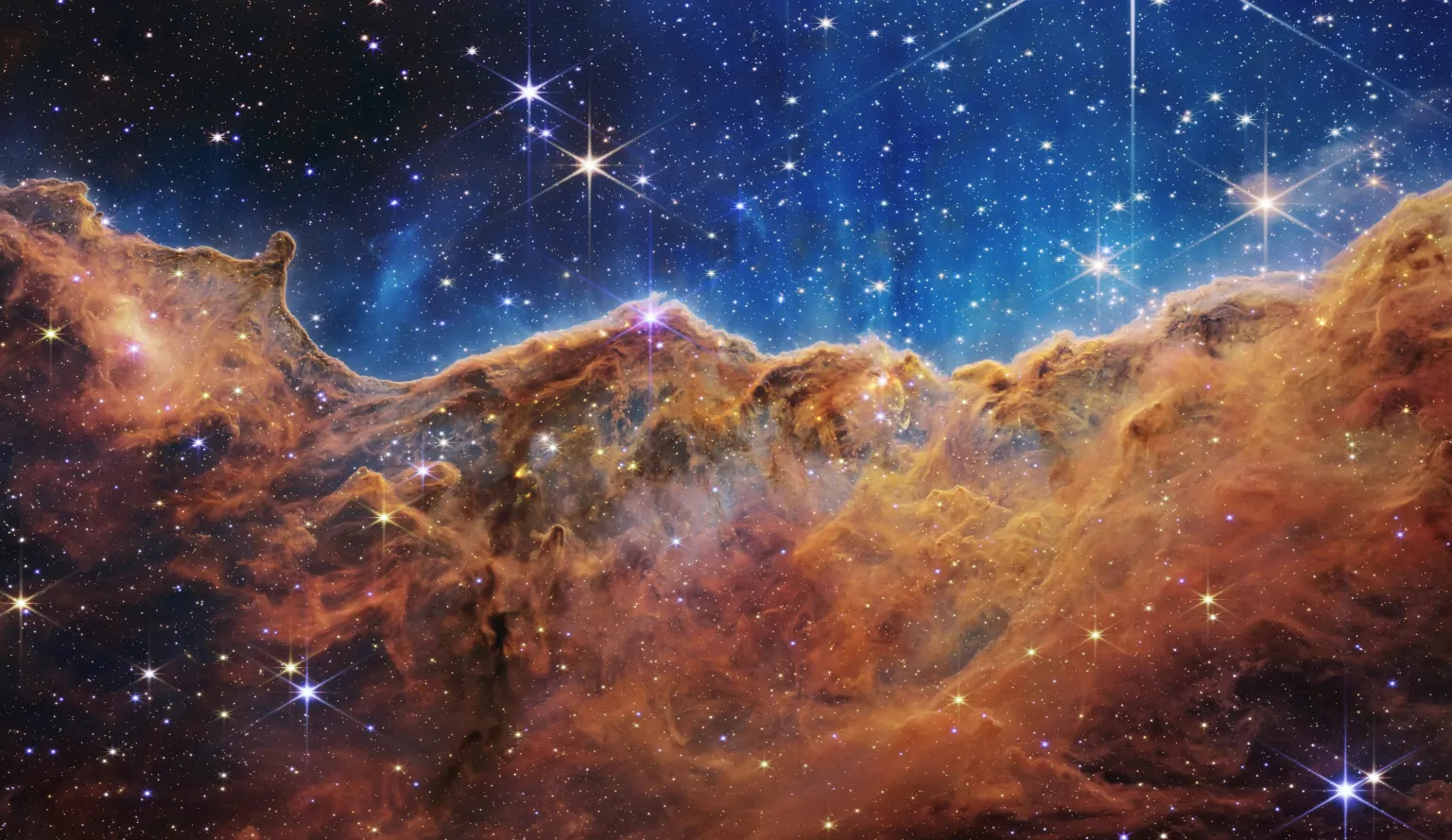
Webb Telescope Captures Formation and Growth of Carbon-Rich Dust Shells in Star System

The Wolf-Rayet 140 star system, located within our Milky Way, has become the focal point of a significant new study, providing valuable insights into the formation and outward expansion of carbon-rich dust shells. Utilizing the advanced capabilities of the James Webb Space Telescope, astronomers have observed a fascinating sequence of 17 concentric dust shells expanding in regular intervals. These shells are moving outward at an astonishing speed of about 1 percent of the speed of light, shedding light on the process by which crucial elements like carbon are dispersed across the universe. This discovery helps scientists better understand the dynamics of stellar systems and their role in the broader cosmic ecosystem.

The Wolf-Rayet 140 system consists of two massive stars that follow an elongated orbit around each other. As these stars draw closer together, their powerful stellar winds collide, compressing the surrounding material and triggering the formation of carbon-rich dust. This process, as observed by the Webb Telescope, results in the creation of concentric shells that continue to expand over time. According to NASA’s latest report, these regular intervals of shell formation suggest a rhythmic process occurring over astronomical periods. Emma Lieb, a doctoral student at the University of Denver and lead author of the study, emphasized that Webb’s detailed observations confirmed the consistency in the velocity of these expanding shells.

The study also highlights the rapid pace of these cosmic events. Over a span of 14 months, Webb’s observations showed that the dust shells visibly expanded, with material traveling at speeds exceeding 1,600 miles per second. This acceleration of dust movement within the system provides a unique perspective on how stellar winds and interactions can influence the surrounding environment. Jennifer Hoffman, a professor at the University of Denver and co-author of the study, noted that this rapid expansion is atypical when compared to other astronomical phenomena, as changes in such systems are usually observed over much longer timescales.

These findings are crucial not only for understanding the specific behaviors of the Wolf-Rayet 140 system but also for the broader implications they hold for the study of stellar evolution and cosmic material distribution. The observation of carbon-rich dust shells expanding at high velocities contributes to a better understanding of how the building blocks for life are spread across space. As scientists continue to study the dynamics of these shells, they hope to uncover further details about the lifecycle of massive stars and the role of stellar winds in shaping the interstellar medium.

ESA Converts Solar Flares into Sound Using Solar Orbiter, Unlocking New Insights

In an exciting new development, the European Space Agency (ESA) has turned the Sun’s activity into audible sound by using data collected by the Solar Orbiter, a joint mission with NASA. This pioneering sonification process has allowed scientists to convert solar flares, a key feature of solar activity, into sound, offering a novel way to experience these powerful cosmic events. The data collected over the past three years helps illustrate the Sun’s behavior as it moves toward the peak of its 11-year solar cycle, providing both researchers and the general public with a new perspective on the Sun’s dynamics.

The sonification process involved combining images from two of the Solar Orbiter’s instruments—the Spectrometer/Telescope for Imaging X-rays (STIX) and the Extreme Ultraviolet Imager (EUI). These instruments captured detailed images of solar flares, which were then translated into sound. Blue circles, representing the location and size of X-rays emitted by solar flares, were mapped onto the Sun’s image, while the Sun’s outer atmosphere was displayed in yellow. Each of the blue circles was paired with a specific tone that increased in frequency as solar activity intensified, offering a dynamic and evolving auditory representation of solar phenomena.

This innovative approach not only provides an artistic interpretation of solar events but also serves as a scientific tool to track the Sun’s behavior. By listening to the solar flares, researchers can analyze the frequencies and patterns, gaining deeper insights into the Sun’s activity. This auditory model brings attention to how solar events can be quantified and interpreted beyond traditional visual methods, making complex data more accessible and engaging.

The timing of this project aligns with the current solar cycle, as solar flare activity is increasing. As the Sun nears its solar maximum, the most active phase of its cycle, the frequency of solar flares is expected to rise, offering even more opportunities to study these phenomena. According to NASA and the U.S. National Oceanic and Atmospheric Administration (NOAA), this heightened solar activity makes it an ideal period for observing not just solar flares but other spectacular space phenomena, such as the northern lights, further emphasizing the relevance and timeliness of this sonification effort.